
Serotonin (5-HT) is a neurotransmitter and peripheral hormone that helps regulate mood, sleep, digestion, and blood clotting, not a single “happy chemical” that runs your emotional life. Most of it is made in the gut, not the brain, and those two pools work almost independently. Its real job is closer to a volume control than a happiness switch, adjusting how strongly signals move through the brain and body.
TL;DR:
- Supporting overall systemic health through good sleep, a nutrient-rich diet, and stress management is more effective for maintaining healthy serotonin pathways than focusing solely on supplements.
- Peripheral serotonin produced in the gut does not cross the blood-brain barrier, so raising blood serotonin levels does not directly influence brain mood regulation.
- Changes in serotonin signaling are more likely to affect sleep and gut function than directly causing depression, with current evidence challenging the idea of serotonin deficiency as the root of mood disorders.
- Medications like SSRIs and SNRIs alter serotonin signaling but do not increase brain serotonin directly; their benefits may come from receptor adaptation and neuroplastic changes.
- Maintaining immune health and reducing chronic inflammation support serotonin production indirectly by preventing the diversion of tryptophan into inflammatory pathways.
Table of Contents
- What Serotonin Is and Where the Body Makes It
- How Serotonin Sends Signals: Receptors, Transporters, and Two Separate Pools
- The Body Functions Serotonin Actually Influences
- Why “Low Serotonin Causes Depression” Doesn’t Hold Up Anymore
- What Actually Influences Serotonin Pathways Day to Day
- Medications, Serotonin Syndrome, and When to See a Professional
- Serotonin’s Role in Brain Development and Neuroplasticity
- When the Gut Goes Wrong: Serotonin and Digestive Disorders
- Why You Can’t Just “Check” Your Serotonin Levels
- The Emerging Link Between Serotonin, Immunity, and Inflammation
- A More Honest Way to Think About Serotonin
- BrainSteady’s Approach to Brain Health Support
- Sources
What Serotonin Is and Where the Body Makes It
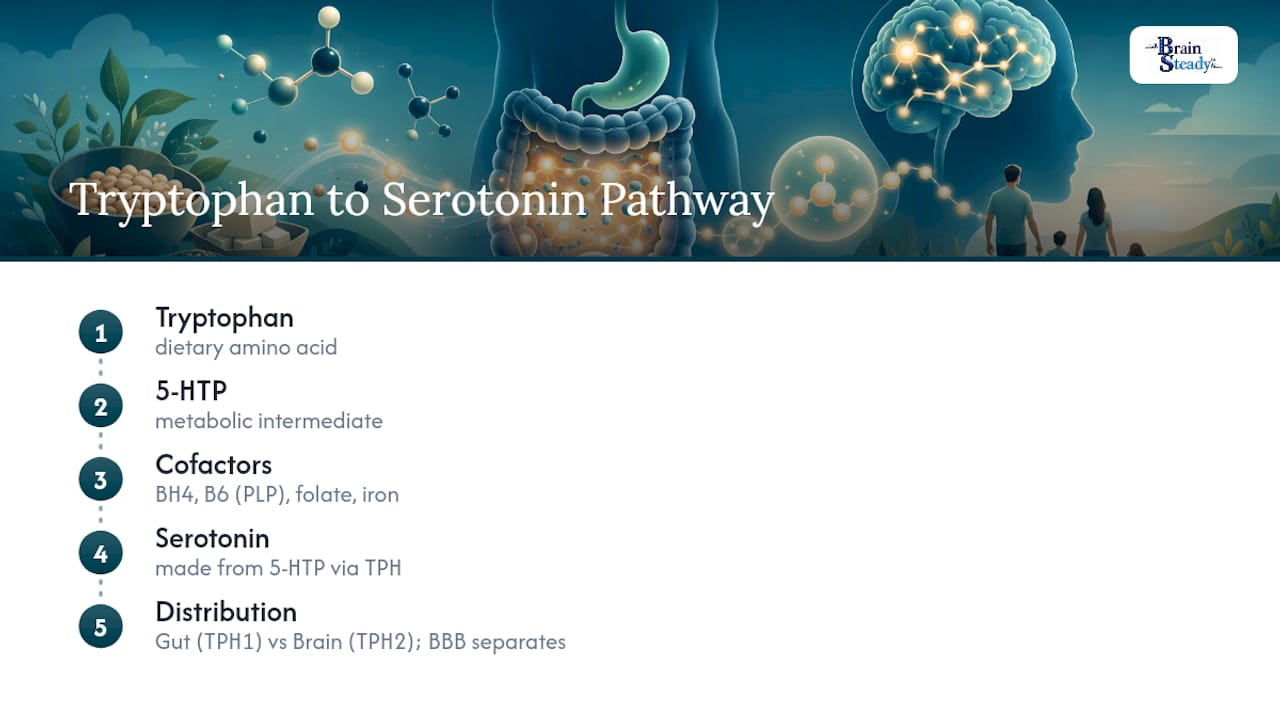
Serotonin starts as an amino acid you eat: tryptophan. The body converts tryptophan into 5-HTP, then into serotonin, through a process that depends on the enzyme tryptophan hydroxylase. There are two versions of this enzyme: TPH1, which runs the show in the gut’s enterochromaffin cells, and TPH2, which operates in the brain’s raphe nuclei. That split matters more than most explainers admit.
The conversion also needs help. Tetrahydrobiopterin (BH4), vitamin B6 (in its active form, PLP), folate, and iron all act as cofactors in this pathway. Run low on any of them and the tryptophan-to-serotonin conversion slows down, regardless of how much tryptophan is on your plate.
Here’s the detail that reshapes how you should think about “boosting serotonin”: peripheral serotonin made in the gut does not cross the blood-brain barrier. The serotonin circulating in your blood and the serotonin signaling inside your brain are functionally separate systems, made in different places, for different jobs. A supplement or food that raises one has no guaranteed effect on the other.
How Serotonin Sends Signals: Receptors, Transporters, and Two Separate Pools
Serotonin doesn’t act through one lock and one key. It works through at least 15 distinct receptor subtypes, most of them G-protein-coupled receptors that trigger slower, modulating effects, plus one type (5-HT3) that’s a fast-acting ion channel. Each subtype is tuned to a different tissue and a different outcome, which is why serotonin can calm anxiety in one context and speed up gut contractions in another.
Once serotonin is released into a synapse or tissue space, its signal has to end somehow. A transporter protein called SERT pulls it back into the releasing cell for reuse, a process SSRIs are specifically designed to block. Enzymes called monoamine oxidases (MAO) break down whatever isn’t recycled.
Because central and peripheral serotonin pools don’t mix, they can move in different directions at the same time. Gut serotonin can spike during a stomach bug and trigger vomiting and diarrhea, while brain serotonin activity stays completely unaffected. Platelets pick up serotonin from the blood and store it for clotting, again with no crossover into brain function. Location determines function almost as much as the molecule itself.
The Body Functions Serotonin Actually Influences
Mood regulation is real, but “regulation” is the operative word. Serotonin adjusts the sensitivity of mood-related circuits rather than manufacturing happiness on demand, more like a thermostat than a light switch. That framing matters because it sets realistic expectations for anything, food, supplements, or medication, that touches this system.
Sleep is where serotonin’s role is more mechanical and more direct. Serotonin is the biochemical precursor to melatonin, meaning your brain needs it available at the right time to build the hormone that governs your sleep-wake cycle. Daylight exposure, timing, and circadian rhythm all feed into this chain, which is one reason serotonin and sleep quality are so tightly linked in the research.
In the gut, serotonin is a workhorse. It regulates motility (how fast things move through your intestines) and secretion, and it’s a central player in the gut-brain axis, the two-way communication line between your digestive system and your nervous system. This is also why gastrointestinal upset often appears alongside mood or stress changes.
Platelets store serotonin and release it during clotting, part of normal hemostasis. This is not a minor footnote: it’s the reason SSRIs, by blocking serotonin reuptake in platelets, can modestly increase bleeding time, a detail worth knowing if you or a family member takes one alongside blood thinners or is facing surgery.
Sexual function is another underdiscussed area. Serotonin signaling affects arousal and response, and it’s part of why some SSRIs come with sexual side effects, a trade-off tied directly to the same mechanism that helps mood symptoms in some people.
Why “Low Serotonin Causes Depression” Doesn’t Hold Up Anymore
This idea has been the default explanation for depression in pop psychology for decades. It’s also, according to the best current evidence, too simple to be accurate. A 2022 umbrella review, a study that pools findings across many prior systematic reviews, found no convincing evidence that depression is caused solely by reduced serotonin activity.
That finding doesn’t mean SSRIs are useless or that serotonin is irrelevant to mood. It means the mechanism is more complicated than “low chemical, low mood, add chemical, fix mood.” SSRIs likely help some people through a mix of receptor adaptation, downstream neuroplastic changes, and effects on other systems entirely, not by simply topping off a depleted tank.
The practical takeaway for parents and adults watching their own mood or a family member’s: depression and anxiety are shaped by biology, life circumstances, sleep, physical health, and more, all at once. A single-neurotransmitter story sells well but doesn’t match what a comprehensive clinical assessment usually finds.
What Actually Influences Serotonin Pathways Day to Day
You can’t measure your own serotonin at home, and no food or supplement will reliably “raise” brain serotonin the way marketing copy implies. What you can do is support the systems that keep the whole pathway functioning well.
Diet quality shapes tryptophan availability more than any single food does. Mediterranean-style eating patterns tend to support tryptophan bioavailability, while diets heavy in ultra-processed foods promote low-grade inflammation that pushes tryptophan down a different metabolic route entirely.
That different route matters. Chronic inflammation activates an enzyme (IDO) that shunts tryptophan toward kynurenine metabolites instead of serotonin, a process researchers call kynurenine shunting. In practice, this means ongoing inflammation from poor sleep, chronic stress, or illness can quietly divert the raw material your body would otherwise use for serotonin synthesis.
A few evidence-informed habits support the pathway without overpromising results:
- Regular sleep timing helps stabilize the serotonin-melatonin handoff that governs your circadian rhythm.
- Morning daylight exposure supports the same circadian signaling, independent of any supplement.
- Consistent movement is linked to better mood regulation and lower systemic inflammation.
- Fiber, polyphenols, and fermented foods support a gut microbiome that interacts with serotonin-related signaling in the enteric nervous system.
- Stress management practices (even simple ones like structured downtime) help limit the inflammatory load that competes with serotonin synthesis.
- Adequate B6, folate, and iron intake matters because these cofactors are required for the tryptophan hydroxylase pathway to run efficiently.
On supplements: direct precursors like tryptophan and 5-HTP have limited and inconsistent effects on central serotonin, largely because of blood-brain barrier selectivity and competition from other amino acids. That’s why supportive ingredients like NAC (N-acetylcysteine), taurine, vitamin B6, and phosphatidylserine get more attention in brain health formulations: they support the broader metabolic and neurological environment rather than acting as a direct serotonin precursor.
Pro Tip: If you’re evaluating a supplement for yourself or a child, look for ingredients that support brain function broadly (cofactors, antioxidants, membrane health) rather than anything promising to “flood” the brain with a single neurotransmitter. That promise is a red flag, not a selling point.
Medications, Serotonin Syndrome, and When to See a Professional
Several medication classes work by adjusting serotonin signaling, though each does it differently. SSRIs block reuptake through SERT. SNRIs do the same for serotonin and norepinephrine. MAOIs prevent the breakdown enzyme from clearing serotonin at all. Older TCAs affect serotonin alongside several other systems, which is part of why they carry a broader side-effect profile.
Combining serotonergic medications, or mixing them with certain supplements or illicit substances, carries a real risk: serotonin syndrome. Watch for this combination of red flags:
- Agitation, confusion, or restlessness
- Rapid heart rate or elevated blood pressure
- Muscle twitching, tremor, or rigidity
- High fever or heavy sweating
Serotonin syndrome is a medical emergency, not a “wait and see” situation. If you suspect it, in yourself or a family member, seek urgent care immediately.
Separately, persistent changes, mood that stays low for weeks, sleep that won’t normalize, appetite shifts, or behavioral changes in a child that disrupt school or relationships, deserve professional evaluation rather than at-home troubleshooting. A mental health provider can assess anxiety and mood symptoms in context, which matters far more than guessing at neurotransmitter levels.
Serotonin’s Role in Brain Development and Neuroplasticity
Serotonin shows up early, well before it’s doing any mood regulation at all. During fetal and early childhood brain development, serotonin signaling helps guide neuron migration, the formation of synaptic connections, and the wiring of circuits that will later handle emotion and behavior. It acts less like a messenger and more like a construction supervisor during this window, shaping structure before it ever manages signaling.
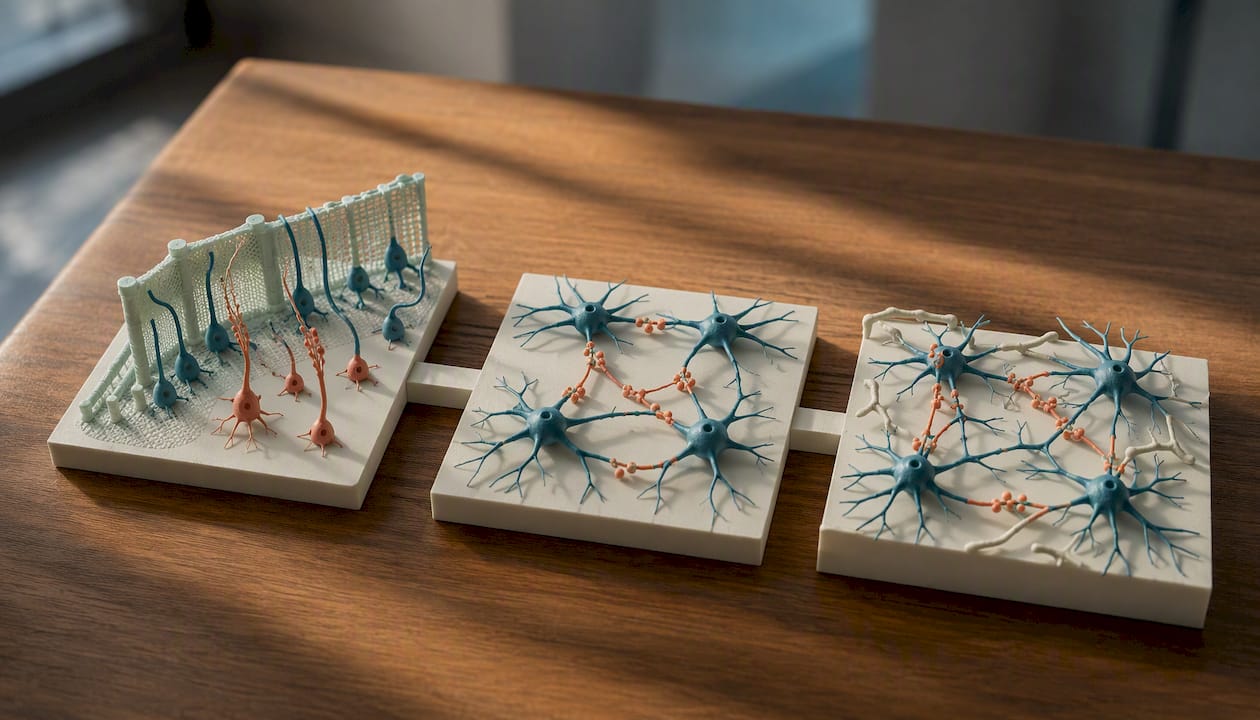
That developmental role is one reason researchers study serotonin so closely in relation to neurodevelopmental conditions. Disruptions to normal serotonin signaling during early brain wiring have been studied for their potential links to differences in social behavior, sensory processing, and attention regulation, areas relevant to conditions like autism and ADHD, though causation remains an active research question rather than settled fact.
Later in life, serotonin continues to play a role in neuroplasticity, the brain’s ongoing capacity to form and reorganize connections in response to experience, learning, and even treatment. This is part of why some antidepressant mechanisms researchers now study look less like “restoring a chemical” and more like “supporting the brain’s ability to rewire itself” over weeks of consistent treatment. It’s a slower, more structural story than the old chemical-imbalance framing, and arguably a more accurate one.
When the Gut Goes Wrong: Serotonin and Digestive Disorders
Ninety-plus percent of the body’s serotonin lives in the gut, so it’s no surprise that digestive disorders are one of the most active areas of serotonin research outside psychiatry. Enterochromaffin cells release serotonin in response to food, irritation, and even certain bacteria, and that release governs intestinal motility and secretion in real time.
Irritable bowel syndrome (IBS) is the clearest example. Researchers have found altered serotonin signaling in IBS patients, with some subtypes linked to excess serotonin release (associated with diarrhea-predominant IBS) and others linked to reduced availability (associated with constipation-predominant IBS). This is precisely why certain IBS medications target serotonin receptors directly, either blocking or stimulating specific subtypes to normalize gut transit.
Inflammatory bowel conditions add another layer. Chronic gut inflammation appears to alter enterochromaffin cell density and serotonin signaling, feeding into the same gut-brain axis that connects digestive symptoms to mood changes so many patients report alongside a GI flare. Nausea and vomiting triggered by illness, chemotherapy, or motion sickness also trace back to serotonin, specifically the 5-HT3 receptor, which is exactly why a class of anti-nausea drugs works by blocking it directly. Gut serotonin isn’t a side note to the “real” brain story. For a huge share of the population, it’s the version of serotonin actually causing symptoms.
Why You Can’t Just “Check” Your Serotonin Levels
There’s no reliable blood test that tells you what your brain’s serotonin activity looks like, and that surprises a lot of people. Blood tests can measure peripheral serotonin, largely reflecting platelet and gut activity, but because that pool never crosses the blood-brain barrier, it tells you essentially nothing about central serotonin signaling.
Researchers studying brain serotonin directly rely on more invasive or indirect methods: cerebrospinal fluid sampling to measure serotonin metabolites, PET imaging using radioactive tracers that bind to serotonin transporters or receptors, and postmortem tissue analysis in research settings. None of these are practical, available, or appropriate for routine clinical use, which is part of why psychiatric diagnosis relies on symptoms and clinical history rather than a lab number.
This is worth repeating because it undercuts a lot of supplement marketing: no over-the-counter test, at-home kit, or consumer product can actually tell you your brain serotonin level. Anything claiming otherwise is measuring something else, usually a peripheral marker, and presenting it with more confidence than the science supports. If you’re concerned about mood, sleep, or behavior, a symptom-based conversation with a qualified provider is the accurate path, not a lab test chasing a number that can’t be measured that way.
The Emerging Link Between Serotonin, Immunity, and Inflammation
One of the more active research frontiers right now involves serotonin’s relationship with the immune system, a connection that barely appears in older explainers. Immune cells, including certain T cells and mast cells, carry serotonin receptors and can both respond to and release serotonin themselves. That two-way interaction means serotonin isn’t just a bystander during inflammation, it may actively shape how immune responses unfold.
The kynurenine pathway sits at the center of this story. When inflammation activates the enzyme IDO, tryptophan gets diverted away from serotonin synthesis and toward kynurenine metabolites instead, some of which have their own effects on brain function and mood. This gives researchers a plausible biological bridge between chronic inflammatory conditions, autoimmune disease, or even prolonged infection, and the mood and cognitive symptoms that so often accompany them.
None of this is settled enough to support strong claims. But it reframes serotonin research in a useful way: instead of treating “low serotonin” as an isolated brain problem to fix with a single input, current science increasingly treats it as one output of a much larger system involving immune activity, gut health, and metabolic state. Supporting that whole system, rather than chasing one molecule, is where the field is heading.
A More Honest Way to Think About Serotonin
The “happiness chemical” framing survives because it’s simple, marketable, and easy to put on a supplement label. It’s also incomplete enough to mislead people who are genuinely struggling. When a parent reads that low serotonin causes depression, and then reads that a supplement raises serotonin, the conclusion feels obvious, and it’s often wrong on both counts.
What the umbrella review actually did was strip away a comforting oversimplification, not disprove that serotonin matters. Serotonin still governs sleep timing, gut function, clotting, and mood sensitivity. What changed is the confidence anyone should have in a single-molecule story explaining something as layered as depression or anxiety.
I think the more useful lens, and the one this article has tried to build, is systemic rather than mechanistic. Sleep debt, chronic inflammation, an under-fed gut microbiome, and unmanaged stress all quietly interfere with the same pathway. None of them require a prescription to address, and none of them promise a fix either. That’s a less satisfying story than “boost this chemical, feel better,” but it’s the one the evidence actually supports, and it’s far more actionable for a family trying to support a child’s mood or their own than chasing a single neurotransmitter ever was.
— Ellory
BrainSteady’s Approach to Brain Health Support
This supplement line focuses on supporting the biology this whole article just walked through, not a single neurotransmitter shortcut. The supplements, available in capsule and liquid form, are designed to support mood, focus, and emotional regulation through a broader nutritional approach rather than a promise to “raise serotonin.”
Several ingredients in these formulations reflect that systemic thinking. NAC (N-acetylcysteine) supports antioxidant activity in the brain. Taurine plays a role in neural signaling and cellular resilience. Vitamin B6 is a direct cofactor in the tryptophan-to-serotonin pathway described earlier in this guide. Phosphatidylserine supports neuronal cell membrane health, relevant to communication between brain cells more broadly.
None of this is a substitute for medication or professional diagnosis, and the products do not claim otherwise. If you’re exploring nutritional support for focus, mood, or emotional balance, visit the product page to see ingredient details, usage guidance, and safety information before deciding if it fits your needs.
Sources
- Serotonin—Its Synthesis and Roles in the Healthy and the Critically Ill - PMC
- UCL: No evidence depression is caused by low serotonin (summary of umbrella review)
- Dietary patterns and tryptophan metabolism: mechanistic insights and health implications
This article is general information, not a substitute for advice from a qualified doctor. Consult a qualified healthcare professional about your own circumstances before acting on anything here.
