
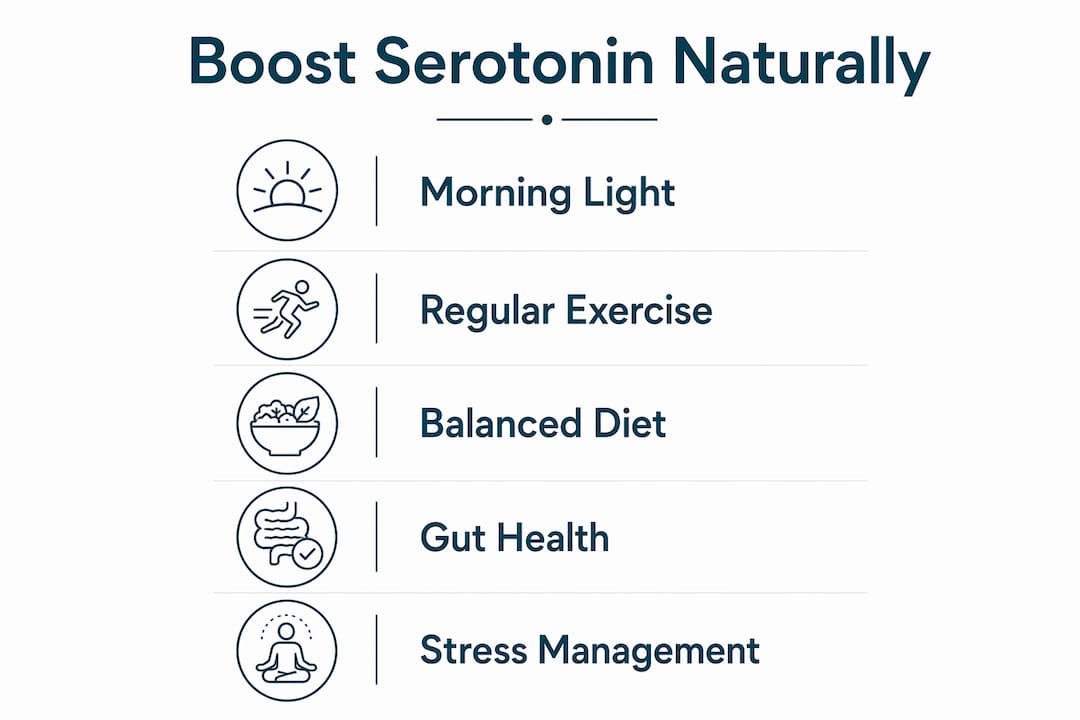
A few evidence-backed lifestyle changes reliably support the body’s serotonin system and mood without medication for many people. The highest-leverage steps are daily aerobic movement, morning bright-light exposure, consistent sleep, dietary patterns that favor tryptophan availability, gut-supporting foods and probiotics, and chronic stress reduction. You can start several of these today.
Quick actions to begin this week:
- Get a short period of morning outdoor light exposure
- Walk briskly, cycle, or do any aerobic activity for regular aerobic activity several times per week
- Include fermented foods like yogurt, kefir, or kimchi regularly
- Eat foods containing tryptophan alongside modest carbohydrates
- Set a consistent wake time and dim screens 60–90 minutes before bed
- Practice 10–15 minutes of mindfulness or slow breathing daily
- Consider vitamin D and omega-3 if you suspect deficiency (confirm with a clinician)
First priorities this week: Start with morning light plus a 20-minute walk. Add one fermented food. Lock in a consistent wake time. These three changes cost nothing and have the broadest evidence base.
Safety first: 5-HTP and L-tryptophan supplements may increase serotonin activity and can pose risks of serotonin syndrome if combined with certain medications; consult your clinician before use. If you take any prescription medication that affects serotonin, consult your clinician before adding any serotonergic supplement. This article is general information, not medical advice.
Table of Contents
- How serotonin is actually made and why “eating serotonin” doesn’t work
- How exercise supports mood and a realistic weekly plan you can follow
- What to eat to support serotonin: meal patterns that actually help
- How morning light and consistent sleep support your mood
- Why your gut matters for mood and how to support it
- Stress management and practices that protect your serotonin
- Supplements: what the evidence actually supports and what to watch out for
- How long before you notice a difference? Realistic timelines
- What depletes serotonin and common mistakes to avoid
- Why combining interventions outperforms single tactics: the research behind it
- When to see a clinician: a short checklist
- Key Takeaways
- The case for starting with lifestyle, not a supplement bottle
- Snapbrainformula’s evidence-informed supplements fit into a lifestyle-first plan
- Useful sources and further reading
How serotonin is actually made and why “eating serotonin” doesn’t work
Serotonin is not a single system you can top off like a gas tank. Serotonin physiology is split between two largely separate compartments: the gut, where enterochromaffin cells produce the vast majority of the body’s supply, and the brain, where a distinct set of neurons synthesize their own serotonin from scratch using the amino acid tryptophan.
The gut vs. brain split matters for everything you eat:
- Roughly 90–95% of the body’s serotonin is produced in the gut; it regulates digestion, gut motility, and immune signaling there
- Brain serotonin is synthesized separately using the enzyme TPH2 and cannot be replenished by gut serotonin
- Peripheral (gut) serotonin does not cross the blood–brain barrier, so eating serotonin-rich foods like bananas does not raise brain serotonin
What does reach the brain is tryptophan, the dietary amino acid precursor. But tryptophan competes with other large neutral amino acids (LNAAs) for the same transport proteins at the blood–brain barrier. A high-protein meal floods the bloodstream with competing amino acids, which can actually reduce the proportion of tryptophan that gets through. Meal composition, not just tryptophan content, determines how much precursor reaches brain neurons.
The practical upshot: supporting brain serotonin pathways means managing tryptophan transport, reducing inflammation that diverts tryptophan away from serotonin synthesis, and maintaining the gut environment that influences brain signaling through vagal and immune pathways. Eating a turkey sandwich alone won’t move the needle much.
How exercise supports mood and a realistic weekly plan you can follow
Regular aerobic and moderate-intensity exercise reliably supports mood and should be the first lifestyle change you make. A 4-week randomized trial found that aerobic exercise used as an adjunct to sertraline improved cardiorespiratory fitness and correlated with better outcomes, with the exercise group sometimes requiring lower antidepressant doses. A separate 8-week program of increased daily physical activity produced significant increases in both BDNF and serum serotonin in older adults.
Note on the evidence: A 2025 systematic review and meta-analysis of five randomized controlled trials found no statistically significant effect of exercise on circulating serotonin levels overall, with high heterogeneity between studies. Circulating serotonin also reflects peripheral, not central, serotonergic activity. Exercise’s mood benefits are real and well-documented, but they likely operate through multiple pathways — BDNF, inflammation reduction, improved sleep — not serum serotonin alone.
Practical weekly plan:
- Weeks 1–2: Three 20-minute brisk walks per week. Aim for a pace where you can talk but feel slightly breathless.
- Weeks 3–4: Increase to four sessions per week, extending two of them to 30–35 minutes. Add cycling or swimming if walking feels easy.
- Month 2 onward: Target 3–5 sessions per week at 20–45 minutes each, mixing aerobic work with one or two interval sessions (alternating 1 minute hard / 2 minutes easy for 20 minutes).
Pro Tip: Schedule your workout in the morning and do it outdoors. You stack the mood benefits of exercise with the circadian benefits of morning light exposure, and you get both done before the day derails your plans.
One underrated option: barefoot walking in a natural setting. A controlled program found that barefoot forest walking produced significantly higher salivary serotonin after 20 sessions compared to a sneaker-wearing group (p = 0.046). It also reduced inflammation markers in participants with above-normal CRP. You don’t need a forest — a park or grassy trail works.
What to eat to support serotonin: meal patterns that actually help
Eating serotonin doesn’t raise brain serotonin. What you can do is structure meals to favor tryptophan transport across the blood–brain barrier and supply the cofactors the brain needs to convert tryptophan into serotonin. Meal composition — specifically the carbohydrate-to-protein ratio — meaningfully changes how much tryptophan reaches the brain.
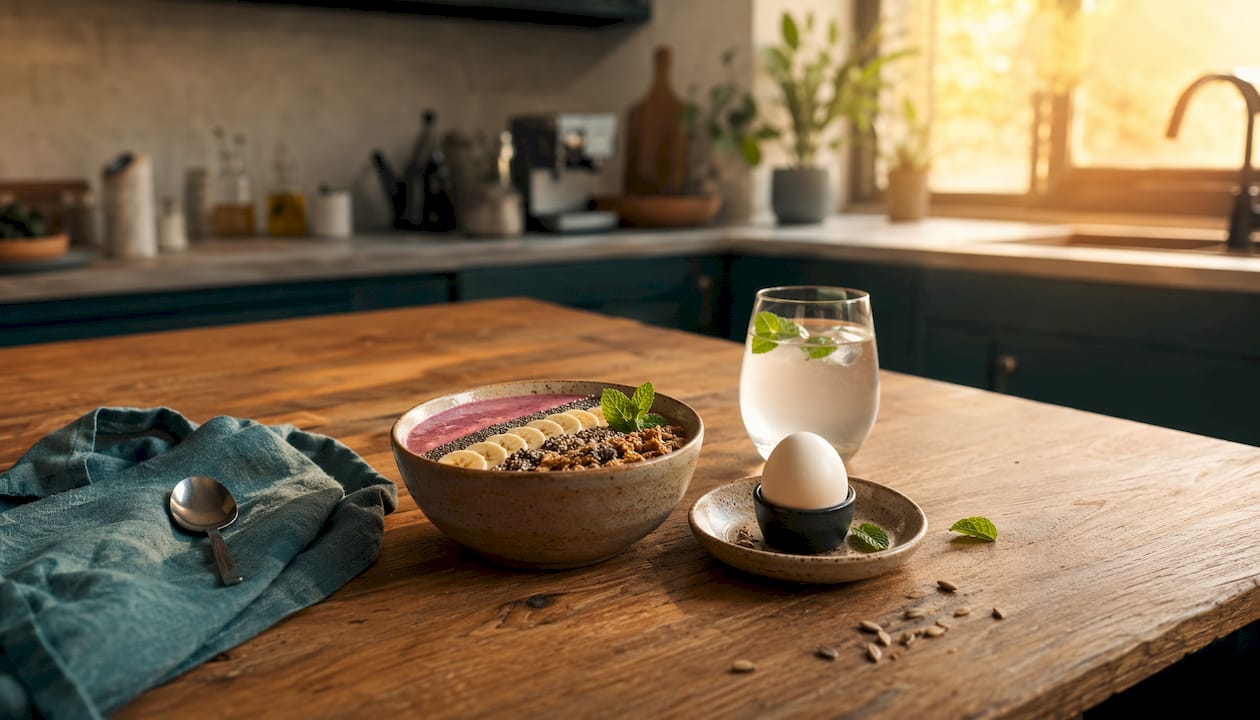
How it works in practice: A meal with modest carbohydrates alongside protein triggers an insulin response that drives competing LNAAs into muscle cells, leaving tryptophan with less competition for brain transport. A very high-protein, low-carb meal does the opposite. This is why a small serving of oats or sweet potato with your eggs is a smarter breakfast than a pure protein shake.
Key foods and nutrients that support serotonin-related pathways:
- Tryptophan sources: eggs, turkey, chicken, canned tuna, pumpkin seeds, tofu, oats, dairy
- Vitamin B6 (needed for tryptophan-to-serotonin conversion): chickpeas, salmon, potatoes, bananas
- Folate: dark leafy greens, lentils, black beans, asparagus
- Vitamin D: fatty fish, fortified dairy, egg yolks (and sunlight)
- Omega-3 fatty acids: salmon, sardines, mackerel, walnuts, flaxseed
- Fermented foods (for gut-brain signaling): yogurt with live cultures, kefir, kimchi, sauerkraut
Key nutrients, food sources, and practical serving examples:
| Nutrient | Role | Food Sources | Practical Serving |
|---|---|---|---|
| Tryptophan | Serotonin precursor | Turkey, eggs, pumpkin seeds, oats | 3 oz turkey + ½ cup oats at breakfast |
| Vitamin B6 | Cofactor for serotonin synthesis | Chickpeas, salmon, banana | ½ cup chickpeas or 1 medium banana daily |
| Folate | Supports methylation and neurotransmitter production | Lentils, spinach, asparagus | 1 cup cooked lentils covers most of daily need |
| Omega-3 (EPA/DHA) | Reduces neuroinflammation | Salmon, sardines, mackerel | 2–3 servings of fatty fish per week |
| Vitamin D | Modulates tryptophan hydroxylase activity | Fatty fish, fortified milk, sunlight | 15–20 min midday sun or supplement if deficient |
| Probiotics | Gut-brain axis support | Yogurt, kefir, kimchi | 1 serving of fermented food daily |
Sample meal pattern: Breakfast — oats with pumpkin seeds and a hard-boiled egg. Lunch — lentil soup with a side salad dressed with olive oil. Dinner — baked salmon with roasted sweet potato and sautéed spinach. Evening snack — plain yogurt with a small handful of walnuts.
How morning light and consistent sleep support your mood
Consistent morning bright-light exposure and stable sleep patterns support the neurotransmitter rhythms that regulate mood. Serotonin and melatonin are linked in the same biochemical chain: serotonin is the daytime precursor to melatonin, and disrupting one disrupts the other. Irregular sleep schedules and insufficient morning light are among the most common, and most overlooked, contributors to low mood.
A practical light and sleep protocol:
- Get outside within 30–60 minutes of waking. Aim for 20–30 minutes of natural light exposure. Overcast sky still delivers far more lux than indoor lighting.
- Use a light therapy box if outdoor morning light isn’t possible. Look for a device rated at 10,000 lux and sit 12–18 inches from it for 20–30 minutes. This is the standard used in seasonal affective disorder (SAD) treatment protocols.
- Set a fixed wake time and hold it on weekends. Circadian consistency matters more than total sleep hours for mood stability.
- Dim overhead lights after 8 PM. Use lamps or warm-toned bulbs in the evening to signal the brain that nighttime is approaching.
- Put screens away or use blue-light blocking glasses 60–90 minutes before bed. Blue-spectrum light suppresses melatonin production and delays sleep onset.
- Keep the bedroom cool and dark. Core body temperature drops during sleep onset; a cooler room supports that process.
If you experience significant seasonal mood changes, persistent sleep disruption, or suspect SAD, a clinician can help you calibrate light therapy timing and intensity. Light boxes are widely available for under $50 and are a reasonable first step for mild seasonal symptoms.
Why your gut matters for mood and how to support it
The gut produces roughly 90–95% of the body’s serotonin, and it communicates with the brain through vagal nerve signaling, immune modulation, and the production of metabolites like short-chain fatty acids and indoles. This gut–brain axis means that what you do for your digestive health has real downstream effects on brain chemistry.
Evidence-backed gut support strategies:
- Dietary fiber first: Feed beneficial gut bacteria with vegetables, legumes, whole grains, and fruit. Fiber fermentation produces short-chain fatty acids that reduce gut inflammation and support the intestinal environment where serotonin-producing cells live.
- Fermented foods daily: Yogurt, kefir, kimchi, and sauerkraut introduce live cultures that support microbiome diversity.
- Probiotic supplements when food isn’t enough: Look for strains with clinical trial data (Lactobacillus and Bifidobacterium species are the most studied). A 30-day trial is a reasonable starting point.
- Limit ultra-processed foods and excess sugar: Both are associated with reduced microbiome diversity and increased gut inflammation.
The strongest evidence for gut–exercise synergy comes from a randomized controlled trial showing that combining probiotics (via yogurt) with regular exercise significantly increased serotonin production in healthy adults, while yogurt alone or exercise alone did not achieve the same effect. That finding is worth taking seriously: neither intervention alone was enough. The combination was.
Microbiome changes also affect mood-relevant metabolites. Indoles, produced when gut bacteria metabolize tryptophan, can modulate the gut–brain axis independently of serotonin itself. Supporting the microbiome isn’t just about serotonin precursors — it’s about the entire signaling environment those precursors operate in.

Stress management and practices that protect your serotonin
Controlling chronic stress is one of the most direct ways to protect serotonin availability. When the body is under sustained stress, systemic inflammation activates an enzyme called IDO1, which diverts tryptophan away from serotonin synthesis and toward the kynurenine pathway instead. Less tryptophan reaches the serotonin-making enzymes, and mood suffers. Reducing inflammation isn’t a soft lifestyle recommendation — it’s a biochemical prerequisite for healthy serotonin production.
A practical daily stress-reduction protocol:
- 10–15 minutes of mindfulness or focused breathing daily. Apps like Insight Timer or Calm work, but a simple 4-7-8 breathing pattern (inhale 4 counts, hold 7, exhale 8) costs nothing and can be done anywhere.
- Progressive muscle relaxation before bed. Tense and release each muscle group from feet to face over 10 minutes. Research consistently links this practice to reduced cortisol and improved sleep quality.
- Weekly massage or bodywork. Massage reduces cortisol and activates the parasympathetic nervous system. Even a 20-minute self-massage or foam rolling session has measurable effects on stress hormones.
- Protect social time. Positive social interaction triggers oxytocin release, which in turn supports serotonin activity. Isolation is a genuine serotonin depressor.
- Schedule leisure activities you actually enjoy. Passive scrolling doesn’t count. Active leisure — cooking, hiking, playing music — engages reward circuits that support neurotransmitter balance.
You can find additional stress reduction strategies that complement these practices without medication.
Pro Tip: Don’t try to measure your serotonin levels to track progress — consumer tests for this aren’t meaningful for brain serotonin. Instead, track sleep quality (hours, how rested you feel) and mood on a simple 1–10 daily scale. Consistent improvement over 4–6 weeks is the signal that matters.
Supplements: what the evidence actually supports and what to watch out for
Some supplements have solid supporting evidence; others are more direct but carry real risks. The distinction matters.
Supplements with supportive evidence (lower direct risk):
- Vitamin D: Deficiency is common in the U.S. and associated with low mood. Typical supplemental doses range from 1,000–2,000 IU daily; confirm deficiency with a blood test before supplementing at higher doses.
- Omega-3 (EPA/DHA): Anti-inflammatory effects support the tryptophan-to-serotonin pathway. A common dose is 1–2 grams of combined EPA/DHA daily from fish oil or algae-based supplements.
- Magnesium: Supports nervous system function and sleep quality. Magnesium glycinate or malate at 200–400 mg before bed is a well-tolerated starting point.
- B vitamins (B6, B9/folate, B12): Cofactors for neurotransmitter synthesis. A quality B-complex covers the bases; individual supplementation should be guided by lab results.
- Probiotics: Clinically studied strains (Lactobacillus rhamnosus, Bifidobacterium longum) have the most evidence for mood-adjacent outcomes. Food-first is preferred; supplements are a reasonable backup.
Supplements with more direct serotonin effects (higher risk):
- 5-HTP (5-hydroxytryptophan): A direct precursor to serotonin, converted in the brain more efficiently than tryptophan. Typical doses range from 50–200 mg daily. Evidence for mood support exists, but the interaction risk with serotonergic medications is significant.
- L-tryptophan: The dietary amino acid in supplement form. Doses of 500–2,000 mg are used in studies. Same interaction warnings apply as with 5-HTP.
Critical safety warning: Combining 5-HTP or L-tryptophan with SSRIs, SNRIs, MAOIs, or other serotonergic drugs can cause serotonin syndrome, a potentially life-threatening condition. Symptoms include agitation, rapid heart rate, high temperature, and muscle rigidity. Never add these supplements to a prescription regimen without explicit clinician approval. This is not a theoretical risk.
For a deeper look at supplement safety and interactions, including how to evaluate product quality, the Snapbrainformula educational library covers this in detail.
Pro Tip: When choosing any supplement, look for products that carry third-party testing verification — NSF International, USP, or Informed Sport certification. These seals mean an independent lab confirmed the product contains what the label says and isn’t contaminated with heavy metals or undisclosed compounds.
How long before you notice a difference? Realistic timelines
Some benefits arrive faster than others. Sleep quality and mood on exercise days can shift within days to a couple of weeks. Durable, consistent mood improvement typically requires 4–12 weeks of sustained practice.
| Intervention | Typical time to noticeable change | What you’re likely to notice first |
|---|---|---|
| Morning light exposure | 3–7 days | Easier waking, slightly better morning energy |
| Aerobic exercise | 1–2 weeks | Better mood on exercise days; improved sleep |
| Sleep hygiene changes | 1–2 weeks | Faster sleep onset, less grogginess |
| Dietary changes | 2–4 weeks | More stable energy, reduced afternoon slumps |
| Fermented foods / probiotics | 4–8 weeks | Improved digestion; mood changes follow |
| Vitamin D supplementation | 6–12 weeks | Gradual mood lift if deficient |
| Omega-3 supplementation | 6–8 weeks | Reduced irritability, improved focus |
| Stress-reduction practices | 2–6 weeks | Lower baseline anxiety, better sleep |
Tracking tips:
- Rate your mood on a 1–10 scale each morning for 30 days. Patterns emerge faster than you’d expect.
- Note sleep hours and quality alongside mood. The two are tightly linked and often move together.
- Reassess at 6 weeks. If you’ve been consistent and see no improvement, that’s a signal to talk to a clinician rather than add more supplements.
What depletes serotonin and common mistakes to avoid
Knowing what lowers serotonin availability is as useful as knowing what raises it.
Major depleters:
- Chronic stress and unmanaged anxiety: Sustained cortisol elevation and neuroinflammation activate IDO1, diverting tryptophan away from serotonin synthesis
- Sleep deprivation: Even one night of poor sleep measurably disrupts neurotransmitter balance and mood the following day
- Heavy or frequent alcohol use: Alcohol temporarily raises serotonin but chronically depletes it; binge drinking is particularly damaging to serotonin-related mood stability
- Ultra-processed, low-fiber diets: Reduce microbiome diversity and gut serotonin-producing cell function
- Social isolation: Reduces the positive social stimuli that support serotonin and oxytocin activity
- Excessive high-intensity exercise without recovery: Overtraining raises cortisol and can suppress mood rather than lift it
Medications and scenarios that require clinician involvement:
- SSRIs and SNRIs: These drugs work by increasing synaptic serotonin activity. Adding serotonergic supplements without medical guidance risks serotonin syndrome.
- MAOIs: The interaction risk with any serotonergic substance is severe. Never combine with 5-HTP, L-tryptophan, or St. John’s Wort without direct clinician supervision.
- Certain pain medications: Tramadol and some opioids have serotonergic activity and carry interaction risks.
- Stimulant medications (e.g., for ADHD): These affect dopamine and norepinephrine systems; the relationship between dopamine and ADHD management and serotonin-supporting supplements warrants clinician review before combining.
- Herbal supplements: St. John’s Wort is a meaningful serotonin reuptake inhibitor and carries the same interaction risks as prescription SSRIs.
Safe medication review checklist: Write down every prescription, OTC medication, and supplement you currently take. Bring that list to your next clinician visit and specifically ask about serotonin interactions before adding anything new.
Why combining interventions outperforms single tactics: the research behind it
The most important finding in recent serotonin-related research isn’t about any single supplement or habit. It’s about synergy. A randomized controlled trial found that combining probiotics with regular exercise produced measurably greater serotonin increases than either intervention alone. Neither yogurt nor exercise alone achieved the same result. That’s a meaningful signal for how to structure a lifestyle plan.
The mechanistic explanation involves the IDO1 enzyme. When chronic stress or systemic inflammation is present, IDO1 activation diverts tryptophan down the kynurenine pathway rather than toward serotonin synthesis. Exercise reduces systemic inflammation. Gut support reduces intestinal inflammation and supports the microbiome’s role in tryptophan metabolism. Together, they address the problem from two angles simultaneously.
Practical takeaways from the research:
- Pair gut-support measures (fermented foods, fiber, probiotics) with regular aerobic exercise rather than treating them as separate interventions
- Prioritize inflammation reduction through stress management, sleep, and diet before adding supplements
- An umbrella review found that the “low serotonin causes depression” model is incomplete; mood improvements from lifestyle changes operate through multiple pathways including BDNF, reduced inflammation, improved sleep, and social engagement, not serotonin alone
Research limitations to keep in mind:
- Most serotonin-related lifestyle trials are small and short-duration
- Circulating serotonin levels don’t directly reflect brain serotonin activity
- Severe mood disorders, suicidal ideation, or significant functional impairment require professional evaluation, not lifestyle optimization alone
When to see a clinician: a short checklist
Lifestyle changes are powerful for mild to moderate mood concerns. They are not a substitute for professional care when symptoms are serious.
Seek medical evaluation when:
- You have thoughts of self-harm or suicide — call or text 988 (Suicide and Crisis Lifeline) immediately
- Mood symptoms are severe enough to interfere with work, relationships, or daily functioning
- You’ve been consistent with lifestyle changes for 6–8 weeks and see no improvement
- You experience rapid mood swings, significant anxiety, or panic attacks
- You want to start 5-HTP, L-tryptophan, or St. John’s Wort while taking any prescription medication
- You suspect a medication you’re currently taking is worsening your mood
How to prepare for a clinician visit:
- Bring a written list of every medication, supplement, and herbal product you take
- Note when symptoms started and any patterns (seasonal, stress-related, sleep-related)
- Describe what you’ve already tried and for how long
- Ask specifically: “Are there any serotonin interactions I should know about with my current medications?”
For guidance on nonpharmacological approaches and when to involve clinicians, the Snapbrainformula resource library covers the evidence clearly.
Key Takeaways
Combining daily aerobic exercise with gut-supporting foods and consistent morning light exposure is the highest-leverage, evidence-backed approach to supporting serotonin-related mood pathways naturally.
| Point | Details |
|---|---|
| Exercise plus gut support | Combining probiotics with regular exercise produced greater serotonin increases than either alone in a randomized trial. |
| Morning light and sleep | 20–30 minutes of morning outdoor light and a fixed wake time support neurotransmitter rhythms that regulate mood. |
| Meal composition matters | Pairing tryptophan-rich foods with modest carbohydrates improves brain tryptophan uptake more than eating high-protein meals alone. |
| Supplement safety | 5-HTP and L-tryptophan carry real serotonin syndrome risk with SSRIs/SNRIs/MAOIs; always consult a clinician before combining. |
| Snapbrainformula supplements | Snapbrainformula offers evidence-informed brain health supplements designed to complement a lifestyle-first plan for mood and focus support. |
The case for starting with lifestyle, not a supplement bottle
The most common mistake people make when they want to support their mood is reaching for a supplement before addressing the environment that determines whether any supplement can work. Chronic stress, poor sleep, a low-fiber diet, and social isolation don’t just make you feel bad — they actively divert tryptophan away from serotonin synthesis at the enzymatic level. No supplement overcomes that upstream problem reliably.
What the research actually supports is a layered approach: reduce inflammation first (through stress management, sleep, and diet), support the gut-brain axis (fermented foods, fiber, exercise), and then consider targeted supplements as a complement, not a foundation. The umbrella review challenging the simple “low serotonin = depression” model is worth sitting with. Mood is not a single-molecule problem, and the lifestyle changes that work do so through multiple pathways simultaneously.
Supplements like vitamin D, omega-3, and quality probiotics fit naturally into this picture when there’s a genuine deficiency or gap. More direct serotonergic supplements like 5-HTP deserve respect for their interaction risks, not dismissal — but they belong at the end of the protocol, not the beginning. The natural mood stabilizer approach that Snapbrainformula’s educational content consistently emphasizes is exactly this: lifestyle first, evidence-informed supplementation second, clinician guidance when the stakes are higher.
Snapbrainformula’s evidence-informed supplements fit into a lifestyle-first plan
Most people who want to support their mood naturally don’t need a complicated supplement stack. They need a solid foundation: consistent movement, morning light, quality sleep, gut-supporting foods, and managed stress. Once that foundation is in place, targeted nutritional support can fill genuine gaps.
Snapbrainformula’s brain health supplements are designed to complement exactly that kind of lifestyle-first approach. Formulated for mood, focus, and emotional balance, they’re built around the same nutrients this article covers — vitamin D, omega-3, B vitamins, and gut-supportive ingredients — in forms that are easy to take consistently. The educational content at Snapbrainformula covers neurotransmitter balance and supplement selection in depth, so you can make informed decisions rather than guessing.
Supplements are not a substitute for medical care. If you take prescription medications that affect serotonin, consult your clinician before adding any serotonergic supplement. For everyone else, explore Snapbrainformula’s supplement line and find the option that fits your specific goals.
Useful sources and further reading
The studies and reviews below form the evidence base for this article. They are starting points for deeper reading; consult a clinician for individualized advice.
- Physiology, Serotonin (StatPearls, NCBI) — Foundational clinical overview of serotonin production, function, and pharmacological interactions
- Effects of barefoot walking in urban forests on CRP, IFNγ, and serotonin levels (PMC) — Controlled trial showing barefoot forest walking raised serotonin and reduced inflammation markers
- Probiotics and exercise combined trial (PMC6189615) — RCT demonstrating synergistic serotonin increases from combining yogurt probiotics with exercise
- Dietary serotonin and blood–brain barrier considerations (PMC2077351) — Explains why dietary serotonin doesn’t raise brain serotonin and how tryptophan transport works
- Antidepressant efficacy of adjunctive aerobic activity in major depression (PLOS ONE) — 4-week RCT showing aerobic exercise as adjunct to sertraline improved outcomes and reduced medication requirements
- Effect of increased daily physical activity on depression biomarkers (JPTS 2018) — 8-week program showing significant increases in BDNF and serum serotonin with increased daily activity
- Serotonin, kynurenine, and indole pathways of tryptophan metabolism (MDPI Nutrients) — Explains IDO1 activation, inflammation-driven tryptophan diversion, and the kynurenine pathway
- Umbrella review challenging the serotonin theory of depression (Nature Mental Health) — Systematic umbrella review finding weak evidence for the simple “low serotonin causes depression” model
- Effects of physical exercise on circulating serotonin levels: systematic review and meta-analysis (PMC) — Most recent meta-analysis finding no statistically significant effect of exercise on circulating serotonin, with important caveats on heterogeneity and peripheral vs. central measurement
- Serotonin: The natural mood booster (Harvard Health) — Accessible Harvard Health overview of serotonin’s role in mood and practical lifestyle strategies
These sources are provided for educational purposes. They do not constitute medical advice, and findings should be interpreted in the context of your individual health situation with guidance from a qualified clinician.
Recommended
- All You Need to Know About Serotonin and Its Role in Brain Health – SNAP Brain Health Supplements
- Mastering Your Mood: Techniques to Enhance Emotional Well-Being – SNAP Brain Health Supplements
- Natural Mood Stabilizer – SNAP Brain Health Supplements
- The Ultimate Guide to Balancing Your Mood Naturally – SNAP Brain Health Supplements
