
Dopamine drives motivation and the push to start a task, while serotonin governs mood stability, sleep, and body signals like appetite and digestion. Neither works alone. They’re both neuromodulators, chemical messengers that adjust how brain circuits fire, and they constantly influence each other in systems tied to focus, emotional regulation, and daily behavior. Understanding the difference helps explain everything from why a child stalls on homework to why stress wrecks sleep.
TL;DR:
- Dopamine is primarily involved in motivation and task initiation, not just reward, making low levels feel like difficulty starting or paralysis rather than sadness.
- Over 90% of body serotonin resides in the gut, influencing digestion, sleep, and mood stability, highlighting the importance of diet and routines for overall emotional health.
- Dopamine and serotonin interact directly, often counterbalancing each other, with dopamine promoting action and serotonin maintaining internal calm during task performance.
- Conditions like ADHD, Parkinson’s, depression, and anxiety link to imbalances in these systems, but symptoms are not reliable indicators without professional evaluation.
- Supporting habits like consistent sleep, regular movement, outdoor light, and stress management help maintain healthy dopamine and serotonin function naturally.
Table of Contents
- Dopamine and Serotonin: Why “Reward Chemical” Undersells Dopamine
- Serotonin’s Job Goes Far Beyond “Happiness”
- Dopamine vs Serotonin: Where They Split and Where They Overlap
- How Dopamine and Serotonin Work Together in the Brain
- Signs Linked to Dopamine and Serotonin Imbalances
- Everyday Habits That Support Dopamine and Serotonin Function
- How the Brain Builds and Clears Dopamine and Serotonin
- Why Receptor Subtypes Change the Story
- How Medications and Substances Change These Systems
- Genetics and Why Everyone’s Baseline Differs
- A Parent’s Perspective on Chasing Chemical Fixes
- Nutritional Support From Snapbrainformula
- Sources
- FAQ
Dopamine and Serotonin: Why “Reward Chemical” Undersells Dopamine
Dopamine is the neurotransmitter behind motivation, reward processing, attention, learning, and movement. Calling it just the “reward chemical” misses the bigger story: dopamine’s real job is pushing you toward action before any reward shows up.
The distinction between reward and motivation matters more than most explanations admit. Reward is the payoff after you finish something. Motivation is what gets you off the couch in the first place, and that’s where dopamine does its heaviest lifting. Research on effort-based decision making shows dopamine directly modulates cost-benefit decisions, essentially weighing whether a task is worth the energy it demands.
That’s why a low-dopamine afternoon doesn’t feel like sadness. It feels like paralysis in front of an easy task.
Dopamine shows up in ordinary moments like these:
- A teenager staring at a math worksheet, fully capable but unable to start
- An adult who reads the same work email five times without replying
- A runner who has to talk themselves into the first quarter mile before momentum kicks in
- A toddler repeating a new word over and over because getting it right feels good
Pro Tip: If a child seems “unmotivated” rather than “lazy,” the distinction matters. Motivation problems often point toward attention and task-initiation systems, not willpower.
This reframing matters because experts increasingly caution against treating dopamine purely as a reward signal and instead emphasize its role in getting behavior started at all. For families dealing with focus struggles, that’s often the more useful lens. For more on how this system supports cognitive performance, see dopamine’s role in cognitive function and mood.
Serotonin’s Job Goes Far Beyond “Happiness”
Serotonin regulates mood, but it also governs sleep, appetite, digestion, and emotional steadiness throughout the body, not just the brain. The “happiness chemical” label is a rounding error that ignores where most of it actually lives.
Roughly 90 to 95 percent of the body’s serotonin sits in the gut, not the brain. That single fact explains a pattern many parents notice without naming it: digestive complaints and mood dips tend to travel together. A child with a sensitive stomach on a stressful school week isn’t coincidentally cranky. The same signaling system runs both.
Everyday signs of serotonin’s reach:
- Sleep quality shifting when routines get disrupted
- Appetite changes during stressful stretches (eating more, or losing interest in food entirely)
- Emotional steadiness fraying after a few nights of poor sleep
- Digestive discomfort showing up alongside anxious or low moods
Serotonin’s role as a broad regulatory signal, rather than a single “mood switch,” is well documented in reviews of its neuromodulatory functions across development. The gut-brain overlap is also why integrated approaches, looking at diet, sleep, and stress together, tend to make more sense than treating mood as an isolated issue. Readers wanting a deeper look can check serotonin’s role in brain health.
Dopamine vs Serotonin: Where They Split and Where They Overlap
The cleanest way to separate these two systems: dopamine drives you toward something, serotonin keeps your internal state steady while you do it.
- Function. Dopamine governs motivation, reward anticipation, attention, and movement initiation. Serotonin governs mood regulation, sleep-wake timing, appetite, and emotional stability.
- Signal pattern. Dopamine often fires in short, situation-specific bursts tied to anticipated outcomes. Serotonin tends to operate more as a steady background tone that shifts more gradually.
- Location bias. Dopamine acts mostly within specific brain circuits tied to movement and reward. Serotonin has a massive presence outside the brain, concentrated in the gut.
- Shared ground. Both are neuromodulators. Both influence mood and behavior. Both get disrupted by poor sleep, chronic stress, and irregular routines.
The myths worth retiring: dopamine isn’t purely pleasure, and serotonin isn’t purely happiness. A more accurate shorthand is dopamine equals drive, serotonin equals stability. For parents trying to figure out which system might be involved in a child’s struggle, the practical question isn’t “is my kid happy?” It’s “can they start things, and can they stay regulated once they do?” Those are two different questions with two different chemical stories behind them.
How Dopamine and Serotonin Work Together in the Brain
These systems don’t operate on separate tracks. They interact directly, sometimes pulling in opposite directions on purpose.
Recordings from reward-processing regions like the nucleus accumbens show dopamine activity rising while serotonin activity drops during certain reward-related moments, an opponent-like pattern that shapes learning. Rather than working as a simple team, the two systems seem to counterbalance each other so the brain can weigh both the pull toward a reward and the need for restraint.
Receptor subtypes add another layer. Some serotonin receptors, like 5-HT2C, appear to inhibit dopamine release, while other subtypes facilitate it. That receptor-level nuance is part of why some medications that target serotonin also produce noticeable effects on motivation and focus.
Newer tools like optogenetics and fiber photometry, which let researchers track and manipulate specific circuits in real time, have shown that dopamine’s effects vary by circuit and timescale far more than older models suggested. The Harvard Brain Science Initiative notes this interaction is still an active area of study, not a settled diagram.
The old picture treated dopamine and serotonin like two separate dials. The current picture looks more like a single mixing board, where turning one knob quietly shifts several others.
Pro Tip: If a treatment approach only targets one neurotransmitter, ask how it might affect the other. The two rarely move independently.
Signs Linked to Dopamine and Serotonin Imbalances
Certain conditions show consistent links to dysfunction in one or both systems, though the relationship is rarely simple cause and effect.
Dopamine-related conditions include Parkinson’s disease, where dopamine-producing neurons progressively decline, and motivation-related symptoms seen in ADHD, where attention and task-initiation circuits function differently. Serotonin-related conditions include depression, anxiety, and disrupted sleep or appetite patterns. Broader review evidence connects altered dopamine and serotonin signaling to a wide range of psychiatric and movement disorders.
Subjective signs sometimes associated with low dopamine:
- Trouble starting tasks despite understanding their importance
- Low interest in previously enjoyable activities
- Sluggish movement or reduced physical initiative
Subjective signs sometimes associated with low serotonin:
- Persistent low mood or irritability
- Disrupted sleep patterns
- Noticeable appetite changes
These signs overlap heavily with normal stress, poor sleep, and life circumstances, so none of them confirm a specific chemical shortfall on their own. Simple blood tests can’t reliably measure “brain levels” of either neurotransmitter, because blood concentrations don’t map cleanly onto brain activity. A clinical evaluation, not a lab number, is what actually clarifies what’s going on.
Everyday Habits That Support Dopamine and Serotonin Function
Nothing here promises to raise neurotransmitter levels. These are supportive habits with a reasonable evidence base behind them, not chemical fixes.
- Keep a consistent sleep schedule. Irregular sleep disrupts both systems; a steady wake time matters more than total hours alone.
- Eat protein-containing meals regularly. Amino acids from protein are the raw materials neurotransmitter synthesis depends on.
- Move your body daily. Even a short walk supports both motivation circuits and mood regulation.
- Get outside during the day. Daylight exposure helps anchor circadian rhythm, which influences both sleep and mood.
- Build in stress-management routines. Brief, repeated stress relief (breathing breaks, short walks) tends to help more than occasional big efforts.
Pro Tip: For task-initiation struggles specifically, breaking a task into a two-minute starting step (open the laptop, write one sentence) works with dopamine’s role in getting behavior moving, rather than fighting it. For more on task freezing, this guide on ADHD task paralysis offers practical starting strategies. See also tips for supporting dopamine and serotonin naturally.
How the Brain Builds and Clears Dopamine and Serotonin
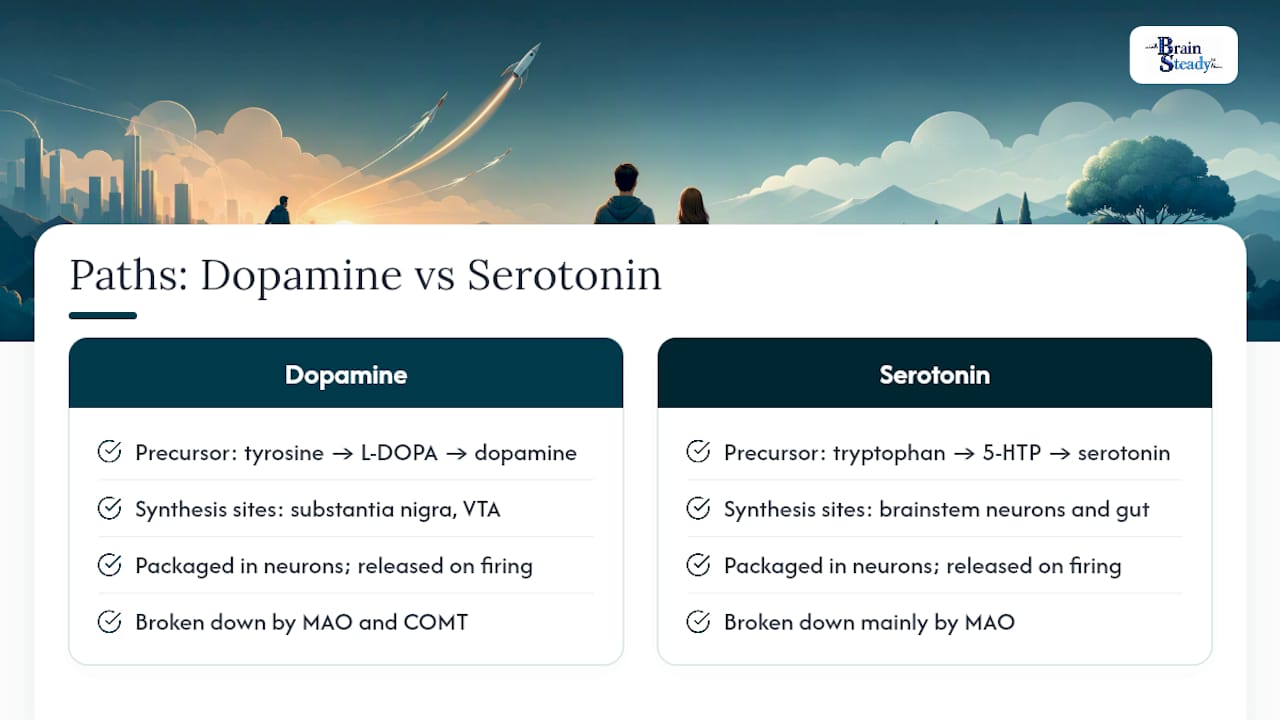
Both neurotransmitters start as ordinary dietary building blocks before enzymes convert them step by step into active brain chemicals.
Dopamine synthesis begins with the amino acid tyrosine, which an enzyme converts into L-DOPA, then into dopamine itself. This happens inside neurons in specific brain regions, including the substantia nigra and ventral tegmental area, where dopamine gets packaged and released when a neuron fires. Afterward, enzymes called MAO and COMT break dopamine down, and transporter proteins pull leftover dopamine back into the neuron for reuse, a process called reuptake.
Serotonin follows a similar arc, starting from the amino acid tryptophan, which gets converted first to 5-HTP and then to serotonin through a different set of enzymes. This synthesis happens both in brainstem neurons and extensively in gut cells, which lines up with why so much of the body’s serotonin supply sits outside the brain entirely. Once released, serotonin gets broken down primarily by MAO and cleared through reuptake transporters, similar in concept to dopamine’s cleanup process.
This synthesis-and-breakdown cycle matters practically because it’s the target point for most psychiatric medications. Drugs that block reuptake, or slow the breakdown enzymes, change how long these chemicals linger in the spaces between neurons, which is the entire mechanism behind several major medication classes.
Why Receptor Subtypes Change the Story
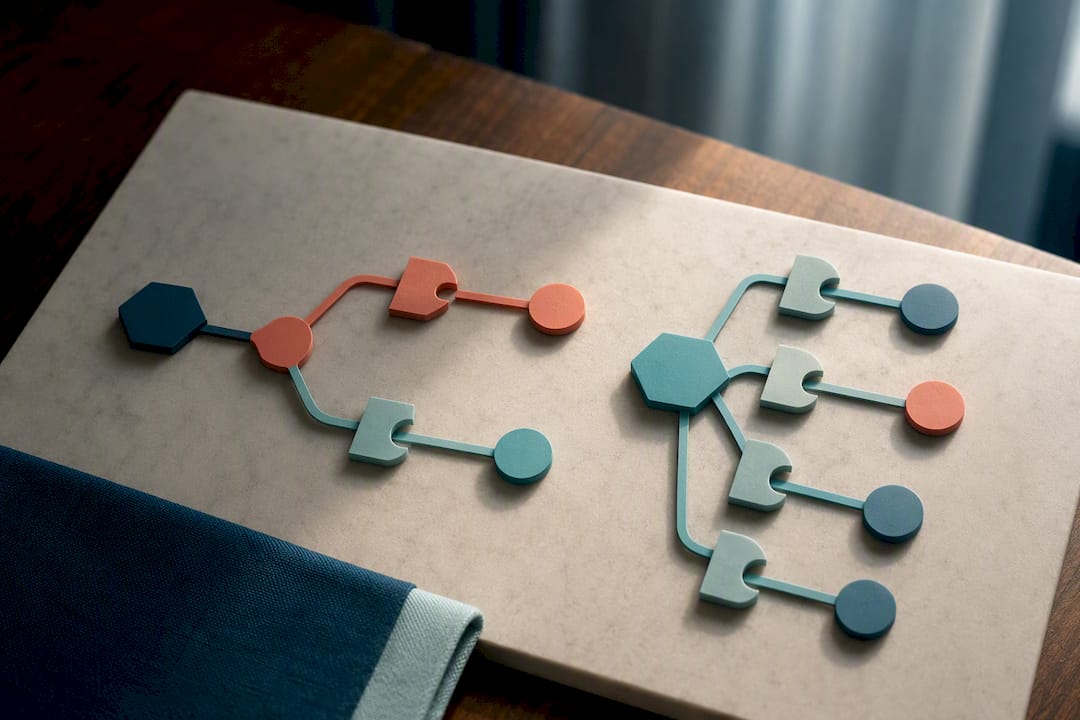
Dopamine and serotonin don’t act on a single receptor each. They act on families of receptor subtypes, and which subtype gets activated changes the outcome significantly.
Dopamine has five known receptor subtypes, grouped into two families: D1-like receptors, which generally excite the neurons they connect to, and D2-like receptors, which generally inhibit them. That balance between excitation and inhibition is part of what allows dopamine to fine-tune movement and motivation rather than simply turning behavior on or off.
Serotonin’s receptor family is far larger, with at least fourteen known subtypes grouped into seven classes. Some of these, like 5-HT2C receptors, appear to inhibit dopamine release in specific pathways, while other serotonin receptor subtypes facilitate it. This receptor-level detail explains a pattern that used to confuse researchers: how one neurotransmitter can produce opposite effects depending on which cells and receptors it reaches.
This nuance carries real clinical weight. It’s part of why medications aimed at serotonin can produce noticeable shifts in motivation or focus as a side effect, and why “boosting serotonin” or “boosting dopamine” is a far less precise idea than it sounds. The receptor a chemical binds to, not just the chemical itself, often determines what actually happens next.
How Medications and Substances Change These Systems
Several major medication classes work specifically by changing how long dopamine or serotonin linger in the spaces between neurons.
SSRIs, a common class of antidepressants, block the reuptake transporter that normally clears serotonin, leaving more of it active in the synapse for longer. Stimulant medications used for ADHD, by contrast, primarily target dopamine and norepinephrine reuptake, which is part of why they can support attention and task initiation. Because these systems interact, a medication aimed mainly at serotonin can still produce dopamine-related side effects, and vice versa, which is exactly the kind of cross-system effect the receptor nuance above helps explain.
Recreational substances complicate this picture further. Stimulant drugs cause a rapid surge in dopamine release far beyond what natural rewards produce, which is central to their addictive potential. Alcohol and other substances interact with both systems in ways that shift with dose and duration of use, sometimes boosting mood short-term while disrupting baseline regulation over time.
None of this is a case for self-diagnosis or adjusting medication without guidance. Anyone currently taking medication that affects dopamine or serotonin, or considering starting one, should work with a prescribing clinician rather than interpreting these mechanisms as a personal chemistry experiment. The interactions are real, but they’re also circuit-specific and dose-dependent in ways that a general explainer can’t resolve for an individual case.
Genetics and Why Everyone’s Baseline Differs
No two people run identical dopamine or serotonin systems. Genetic variation shapes how much of each neurotransmitter gets made, how quickly it’s cleared, and how sensitive receptors are to begin with.
Variations in genes coding for dopamine receptors, transporters, and the enzymes that break dopamine down are linked to differences in attention, impulse control, and reward sensitivity across individuals. Similar genetic variation affects the serotonin transporter gene, influencing how efficiently serotonin gets recycled after release. These differences don’t determine outcomes on their own, but they help explain why two people facing identical stress or sleep disruption can respond in noticeably different ways.
This is one reason blanket advice rarely fits everyone equally well. A sleep or nutrition habit that meaningfully shifts one person’s focus might do far less for someone whose baseline receptor sensitivity runs differently. It’s also why family patterns in attention differences, mood tendencies, or stress reactivity often show up across generations, not because of shared circumstances alone, but because of shared genetic architecture underneath the chemistry.
A Parent’s Perspective on Chasing Chemical Fixes
The instinct to find the one lever, the single supplement or habit that “fixes” focus or mood, is understandable and usually wrong. Dopamine and serotonin operate inside a system of sleep, stress, routine, and genetics, not as switches you flip in isolation. What tends to work better is smaller and less dramatic: consistent routines, small daily wins, gradual adjustments you can actually sustain. When concerns feel serious or persistent, a clinician’s evaluation matters more than any single intervention. Snapbrainformula’s educational mission is to help families understand this system clearly, not to promise a shortcut around it.
— Ellory
Nutritional Support From Snapbrainformula
The approach is straightforward: provide nutritional support intended to complement habits that support mood, focus, and emotional balance, not as medication or treatment for any diagnosed condition.

Both formulas are non-stimulant and designed to fit into an everyday routine alongside the habits covered above: consistent sleep, regular movement, and daylight exposure. The BrainSteady capsules start at $74.95 for those who prefer a straightforward daily routine, while the liquid formula starts at $34.95 for households wanting a flexible dosing option, particularly useful for younger children or anyone who has trouble with capsules.
If you’re currently taking medication that affects dopamine or serotonin, or managing a diagnosed condition, talk with your clinician before adding any new supplement to your routine. Snapbrainformula supports the system. It doesn’t replace the professional evaluating it.
Sources
- The Neurobiology of Activational Aspects of Motivation: Exertion of Effort, Effort-Based Decision Making, and the Role of Dopamine
- Dopamine and serotonin work in opposition to shape learning (Stanford neuroscience news)
This article is general information, not a substitute for advice from a qualified doctor. Consult a qualified healthcare professional about your own circumstances before acting on anything here.
FAQ
How Do I Know if I Need More Dopamine or Serotonin?
There’s no reliable blood test that measures brain-level dopamine or serotonin, so “needing more” isn’t something you can confirm at home. If you notice persistent trouble starting tasks, low motivation, disrupted sleep, or mood changes lasting more than a couple of weeks, a clinician can evaluate the fuller picture rather than guessing from symptoms alone.
What Are the Four Happy Hormones?
The four chemicals commonly grouped under this label are dopamine, serotonin, oxytocin, and endorphins, though “happy hormones” oversimplifies what each one actually does. Dopamine drives motivation and reward anticipation, serotonin stabilizes mood and regulates sleep and appetite, oxytocin supports bonding, and endorphins reduce pain perception.
What Are the Signs of Low Dopamine?
Commonly reported signs include trouble starting tasks, reduced interest in previously enjoyable activities, and low physical initiative. These signs overlap with stress, poor sleep, and other conditions, so they point toward a conversation with a clinician rather than a self-diagnosis.
What Makes You Happier, Serotonin or Dopamine?
Neither works alone to produce happiness. Dopamine generates the drive and anticipation behind pursuing something rewarding, while serotonin maintains the steady mood baseline that makes emotional highs and lows feel manageable, and research shows they often move in opposite directions during reward processing rather than simply adding together.
Can Supplements Raise Dopamine or Serotonin Levels?
No supplement, including Snapbrainformula’s formulas, is designed or marketed to directly raise neurotransmitter levels. Products like BrainSteady capsules are positioned as nutritional support for overall brain health, meant to complement habits like sleep and nutrition, not to replace medical treatment for a diagnosed condition.
