
A sensory disorder, more accurately called sensory processing difficulties, means the brain has trouble receiving and organizing information from sound, touch, sight, movement, taste, or smell, often reacting too strongly or too weakly. It shows up in children and adults, and it can exist on its own or alongside autism or ADHD. If it’s disrupting school, sleep, meals, or daily routines, start with practical sensory supports at home and ask your pediatrician about an occupational therapy evaluation.
TL;DR:
- Sensory processing difficulties often involve over- or under-reactivity to sensory input and do not have standalone diagnostic status in major mental health classifications.
- Functional needs, such as noise breaks or feeding support, drive therapy referrals and accommodations more than labels like SPD.
- Common sensory profiles include over-responsivity, under-responsivity, seeking behavior, discrimination difficulty, and motor planning challenges, varying by sense and situation.
- Sensory sensitivities tend to shift with age, being more prominent in toddlers and surfacing as academic or social challenges in older children and adults.
- Occupational therapy and personalized sensory diets are the most evidence-supported supports, while treatments like sensory integration therapy have limited proven efficacy.
Table of Contents
- What Does “Sensory Disorder” Actually Mean?
- What Are the Main Types of Sensory Processing Differences?
- How Do Sensory Challenges Change From Toddlerhood to Adulthood?
- What Causes Sensory Processing Difficulties?
- How Is a Sensory Processing Disorder Diagnosed?
- What Sensory Supports Actually Help at Home and School?
- What Therapies and Treatments Are Available?
- When Should You Get a Professional Evaluation?
- How Snapbrainformula Supports Families Navigating Sensory Challenges
- A Note to Parents Still Figuring This Out
- Supporting Brain Health Alongside Sensory Strategies
- Where to Learn More
- Sources
- FAQ
What Does “Sensory Disorder” Actually Mean?
The term “sensory disorder” gets used loosely, and that causes real confusion for families trying to figure out what’s happening with their child. Here’s the clearer picture: sensory processing disorder (SPD) is the label most people search for, but it isn’t a standalone diagnosis in the DSM-5 or ICD-11. Clinicians and occupational therapists increasingly prefer “sensory processing difficulties,” a phrase that shifts focus away from a fixed label and toward what a child or adult actually needs to function better day to day.
This distinction isn’t just semantics. It changes what happens next for your family.
The Cleveland Clinic describes sensory processing disorder as a condition where the brain has trouble receiving and responding to information that comes in through the senses, and it lists occupational therapy as the primary path to managing symptoms. Meanwhile, Scientific American has covered the ongoing debate among researchers about whether SPD should stand alone as a diagnosis at all, even while brain imaging and EEG studies support that these sensory differences have a real biological basis.
Occupational therapy guidance tends to sidestep the labeling debate entirely and focus on person-centered goals instead of chasing a diagnostic code, according to guidance from occupational therapy practitioners. That approach matters because services in most places attach to function, not to a name.
Here’s how the terminology plays out in real situations:
- A school might not create a formal accommodation plan around “sensory processing disorder” alone, but will act on documented functional needs like needing noise breaks during fire drills.
- A pediatrician may hesitate to write “SPD” on a referral form, but will readily refer to occupational therapy for “sensory difficulties affecting feeding and dressing.”
- Insurance coverage often depends on a functional diagnosis (like a feeding disorder or a coexisting condition) rather than SPD by itself.
Whatever term you use at home, describe what your child struggles with in concrete terms. That’s what gets you services.
What Are the Main Types of Sensory Processing Differences?
Sensory differences don’t look the same in every child, which is exactly why so many parents feel confused when they compare notes with other families. Some kids seek out sensation; others avoid it entirely. Most show a mix depending on the sense involved and the day.
Occupational therapists generally sort these patterns into a few recognizable buckets:
- Sensory over-responsivity. The brain registers ordinary input as too intense. A child covers their ears at the school bell, refuses tags on shirts, or gags at the smell of certain foods.
- Sensory under-responsivity. The brain registers input as weaker than it is. A child might not notice a scraped knee, seem unaware when their name is called, or fail to register they’re cold.
- Sensory seeking. The brain craves more input than usual. Think constant fidgeting, crashing into furniture on purpose, or spinning until other kids get dizzy just watching.
- Sensory discrimination difficulty. The brain has trouble telling sensations apart. This can show up as trouble locating where a touch happened or confusing similar sounds in a noisy classroom.
- Postural and motor planning difficulty (dyspraxia). The body struggles to plan and sequence movement. Frequent collisions, clumsy handwriting, and difficulty learning new physical tasks all fall here.
Breaking it down by sense makes the patterns easier to spot in daily life:
- Touch (tactile): avoiding messy play, or the opposite, seeking out mud and finger paint constantly.
- Sound (auditory): covering ears during assemblies, or auditory processing disorder symptoms like appearing not to hear directions in a loud room.
- Sight (visual): squinting under fluorescent lights, or staring intently at spinning fans and ceiling fans.
- Taste and smell: picky eating limited to a handful of textures, or seeking out strong flavors like hot sauce.
- Vestibular (movement and balance): fear of swings and escalators, or endless swinging and spinning without getting dizzy.
- Proprioception (body awareness): frequent crashing into walls, or calming down noticeably after heavy physical work like carrying groceries.
Pro Tip: Keep a simple notebook for two weeks and jot down what triggers a meltdown or a seeking behavior, along with the time of day and setting. Patterns that feel random in the moment often turn out to repeat once you see them on paper.
Context matters more than people expect. A child who seems fine with loud noise at home may fall apart in a crowded gym, and the same child’s tolerance often shifts with fatigue, illness, or growth spurts.
How Do Sensory Challenges Change From Toddlerhood to Adulthood?
Sensory sensitivity in children often looks different depending on age, and knowing what’s typical for a stage helps you tell normal variation from something worth flagging.
Toddlers frequently show sensory differences through feeding refusals, unusual sleep patterns, or an exaggerated startle response to sudden sounds. A toddler who screams during nail trims or hates having hair washed isn’t necessarily headed for a diagnosis, but persistent, intense reactions across multiple settings are worth mentioning at a well-child visit.
School-age children run into sensory demands that toddlers never faced: sitting still at a desk, tolerating cafeteria noise, managing gym class textures like mats and equipment. This is often when sensory overload symptoms first interfere with academics, not because the sensitivity is new, but because the environment now demands more filtering.
Teens and adults deal with sensory challenges in workplaces, public transportation, and social gatherings. An adult who avoids concerts, dreads open-plan offices, or gets exhausted after a day of fluorescent lighting may have lived with unaddressed sensory differences for decades.
- Toddler adjustment: warm-up routines before haircuts, weighted blankets at nap time.
- School-age adjustment: a quiet corner for early finishers, noise-reducing headphones during assemblies.
- Teen and adult adjustment: noise-canceling earbuds on commutes, choosing aisle seats near exits at events.
Developmentally normal variation tends to be mild and situational. Concern grows when reactions are intense, happen across multiple environments, and interfere with eating, sleeping, learning, or relationships.
What Causes Sensory Processing Difficulties?
There’s no single known cause of sensory processing difficulties, and that’s genuinely frustrating for parents who want a clear answer. Genetics and differences in brain development likely play a role, though researchers haven’t pinned down one specific mechanism that explains every case.
What the research does show clearly is overlap. Sensory differences show up frequently alongside autism and ADHD, and some studies place the co-occurrence with autism especially high, while sensory atypicalities also appear commonly in children with ADHD, though the exact prevalence figures vary across studies.
A narrative review on neurobiological convergence found that sensory profiles look remarkably similar across autism and ADHD diagnostic groups, pointing to shared neural mechanisms rather than separate, unrelated conditions.
This overlap has practical consequences for how you interpret your child’s behavior:
- Sensory differences frequently appear as one piece of a larger picture rather than a condition that stands entirely alone.
- The same sensory profile, like intense sound sensitivity, can show up in a child with autism, a child with ADHD, and a child with neither diagnosis.
- Because the phenotypes overlap so much, transdiagnostic research suggests interventions targeting a specific sensory domain, like auditory filtering, may help more than chasing a diagnostic category.
Sensory symptoms alone don’t confirm autism or ADHD, and they don’t rule them out either. A child who covers their ears at loud noises might have autism, might have ADHD, might have anxiety, or might simply have a sensitive auditory system and nothing else going on. This is exactly why an evaluation looks at the whole child rather than one behavior in isolation. Related reading on this overlap covers ADHD and sensory processing in more depth.
How Is a Sensory Processing Disorder Diagnosed?
No single professional owns this evaluation. Pediatricians typically make the first referral after ruling out hearing or vision problems, then occupational therapists take the lead on functional assessment, sometimes alongside psychologists when autism or ADHD is also being considered. School-based teams often contribute observations from the classroom, which matters because sensory difficulties frequently look different at school than they do at home.
The most widely used tool in this process is the Sensory Profile-2, a caregiver and teacher questionnaire that maps how a child responds across sensory categories compared to same-age peers. It doesn’t diagnose anything by itself. Instead, it gives clinicians a structured picture to combine with direct observation and, often, standardized task-based measures. Research on assessment approaches emphasizes that functional goal-setting with families produces better real-world outcomes than relying on checklist scores alone.
What you’ll typically walk away with after an evaluation:
- A written sensory profile describing specific patterns (for example, auditory over-responsivity paired with vestibular seeking).
- A short list of functional goals tied to daily life, like tolerating tooth brushing or sitting through a full meal.
- Concrete home and school recommendations, from seating changes to sensory breaks.
- Referrals to other specialists if the evaluation raises questions about autism, ADHD, or anxiety.
Ask directly whether the evaluating clinician uses the Sensory Profile-2 or a comparable tool. It gives you a benchmark to track progress against over time.
What Sensory Supports Actually Help at Home and School?
A sensory diet is the term occupational therapists use for a personalized, scheduled sequence of sensory activities, things like movement breaks, heavy work, or tactile play, built into the day rather than offered only during a crisis. Research on this approach notes that small, consistent trials paired with tracking help families figure out which strategies genuinely change behavior versus which ones just feel like they should work.
Strategies worth trying at home:
- Build a predictable morning and bedtime routine with the same order of steps every day.
- Offer a five-minute movement break, like jumping on a mini trampoline, before homework or meals.
- Introduce a weighted lap pad or blanket during quiet activities and watch whether it actually calms or distracts.
- Let a picky eater explore new food textures through play (touching, smelling) before ever expecting them to taste it.
- Create a designated quiet corner with dim lighting and soft seating for decompressing after school.
- Use noise-reducing headphones for loud environments like grocery stores or family gatherings.
- Give warnings before transitions, “five more minutes,” instead of abrupt stops.
Classrooms can layer in their own supports without much disruption: noise-reducing headphones during independent work, a seating spot away from doorways and high-traffic areas, and scheduled movement breaks built into the daily schedule rather than left to a teacher’s discretion in the moment.
Introduce new sensory tools one at a time, not all at once, so you can actually tell what’s helping. A simple tracking sheet, just noting the strategy, the day, and whether it helped a little or a lot, turns guesswork into real data you can bring to an occupational therapist.
Pro Tip: When a strategy doesn’t work right away, give it a real trial of one to two weeks before dropping it. Some sensory strategies, like weighted blankets, take repeated exposure before a child’s nervous system responds consistently.
Pro Tip: Caregiver burnout is common with sensory-sensitive kids, and it’s not a sign you’re doing something wrong. Build in your own recovery time, even ten quiet minutes, and loop in a partner or family member to share the sensory-support workload. For more on managing daily demands, this guide on supporting daily living offers useful caregiver-focused framing.
What Therapies and Treatments Are Available?
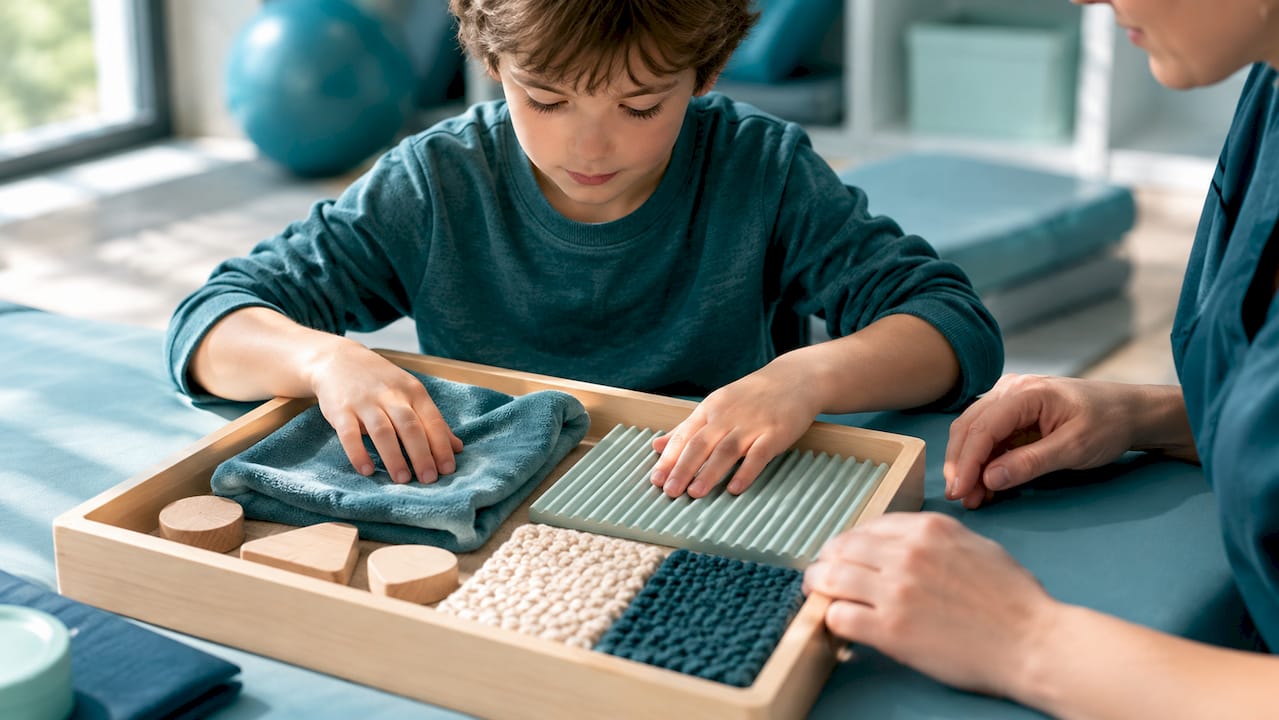
Occupational therapy is the most established support for sensory processing difficulties, and sessions typically involve structured play designed to challenge a specific sensory system, swinging to address vestibular under-responsivity, or textured play to build tolerance for tactile input, while therapists track functional goals like independent dressing or classroom participation.
The evidence base is genuinely mixed, and it’s worth saying that plainly rather than overselling it. A balanced evidence review notes that sensory integration therapy may help some children function better, but research quality varies significantly across studies, and no treatment has been shown to “cure” sensory processing differences. The realistic goal is improved participation in daily life, not elimination of sensitivity.
Complementary supports often round out a care plan:
- Behavioral strategies for managing meltdowns tied to sensory overload.
- Therapy for co-occurring anxiety, which frequently intensifies sensory reactions; some families explore options like hypnotherapy research for anxiety alongside standard approaches.
- Medication, when prescribed, typically targets a diagnosed co-occurring condition like ADHD or anxiety, not sensory processing itself.
Sensory integration therapy works best as one piece of a broader plan, not a stand-alone fix.
When Should You Get a Professional Evaluation?
Seek an evaluation when sensory reactions consistently disrupt eating, sleeping, school performance, or safety, not just when a behavior feels unusual on one bad day. A child who occasionally hates a scratchy sweater is different from one who cannot tolerate any clothing texture without daily distress.
Red flags that warrant a referral:
- Meltdowns or shutdowns that happen across multiple settings, not just one.
- Safety risks, like a child who doesn’t register pain or who bolts toward danger when overstimulated.
- School performance or friendships suffering because of sensory reactions.
Before your appointment, prepare a short behavior log noting triggers, timing, and intensity, gather any videos of a typical reaction, collect notes from teachers, and write down two or three specific questions for the clinician. After the evaluation, expect next steps like an occupational therapy referral, a school accommodation plan, or a follow-up appointment to reassess in a few months.
How Snapbrainformula Supports Families Navigating Sensory Challenges
Nutritional support and educational resources can help families navigating ADHD, autism, anxiety, and related brain health topics. These are offered as supplements alongside professional clinical guidance, not as treatments or medications. This article draws on peer-reviewed research and clinical resources, including the Sensory Profile-2 assessment framework and occupational therapy best practice, to give families an accurate starting point.
The author, Ellory, covers brain health and neurodevelopmental topics for Snapbrainformula’s autism support resource hub, synthesizing current research into practical guidance for parents and caregivers.
Nutritional support can sit alongside occupational therapy and clinical care as one small piece of a broader plan, never as a replacement for professional evaluation or treatment.
A Note to Parents Still Figuring This Out
If you’re exhausted from decoding meltdowns, decoding food refusals, decoding why loud rooms wreck your kid’s whole afternoon, that exhaustion is real and it doesn’t mean you’re missing something obvious. Most families get here through trial and error, not a manual.
Small experiments matter more than perfect diagnoses. Try one strategy for two weeks. Track it honestly. If daily life is still hard, get an occupational therapy evaluation and let a professional help you build from there. Kids and adults with sensory differences generally do better with structure and support, not with a cure, and that’s a genuinely hopeful place to land.
— Ellory
Supporting Brain Health Alongside Sensory Strategies
Nutrition is one piece families often ask about once occupational therapy and daily routines are already in place. Snapbrainformula makes two evidence-informed options for families exploring nutritional support for mood, focus, and emotional balance: SNAP BrainSteady™ Capsules, priced from $74.95, and the BrainSteady™ Liquid Formula, priced from $34.95, for households that prefer a liquid option for younger children or picky swallowers.

Neither product treats sensory processing difficulties, autism, or ADHD, and neither replaces occupational therapy, clinical evaluation, or medication when a doctor prescribes one. They’re formulated as non-stimulant nutritional support meant to sit alongside the strategies covered in this guide, not instead of them. If you’re curious whether nutritional support fits your family’s plan, talk with your child’s pediatrician or clinician first, then browse the capsule and liquid formula pages to see which delivery format makes sense for your household.
Where to Learn More
For deeper reading beyond this guide, the Cleveland Clinic’s clinical overview covers symptoms and treatment basics. The peer-reviewed review in PMC goes deeper into assessment tools and research gaps. Scientific American’s reporting unpacks the diagnostic debate from a journalistic angle, while the Child Mind Institute’s guide offers practical, parent-tested checklists. For families exploring the broader neurodevelopmental picture, this guide to neurodevelopmental disorders and sensory issues rounds out the picture.
This article is general information, not a substitute for advice from a qualified doctor. Consult a qualified healthcare professional about your own circumstances before acting on anything here.
Sources
- Sensory Processing Disorder (SPD): Symptoms & Treatment
- Sensory Processing Disorders in Children and Adolescents: Taking Stock of Assessment and Novel Therapeutic Tools
- Is Sensory Processing Disorder for Real?
- Sensory Processing Issues Explained
FAQ
Is Sensory Processing Disorder a Form of Autism?
No, sensory processing difficulties can occur on their own without autism. They also occur frequently in autistic children, with some research placing the overlap very high, but sensory symptoms alone never confirm an autism diagnosis on their own.
Is Sensory Disorder the Same as ADHD?
They’re related but not the same thing. Sensory processing difficulties and ADHD frequently co-occur and share overlapping neural patterns, but a child can have sensory challenges without ADHD, and vice versa.
Can You Have Sensory Issues Without Being Autistic?
Yes. Sensory over-responsivity, under-responsivity, and sensory seeking all show up in children and adults with no autism diagnosis at all. An occupational therapy evaluation looks at functional impact, not just the presence of sensory reactions, to figure out what’s actually going on.
How Do You Manage Sensory Issues Day to Day?
Start with predictable routines, a quiet space to retreat to, and gradual transitions instead of abrupt changes. Building a personalized sensory diet, short movement breaks and calming activities scheduled through the day, and tracking what helps over a couple of weeks gives you real data to bring to an occupational therapist if daily life is still a struggle.
What Does Snapbrainformula Offer for Sensory Challenges?
Snapbrainformula offers SNAP BrainSteady™ Capsules and BrainSteady™ Liquid Formula, non-stimulant nutritional supplements for mood, focus, and emotional balance. Current pricing is available on each product page, and these are educational nutritional supports, not treatments for sensory processing difficulties.
