
Yes, a protein-forward breakfast can meaningfully improve morning focus, mood, and medication tolerance for many people with ADHD. Aim for a moderate amount of protein at breakfast for kids and adults, such as swapping a bowl of cereal for two scrambled eggs plus a cup of Greek yogurt. That single change can get a child to 20 g of protein in under five minutes.
Table of Contents
- Why does a protein breakfast help ADHD brains?
- How much protein do you actually need at breakfast?
- What are the best high-protein breakfast ideas for ADHD?
- How should you time a protein breakfast around stimulant medication?
- Practical tactics for picky eaters and rushed mornings
- What other nutrients matter, and when should you consult a clinician?
- What does the research actually say about protein breakfasts and ADHD?
- Key Takeaways
- The part most guides skip
- Snapbrainformula supports what breakfast starts
- Useful sources and further reading
Why does a protein breakfast help ADHD brains?
The mechanism is direct. Protein supplies amino acids like tyrosine and phenylalanine, which the brain uses as raw materials to synthesize dopamine and norepinephrine — the two neurotransmitters most central to attention, impulse control, and executive function. When breakfast is mostly refined carbohydrates, those precursors are in short supply right when cognitive demand peaks.
Blood sugar stability matters just as much. A carb-heavy morning meal spikes glucose and then drops it, and that crash lands squarely in the middle of the school day or a work meeting. Protein slows digestion and flattens that curve, which translates to steadier energy and fewer of the irritability spikes that make ADHD symptoms look worse than they are.
There is also a medication angle that often goes unmentioned. Clinical coaches and psychiatrists report that stimulant medication taken on an empty or carb-only stomach can cause rapid-onset side effects — a “head rush,” irritability, or nausea — that sometimes lead people to stop taking their medication altogether. Protein before meds creates a better physiological environment. It does not chemically alter the drug; it simply gives the body a more stable foundation.
Research note: Early controlled studies showed better attention test performance after high-protein breakfasts versus high-carbohydrate breakfasts in children with ADHD — a finding that has held up across multiple short-term trials.
How much protein do you actually need at breakfast?
Individual needs vary, but the ranges below give a practical starting point. A child’s target scales with body weight and age; adults generally need more to sustain attention through a longer morning.
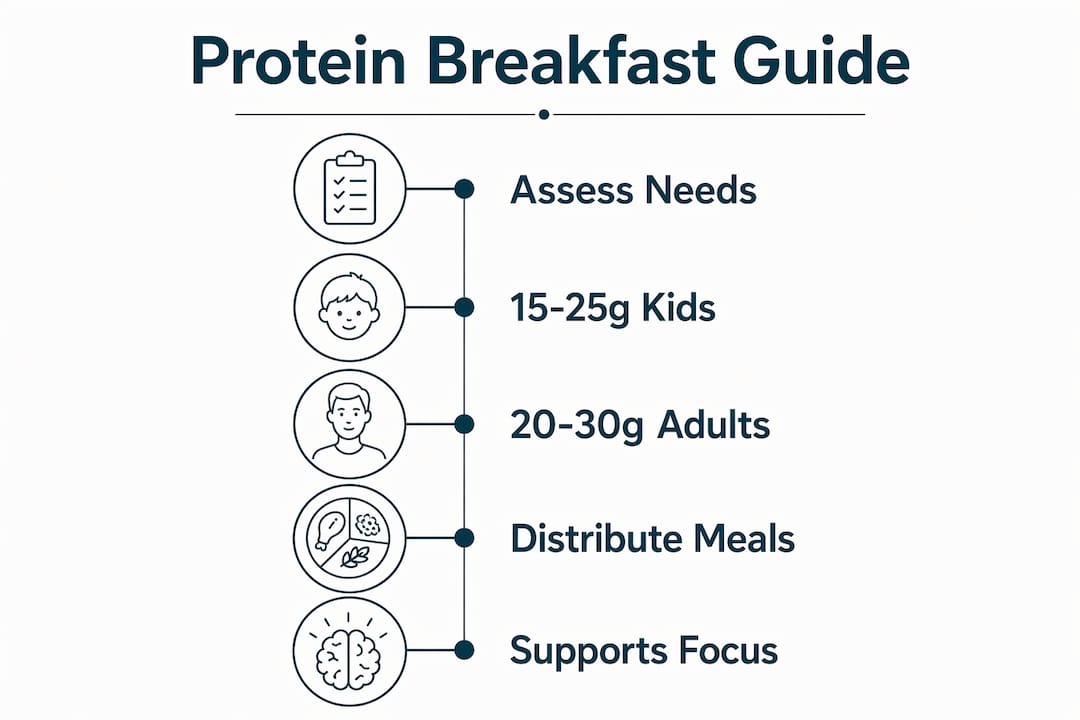
| Who | Breakfast protein target | Why this range |
|---|---|---|
| Children | 15–25 g | Supports sustained attention and neurotransmitter synthesis for age and weight |
| Adults | 20–30 g | Higher cognitive demand and longer fasting require more protein to maintain focus |
| Children generally need smaller amounts of protein at breakfast scaled to their age and growth needs, while adults require more to sustain morning cognitive load and medication synergy. |
Common breakfast foods and their protein content:
- Large egg: about 6 grams per egg
- Greek yogurt (6 oz serving): about 15–20 grams per serving
- Cottage cheese (½ cup): about 14 grams per serving
- Peanut or almond butter (2 tbsp): about 7–8 grams
- Oatmeal made with milk (~1 cup cooked): about 6–8 grams
- Protein smoothie (Greek yogurt + milk base): 20–25 grams, depending on amounts
- Cheddar cheese (1 oz): about 6–7 grams
- Deli turkey (2 slices): about 6–8 grams
Sample kid-friendly plate (target: 15–25 g) Two scrambled eggs plus ½ cup cottage cheese with berries together provide ample protein within the recommended range, allowing flexibility on low-appetite mornings.
Sample adult plate (target: 20–30 g) One cup Greek yogurt with peanut butter on whole-grain toast and a hard-boiled egg together offer a substantial protein amount along with healthy fats.

Distributing protein across meals rather than saving it all for dinner matters. Morning protein has outsized benefits for attention because brain precursor demand peaks with morning cognitive load — the brain is essentially asking for building blocks right when you need focus most.
What are the best high-protein breakfast ideas for ADHD?
The goal is variety by prep time and format, because a breakfast that works on a calm Sunday rarely survives a chaotic Tuesday. Combining protein with fiber and healthy fats produces the slowest digestion and the flattest blood-sugar curve — what some nutritionists call the “three-box” approach: one box of protein, one box of fiber, one box of healthy fat.
| Breakfast idea | Prep time | Notes |
|---|---|---|
| Greek yogurt parfait (yogurt + nuts + berries) | 2 min | No cooking; kid-friendly |
| Two-egg omelet with cheese | 8 min | Add spinach for fiber |
| Cottage cheese with fruit | 2 min | High protein, low sugar |
| Peanut butter on whole-grain toast + hard-boiled egg | 3 min | Make eggs ahead |
| Protein smoothie (yogurt + milk + banana) | 5 min | Ideal for low appetite |
| Egg and cheese breakfast burrito | 10 min or make-ahead | Freezer-friendly |
| Blender protein pancakes (cottage cheese + oats) | 15 min | Great make-ahead option |
| Turkey and egg breakfast bowl | 10 min | High-protein bowl recipe |
Quick kid-approved recipe: Peanut butter banana roll-up Spread 2 tablespoons of peanut butter on a whole-wheat tortilla, add half a banana, roll it up. Protein: ~10 g. Add a 4 oz cup of Greek yogurt on the side and you reach about 15–20 g total. Takes 90 seconds. Most kids who refuse eggs will eat this without argument.
On-the-go adult smoothie (target: 20–30 g) Blend ¾ cup Greek yogurt, 1 cup milk, 1 tablespoon almond butter, half a banana, and a handful of spinach. Protein: about 20–25 g. The spinach disappears completely in flavor; the almond butter adds healthy fat to slow absorption. Drink it in the car if you have to.
Pro Tip: Whole-food protein sources outperform isolated protein powders for steady neurotransmitter support because foods deliver cofactors like B6, magnesium, and zinc that the brain needs alongside amino acids. Use powders as a backup, not the default.

How should you time a protein breakfast around stimulant medication?
The sequence matters more than most people realize. Eating protein before medication onset reduces the chance of GI discomfort and the “head rush” effect that some people experience when stimulants hit an empty stomach. The practical rule is simple: eat something with protein first, then take the medication.
Key do’s and don’ts:
- Do eat at least a small protein-containing snack before taking stimulant medication, even if appetite is low.
- Do keep the pre-med snack easy to swallow — a few bites of yogurt, a spoonful of nut butter, or a small cheese stick counts.
- Don’t rely on a sugary-only breakfast (juice, cereal, pastry) before medication; the blood-sugar spike and crash amplifies side effects.
- Don’t skip breakfast entirely because “they’re not hungry.” Appetite suppression from stimulants is common, but taking meds on an empty stomach often makes side effects worse.
Three quick high-protein options for before or shortly after medication:
- A 4 oz container of Greek yogurt (about 10–12 g protein, takes 60 seconds to eat)
- A cheese stick and a small handful of almonds (about 10 g protein, no prep)
- A hard-boiled egg made the night before (about 6 g protein, portable)
Always check the specific instructions for your child’s or your own medication, and talk to the prescribing clinician before making changes to the medication routine. Some medications have specific food interactions worth knowing about.
Pro Tip: On mornings when appetite is nearly zero, front-load protein in liquid form. A smoothie with Greek yogurt and milk delivers about 20–25 g of protein and is far easier to get down than solid food when stimulants have already blunted hunger.
Practical tactics for picky eaters and rushed mornings
The biggest mistake is trying to overhaul breakfast all at once. Small additions to a preferred food almost always work better than introducing an entirely new “healthy” meal. Adding cheese, nut butter, or a boiled egg to a child’s existing favorite carbohydrate is a faster path to adequate protein than fighting over eggs every morning.
Tactics that actually work:
- Batch-cook egg muffins on Sunday. Whisk eggs with cheese and vegetables, pour into a muffin tin, bake at 350°F for 20 minutes. Refrigerate for five days; reheat in 60 seconds. Each muffin is roughly 6–8 g protein.
- Freeze breakfast burritos. Scramble eggs with turkey or black beans, wrap in whole-wheat tortillas, freeze individually. Microwave for 90 seconds on a school morning.
- Stir Greek yogurt into a smoothie the child already likes. They will not taste it, and you add 10–15 g of protein without a single argument.
- Peanut butter on fruit. Apple slices or banana halves with 2 tablespoons of peanut butter = ~8 g protein and zero cooking.
- Offer nontraditional breakfast foods. Leftover dinner proteins — chicken strips, pasta with meat sauce, a cheese quesadilla — count as breakfast. There is no rule that breakfast food must look like breakfast.
- Use protein-enriched oatmeal. Cook oats in milk instead of water, stir in a spoonful of peanut butter, and top with a hard-boiled egg on the side. That combination reaches 15–18 g without looking unusual.
- Try the “two-breakfast” approach. A small protein snack immediately after waking (a cheese stick, a few bites of yogurt), then a slightly larger meal 20–30 minutes later once the child is more awake. This sidesteps the early-morning appetite resistance many kids with ADHD have.
- Set up an assembly line the night before. Lay out yogurt cups, pre-portioned nuts, and fruit so the morning requires zero decisions — just grab and eat.
Pro Tip: Honor preferences over perfection. A child who eats peanut butter on toast every single day is getting more consistent protein than one who eats a “perfect” breakfast twice a week and refuses it the other five.
What other nutrients matter, and when should you consult a clinician?
Protein is the anchor, but it does not work in isolation. Observational studies and some trials identify iron, zinc, and vegetable protein intake as negatively correlated with ADHD symptom severity in school-age children — meaning lower levels of these nutrients tend to track with worse symptoms.
Nutrients worth monitoring:
- Iron: Low ferritin (stored iron) is associated with worse attention and sleep in children with ADHD. Ask the pediatrician about testing before supplementing.
- Zinc: Involved in dopamine regulation; deficiency correlates with increased impulsivity in some studies. Found in meat, seeds, legumes, and dairy.
- Omega-3 fatty acids: Mixed but promising evidence for attention and behavior; supplements and dietary interventions show potential, particularly for children who eat little fish.
- Vitamin D: Some trials show behavioral improvements with supplementation in deficient children, though effects on ADHD-specific symptoms are inconsistent.
- Magnesium: Emerging evidence suggests benefits for emotional and behavioral symptoms in children with low levels.
For deeper reading on how these nutrients interact with brain chemistry, the top nutrients for cognitive health resource covers the mechanisms in plain language.
When to consult a pediatrician, primary care provider, or registered dietitian:
- Your child shows signs of poor growth or significant weight loss
- Appetite suppression from medication is severe and persistent
- You suspect a nutrient deficiency (fatigue, pallor, brittle nails, frequent illness)
- The child follows a highly restrictive diet (vegan, multiple food allergies, sensory-based avoidance)
- You are considering adding supplements — especially iron or zinc, which can be harmful in excess
- Behavioral or focus changes are sudden or severe despite dietary improvements
Supplements can help children who are genuinely deficient, but giving them to children who are not deficient carries real risk and is not supported by current evidence. Testing first, then supplementing if needed, is the clinician-recommended sequence.
What does the research actually say about protein breakfasts and ADHD?
The evidence is encouraging but not definitive. Short-term controlled studies show measurable attention improvements in children who eat high-protein breakfasts compared to high-carbohydrate ones. The mechanism is biologically plausible: amino acid availability directly affects dopamine and norepinephrine synthesis, and blood-sugar stability reduces the cognitive disruptions that worsen ADHD symptoms.
Caveats are real. Most studies are short-term, sample sizes are modest, and individual responses vary considerably. A comprehensive review published in PMC found that while nutritional status clearly influences ADHD symptomatology, the evidence does not yet support universal dietary prescriptions. Diet is one component of a multimodal plan that typically includes behavioral strategies, environmental accommodations, and often medication.
A practical trial period of 2–8 weeks gives enough time to see whether dietary changes are making a difference. Keep a simple focus and behavior log — one line per day noting mood, attention, and appetite at breakfast time. After four weeks, patterns usually become visible. If nothing has shifted, that is useful information too, and worth discussing with a clinician.
This article is general educational information, not medical or nutritional advice. Confirm any dietary or supplement changes with a qualified clinician for your specific situation.
Key Takeaways
A high-protein breakfast supports ADHD focus and medication tolerance by supplying the amino acids needed for dopamine and norepinephrine synthesis while stabilizing blood sugar across the morning.
| Point | Details |
|---|---|
| Protein targets | Aim for 15–25 g at breakfast for children and 20–30 g for adults as a practical starting range. |
| Best food sources | Eggs (about 6 g each), Greek yogurt (about 15–20 g per serving), cottage cheese (about 14 g per ½ cup), and nut butters (about 7–8 g per 2 tbsp) are the fastest wins. |
| Medication timing | Eat a small protein snack before taking stimulant medication to reduce side effects and improve tolerance. |
| Picky eaters | Add protein to preferred foods (nut butter on fruit, yogurt in smoothies) rather than replacing them entirely. |
| Snapbrainformula | Snapbrainformula’s evidence-informed supplements and educational resources are designed to support the nutritional foundation that high-protein mornings help build. |
The part most guides skip
Most articles on high-protein breakfasts for ADHD treat the protein target as the finish line. Hit 20 grams, problem solved. What they underestimate is how much the consistency of the habit matters more than any single morning’s macros.
A child who eats a decent protein breakfast four days out of five will outperform one who eats a perfect breakfast twice a week and skips it the other three. The brain does not bank neurotransmitter precursors from Monday to cover a skipped Wednesday. Dopamine synthesis is a daily process, and the morning window is when it matters most for attention.
The other thing worth saying plainly: do not let the pursuit of the ideal breakfast become its own source of stress. A stressed, rushed morning undermines focus regardless of what is on the plate. A peanut butter roll-up eaten calmly beats a perfectly balanced plate eaten in a panic. Start with one change, make it easy enough to repeat, and build from there. That is how dietary habits actually stick, especially for families already managing the daily complexity of ADHD.
Consult your child’s pediatrician or a registered dietitian for personalized guidance, particularly around medication timing and supplementation.
Snapbrainformula supports what breakfast starts
A high-protein morning gives the ADHD brain its best shot at a focused day. But food alone covers only part of the picture. Snapbrainformula’s evidence-informed supplements are formulated to work alongside a nutrient-rich diet, not replace it — providing targeted nutritional support for focus, mood, and emotional balance in children, teens, and adults.

The educational content at Snapbrainformula covers the neuroscience behind ADHD nutrition, practical strategies for managing ADHD at home, and the specific nutrients that support brain chemistry. As always, talk to your clinician before adding any supplement to a child’s or adult’s routine. When you are ready to explore what nutritional support looks like beyond the breakfast plate, visit Snapbrainformula to browse the product line and educational resources.
Useful sources and further reading
- ADDitude Magazine — High-Protein Breakfast Foods for ADHD: Practical food lists and clinician commentary on protein timing for kids and adults with ADHD.
- ADDitude Magazine — Quick Breakfast Recipes for ADHD Minds: A slideshow of fast, kid-tested recipes with protein estimates.
- UCLA Health — Foods That Feed an ADHD Mind: Clinical explanation of how specific nutrients support dopamine and norepinephrine synthesis.
- Child Mind Institute — What We Know About ADHD and Diet: Balanced, evidence-grounded overview of what diet can and cannot do for ADHD, including supplement cautions.
- PMC — Nutrition in the Management of ADHD: A Review of Recent Research: Peer-reviewed review of cohort studies and dietary interventions; covers iron, zinc, omega-3s, and dietary patterns.
- PMC — Dietary Interventions and Supplements for Managing ADHD: A Systematic Review: Systematic review of 14 randomized controlled trials on diet and supplements in ADHD management.
- DIG Coaching — Is Protein the Silent Hero of ADHD Medication Success?: Practitioner perspective on protein timing and medication tolerance, with clinical observations.
- Harvard Health — Breakfast and Beyond: Broader context on why breakfast composition affects cognitive performance across the morning.
Recommended
- ADHD vs Other Behavioral Disorders What You Need to Know – SNAP Brain Health Supplements
- The Best Brain Supplements for Enhancing Dopamine Production – SNAP Brain Health Supplements
- Just the BS | BrainSteady Blog for ADHD, Anxiety & Brain Health – SNAP Brain Health Supplements
- Top 7 Brain Supplements to Support Neurotransmitter Balance – SNAP Brain Health Supplements
