
Omega-3 supplements can produce a small but measurable improvement in ADHD symptoms for some people, particularly in attention and focus, when used alongside standard care. The effect is real but modest. It is not comparable to stimulant medications, and it does not replace them. What the research does support is this: for caregivers and adults looking for an evidence-informed adjunct to an existing treatment plan, omega-3s are worth a serious conversation with a clinician. Expect to wait at least 8–12 weeks before noticing anything, and closer to 6 months for the fuller picture. Some clinical trials found that roughly 25% of children showed improvement at 3 months, with that figure rising to around 50% by 6 months in certain cohorts.
Do not stop or reduce any prescribed ADHD medication without medical guidance. Omega-3s work best as a complement, not a substitute.

Table of Contents
- What does the research actually say about omega-3 for ADHD?
- How omega-3s might actually influence attention and behavior
- Which omega-3s matter most, and what doses did trials use?
- Safety, side effects, and interactions you should know about
- How to choose a high-quality omega-3 supplement
- How long until you might see changes, and what is realistic?
- A practical plan for adding omega-3s to an ADHD treatment plan
- Snapbrainformula’s BrainSteady: evidence-informed omega-3 support
- Key Takeaways
- A perspective worth sitting with
- The gap between “it works” and “it works for you”
- Authoritative sources and further reading
What does the research actually say about omega-3 for ADHD?
The evidence base is larger than most people realize, and more nuanced than the headlines suggest.

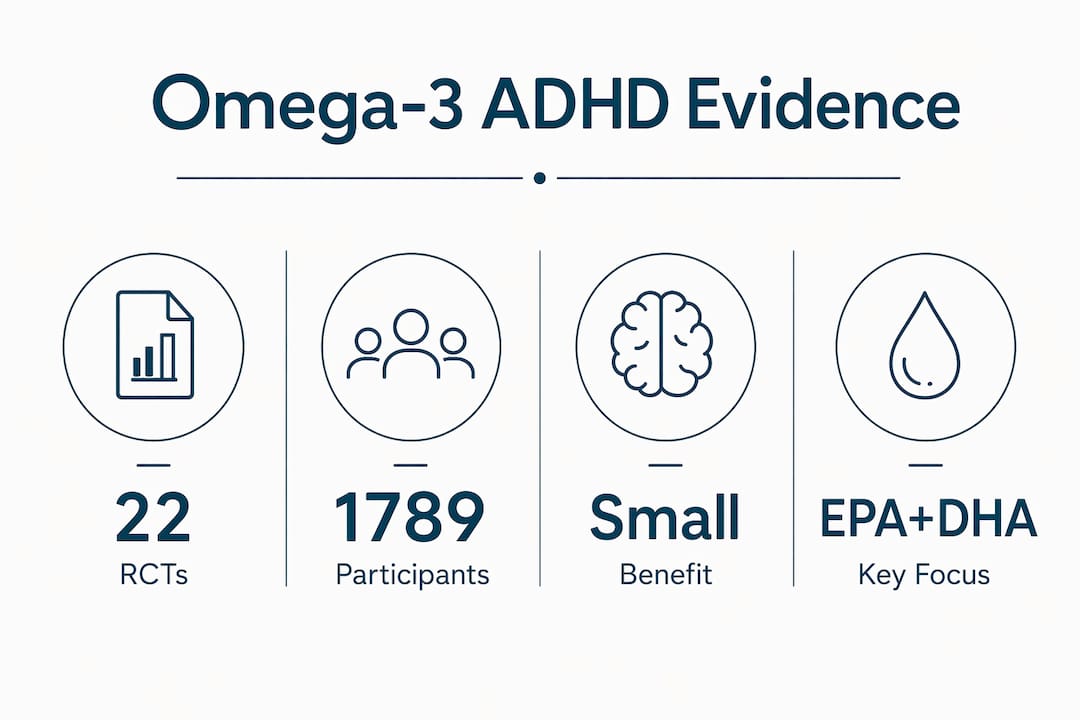
A 2023 meta-analysis of 22 randomized controlled trials covering 1,789 participants found no statistically significant improvement in core ADHD symptoms when all trials were pooled together. But the subgroup analysis told a different story: trials lasting at least 4 months showed a standardized mean difference (SMD) of −0.35, which is statistically significant and clinically meaningful in the context of a nutritional supplement. Duration matters.
A separate meta-regression of 18 RCTs found a pooled SMD of −0.192 for combined ADHD symptoms, with EPA and GLA specifically linked to improvements in inattention. Hyperactivity-impulsivity scores were less responsive. A consensus commentary from a clinical panel concluded that omega-3 supplementation shows a small beneficial effect on behavior in children with ADHD and should be presented by clinicians as adjunctive, not frontline.
Key findings at a glance:
- Meta-analyses consistently show small-to-modest effects, strongest for attention and cognitive measures
- Trials under 12 weeks often show no significant benefit; longer trials (16–24 weeks) tend to show stronger results
- EPA appears more active than DHA for core ADHD symptoms; GLA may also contribute to inattention improvements
- People with low baseline omega-3 or EPA levels tend to respond better than those already consuming adequate amounts
- Effect sizes are smaller than those seen with stimulant medications, but the safety profile is favorable
| Study / Review | Year | Participants | Key Finding |
|---|---|---|---|
| Meta-analysis of 22 RCTs (PubMed) | 2023 | 1,789 | No overall effect; SMD −0.35 in trials ≥4 months |
| Meta-regression of 18 RCTs (PubMed) | 2014 | Mixed | SMD −0.192 overall; EPA + GLA linked to inattention gains |
| PUFA consensus commentary (SAGE) | 2018 | Panel | Small beneficial effect; adjunctive use recommended |
| High-dose EPA RCT (Nature) | 2019 | Children/adolescents | ES = 0.38 for focused attention; strongest in low-EPA group |
| MDPI marine LC-PUFA review | 2025 | Multiple cohorts | Modest attention gains; better response at higher doses, longer duration |
Why do studies conflict so much? The short answer is heterogeneity. Trials differ in EPA-to-DHA ratio, total dose, trial length, whether participants had low baseline omega-3 levels, and what outcomes they measured. These methodological differences likely explain why some meta-analyses find clear benefit and others do not. Attention and vigilance measures tend to show larger effects than broad parent-rated behavioral checklists, which capture a much wider range of behaviors.
How omega-3s might actually influence attention and behavior
EPA and DHA are structural components of brain cell membranes. They affect how fluid and responsive those membranes are, which in turn influences how efficiently neurons communicate. DHA is particularly concentrated in the brain and supports membrane stability and neural development. EPA plays a more active role in reducing neuroinflammation and modulating neurotransmitter signaling, particularly in dopamine and serotonin pathways that are central to ADHD.
There is also an oxidative stress angle. Children with ADHD show higher markers of oxidative stress in some studies, and omega-3s have antioxidant-adjacent properties that may reduce this burden. A PMC review on circadian rhythms and ADHD adds another layer: n-3 PUFAs may modulate circadian clock genes in the brain’s master clock, potentially improving sleep-wake regulation and the downstream behavioral effects of disrupted circadian rhythms. Sleep problems are common in ADHD, and anything that supports more regular sleep architecture can have real behavioral benefits.
Understanding where omega-3s fit among other brain chemistry and behavior factors helps clarify why they are worth considering as part of a broader plan.
Pro Tip: Before committing to a long supplementation trial, ask a clinician about baseline omega-3 or erythrocyte EPA testing. A 2019 RCT found that high-dose EPA produced an effect size of 0.38 for focused attention, but the benefit was concentrated in children with low baseline EPA levels. If levels are already adequate, the response may be minimal.
Which omega-3s matter most, and what doses did trials use?
EPA is the more clinically active fatty acid for ADHD symptoms. DHA matters for brain development and membrane structure, but most of the positive trial results for attention have been driven by EPA-predominant formulas.
Here are the dose ranges most commonly used in positive trials:
- EPA ≥500 mg/day — the lower end of doses used in trials showing attention benefits; often combined with DHA
- EPA 1,200 mg/day — used in a 12-week double-blind RCT that found improved focused attention with an effect size of 0.38, particularly in youth with low baseline EPA
- Combined EPA+DHA ≥750 mg/day — a commonly cited threshold in clinical recommendations for children
- Higher EPA doses (up to 1,500–2,000 mg/day) — used in some adult and adolescent trials; generally well-tolerated but always discuss with a clinician before going above standard ranges
| Formula Type | Typical Trial Dose | Primary Outcomes Observed | Notes |
|---|---|---|---|
| EPA-predominant (EPA > DHA) | 500–1,200 mg EPA/day | Attention, vigilance, focused cognitive tasks | Stronger evidence for inattention; preferred in most positive RCTs |
| Balanced EPA+DHA | 750–1,500 mg combined/day | Broader behavioral ratings; some attention benefit | More common in commercial products; evidence slightly less consistent |
One practical note: most over-the-counter fish oil capsules contain far less EPA and DHA per capsule than the doses used in trials. A standard 1,000 mg fish oil softgel often delivers only 180 mg EPA and 120 mg DHA. Reading the label carefully matters more than the total fish oil milligrams on the front of the bottle.
Pro Tip: When evaluating products for a child, check the mg of EPA and DHA per serving, not the total fish oil weight. A liquid omega-3 formula often delivers higher concentrations per serving than capsules and can be easier for younger children to take.
Safety, side effects, and interactions you should know about
For most people, omega-3 supplements at the doses used in ADHD trials are well-tolerated. The most common complaints are digestive: nausea, loose stools, and a fishy aftertaste or “fish burps.” Taking capsules with food, choosing enteric-coated products, or refrigerating liquid formulas reduces these effects significantly. Occasional nosebleeds have been reported at higher doses, which connects to the most clinically important interaction risk.
Omega-3 fatty acids have mild antiplatelet effects. At typical supplemental doses this is rarely a problem, but at higher doses (generally above 3 g/day of combined EPA+DHA), the anticoagulant effect becomes more significant. Anyone taking warfarin, aspirin, clopidogrel, or other blood-thinning medications should notify their prescriber before starting omega-3 supplementation. The same applies before any surgical procedure.
Before starting high-dose omega-3 supplementation, tell your child’s pediatrician, psychiatrist, or your own primary care provider. This is especially important if any anticoagulant or antiplatelet medication is already part of the regimen. Monitoring for changes in bleeding time or bruising is a reasonable precaution, and your prescriber can advise on timing if surgery is planned.
One question caregivers often ask: is it safe to take omega-3s alongside stimulant medications like methylphenidate or amphetamine salts? Current evidence does not show a problematic interaction between omega-3 supplements and standard ADHD stimulants. Several RCTs have included participants on stimulants without reporting adverse interactions. That said, always disclose all supplements to the prescribing clinician so the full picture is visible.
How to choose a high-quality omega-3 supplement
The supplement market is crowded, and quality varies considerably. A few specific things on the label will tell you more than the marketing copy on the front.
What to look for:
- EPA and DHA mg per serving (not total fish oil weight): this is the number that matters
- Serving size and frequency: some products require 2–4 capsules to reach the stated dose
- Ingredient source: wild-caught cold-water fish (sardines, anchovies, mackerel) tend to have lower contamination risk than larger species
- Oxidation indicators: rancid fish oil smells strongly and may be less effective; freshness matters
- Batch testing and lot traceability: a sign the manufacturer takes quality seriously
Third-party verification programs add meaningful assurance:
| Program | What It Tests |
|---|---|
| IFOS (International Fish Oil Standards) | Potency, purity, oxidation, heavy metals, PCBs |
| NSF International | Label accuracy, contaminants, manufacturing standards |
| USP Verified | Ingredient identity, potency, dissolution, contaminants |
| ConsumerLab | Potency accuracy, oxidation, heavy metals |
For children, liquid formulas with natural flavoring (lemon, orange) are often easier to administer than large softgels, and they allow more flexible dosing. For adults, high-concentration capsules (500+ mg EPA per capsule) reduce the pill burden.
Pro Tip: Calculate the cost per 500 mg of EPA, not the cost per bottle. A cheaper bottle with lower EPA concentration often costs more per effective dose than a pricier, concentrated product. This single calculation cuts through most of the noise in the supplement aisle.
Exploring where omega-3s fit among other brain health supplements can also help caregivers build a more complete picture of nutritional support options.
How long until you might see changes, and what is realistic?
Set the timeline before you start, or the first 6 weeks will feel like failure.
Trials that found significant benefits typically ran for 12–24 weeks. The MDPI marine LC-PUFA review noted that better responses appeared at higher doses and longer treatment durations, specifically 16–24 weeks. The 2023 meta-analysis found that the subgroup of trials lasting at least 4 months was the one that reached statistical significance, with an SMD of −0.35. Shorter trials, even well-designed ones, often show nothing.
Realistic expectation: A small-to-modest improvement in attention and some cognitive measures is the most evidence-supported outcome. Hyperactivity and impulsivity are less likely to change. The effect is not dramatic, and it will not look like the response to a stimulant medication.
What tends to improve first, when something does improve, is focused attention and task persistence. Parents and teachers often notice it before the child does. Broad behavioral changes, like reduced impulsivity or better emotional regulation, are less consistently reported and take longer to emerge.
Trials measuring focused attention and vigilance directly tend to show larger effect sizes than those relying on parent-rated global behavior checklists. This is worth keeping in mind when you are tracking progress at home: specific, observable behaviors (time on task, homework completion rate, teacher ratings) will give you a cleaner signal than a general sense of “is this working?”
A practical plan for adding omega-3s to an ADHD treatment plan
This is not a replacement for a clinician’s guidance. Think of it as a framework to bring to that conversation.
-
Review current diet and medications with your clinician. Discuss omega-3 intake from food (fatty fish 2–3 times per week provides meaningful EPA+DHA), any supplements already in use, and all current medications. Disclose everything.
-
Consider baseline testing. Ask whether an omega-3 index or erythrocyte EPA test makes sense. People with low baseline EPA are most likely to respond. If testing is not available, a dietary assessment is a reasonable alternative.
-
Select an EPA-oriented product. Look for a formula with at least 500 mg EPA per serving, third-party tested, with clear lot traceability. For children, a liquid formula with natural flavoring is often more practical.
-
Set an objective baseline before starting. Use a validated symptom checklist (Vanderbilt, Conners, or a teacher rating scale), note specific observable behaviors, and record them. This is your comparison point.
-
Run a trial of 12–24 weeks. Shorter trials are unlikely to show meaningful change based on the meta-analysis data. Consistency matters more than the exact dose within the trial range.
-
Check in at 8 weeks, then again at 16 weeks. Compare symptom ratings to baseline. If there is no change at 16 weeks and the product has been taken consistently, discuss with your clinician whether to continue.
-
Reassess and decide. If there is measurable improvement, continue and recheck at 6 months. If there is no improvement after a full trial, omega-3s may not be the right adjunct for this individual.
Pairing nutritional support with behavioral strategies amplifies the effect. The 20-minute rule for task initiation is one practical tool that pairs well with any nutritional approach: commit to just 20 minutes on a task to overcome the activation barrier that ADHD makes so steep.
Omega-3s are adjunctive support for mild-to-moderate symptom management. For moderate-to-severe ADHD, stimulant medication and behavioral therapy have substantially stronger evidence and should remain the foundation of the treatment plan.
Snapbrainformula’s BrainSteady: evidence-informed omega-3 support
If you are looking for an omega-3 option designed with brain health in mind, Snapbrainformula’s BrainSteady line is built around the same evidence this article covers: EPA-forward formulas, clear EPA+DHA content per serving, and a focus on mood, focus, and emotional regulation for children, teens, and adults.

BrainSteady is formulated for the caregivers and individuals who have done the research and want a product that reflects it. Available in both capsule and liquid formats, it is designed to fit into a real treatment plan alongside clinician guidance, not as a shortcut around it.
- EPA+DHA content clearly labeled per serving, so you can match it to the trial dose ranges discussed above
- Kid-friendly liquid format available, with third-party quality standards
Visit Snapbrainformula to review full product details and ingredient transparency, then bring that information to your next clinician appointment. That conversation is the right next step.
Key Takeaways
Omega-3 supplementation offers a small but real benefit for attention in some people with ADHD, with the strongest evidence appearing in trials lasting at least 4 months and in individuals with low baseline EPA levels.
| Point | Details |
|---|---|
| Small but real benefit | Meta-analyses show significant effects for attention in trials lasting at least 4 months (SMD −0.35). |
| EPA matters most | EPA-predominant formulas (500–1,200 mg EPA/day) drive most of the positive attention findings in RCTs. |
| Expect a long trial | Allow 12–24 weeks before evaluating results; trials under 12 weeks rarely show significant change. |
| Safety and clinician oversight | Omega-3s are generally safe but interact with anticoagulants; always disclose to your prescriber. |
| Snapbrainformula’s BrainSteady | Offers EPA-forward formulas in capsule and liquid formats designed to align with evidence-based dose ranges. |
A perspective worth sitting with
The gap between “it works” and “it works for you”
The honest tension in the omega-3 and ADHD conversation is this: the research is real, but the average effect size is small enough that many individuals will not notice a meaningful difference. That is not a reason to dismiss the evidence. It is a reason to be strategic about who tries it, at what dose, and for how long.
Caregivers often come to omega-3 research after years of navigating medication side effects, school accommodations, and the emotional weight of watching a child struggle. The appeal of a nutritional approach is completely understandable. What the evidence actually supports is more specific: a targeted trial in someone with low baseline EPA, using an EPA-forward formula at a dose consistent with positive RCTs, run for at least 12–16 weeks, tracked with objective measures, and supervised by a clinician who knows the full picture.
That is not a small ask. But it is the version that gives omega-3s a fair test. The caregivers who see the best outcomes are usually the ones who treat this as a structured experiment rather than a hope. Snapbrainformula’s educational content exists precisely to help families and clinicians have that conversation with better information in hand. Individual response varies, and that is not a failure of the supplement or the person. It is just biology being honest.
Authoritative sources and further reading
The findings in this article draw primarily from meta-analyses and systematic reviews, which carry the strongest weight in evaluating nutritional interventions. Key RCTs and clinical commentaries fill in the practical details on dose, duration, and safety. Discussing any of these with your clinician will help you apply them to your specific situation.
-
Omega-3 polyunsaturated fatty acids for ADHD: meta-analysis of RCTs (PubMed, 2023) — The most current large meta-analysis (22 studies, 1,789 participants); essential for understanding why trial duration changes the conclusion.
-
PUFA meta-regression in children with ADHD (PubMed, 2014) — Identifies EPA and GLA as the fatty acids most associated with inattention improvements; methodologically rigorous.
-
High-dose EPA RCT in children and adolescents (Nature, 2019) — The clearest evidence for EPA 1,200 mg/day and the importance of baseline EPA status; directly informs dosing guidance.
-
PUFA supplementation in ADHD: clinical consensus (SAGE Journals, 2018) — A clinician-facing commentary on how to present omega-3s as adjunctive; practical for shared decision-making conversations.
-
Marine LC-PUFA review: children’s development and neurological disorders (MDPI, 2025) — Broad review covering dose-response and duration effects; useful for understanding why longer, higher-dose trials perform better.
-
Omega-3 and circadian rhythms in ADHD (PMC, 2025) — Emerging framework connecting omega-3s to sleep-wake regulation and circadian gene modulation in ADHD; relevant for caregivers dealing with sleep comorbidities.
-
J Clin Psychiatry meta-analysis summary — A clinician-accessible summary of the heterogeneity problem in omega-3 ADHD research; good context for why results vary.
This article is general educational information, not medical advice. Confirm current guidance and individual suitability with a qualified clinician before starting any supplement regimen.
Recommended
- ADHD vs Other Behavioral Disorders What You Need to Know – SNAP Brain Health Supplements
- 10 Strategies for Managing ADHD at Home – SNAP Brain Health Supplements
- Effective Solutions for Managing ADHD Alongside Depression – SNAP Brain Health Supplements
- Top 7 Brain Supplements to Support Neurotransmitter Balance – SNAP Brain Health Supplements
