
A multivitamin can be a safe, reasonable adjunct for some people with ADHD, but it is not a replacement for behavioral therapy or medication. The strongest trial evidence points to broad-spectrum micronutrient formulas and targeted correction of documented deficiencies, not generic one-a-day vitamins taken without any baseline testing.
Three things to do before you buy anything:
- Check for deficiencies first. Ask your clinician to order ferritin, 25-OH vitamin D, serum zinc, and RBC-magnesium. Supplementing without knowing your baseline is guesswork.
- Talk to your prescriber. Some nutrients interact with stimulant medications. Your clinician needs to know what you are adding.
- Set an 8–12 week monitoring window. If you cannot measure a meaningful change in that timeframe, the product is not working for your child or yourself.
Table of Contents
- What the research actually says about key nutrients for ADHD
- How a multivitamin formula compares to single-nutrient supplements
- Safety, lab testing, and interactions you need to know about
- How the evidence holds up and what BrainSteady makes of it
- How to start, choose, and monitor a supplement trial for ADHD
- Key Takeaways
- The part most supplement guides skip
- Snapbrainformula’s brain health supplements for ADHD support
- Useful sources
What the research actually says about key nutrients for ADHD
The evidence is not uniform across nutrients. Some have solid RCT data behind them; others have only observational support or single small trials. Here is where each one stands.
Omega-3 fatty acids (EPA/DHA)
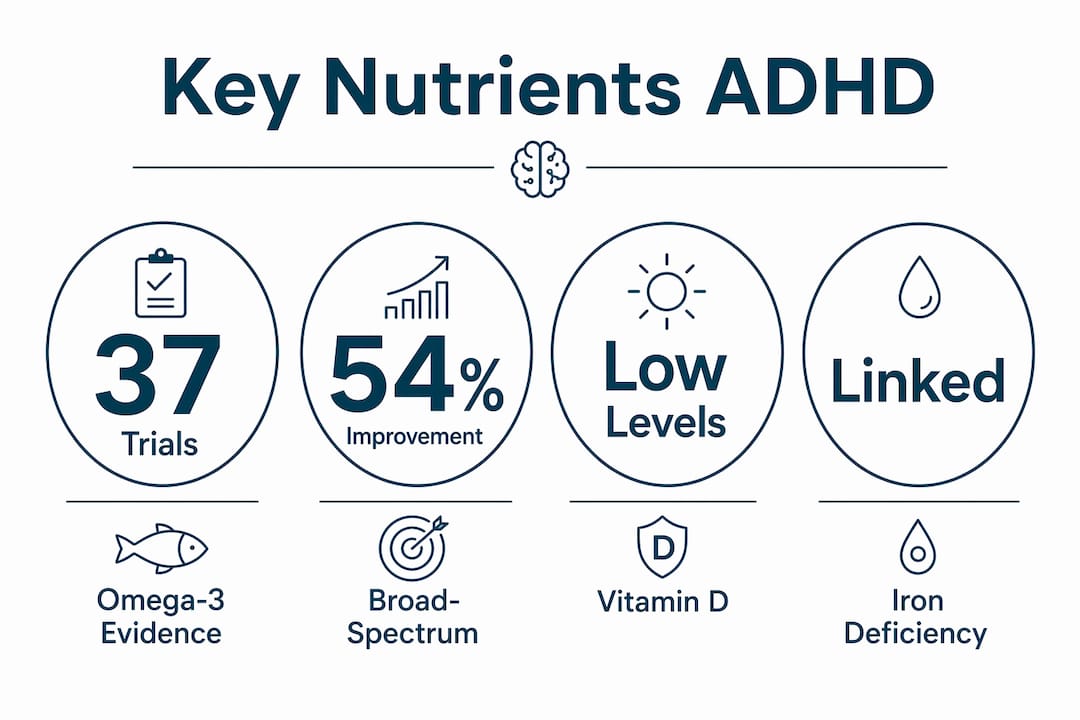
Omega-3s are the most studied single-nutrient intervention for ADHD. A Cochrane-style synthesis of 37 trials covering more than 2,374 participants found no high-certainty effect on total parent-rated ADHD symptoms. Some individual trials show modest gains on inattention subscales, but the pooled evidence is low to moderate certainty. Typical trial doses range in the range commonly studied for EPA/DHA daily, without specifying exact numbers. The main safety flag is fishy burp and mild GI upset; high doses can affect bleeding time, so flag this if your child takes any blood-thinning medication.

Zinc
Zinc is a cofactor for dopamine metabolism, melatonin synthesis, and prostaglandin regulation. Observational studies consistently find lower serum zinc in children with ADHD compared to peers. A systematic review of RCTs on iron and zinc in children and adolescents found evidence supporting supplementation in deficient individuals, with effects on multiple ADHD correlates. Trial doses of zinc vary within ranges used in studies, typically moderate daily amounts. The critical safety note: zinc above 40 mg/day in adults (lower in children) can deplete copper, so any long-term zinc supplementation should include monitoring of copper status.
Iron (ferritin)
Iron is a cofactor for dopamine synthesis. Low ferritin, even without frank anemia, has been linked to worse ADHD symptoms in observational data. The key threshold most clinicians watch is a ferritin level below 30 ng/mL. Iron supplementation should only happen when labs confirm deficiency. Supplementing iron in a child with normal ferritin carries real toxicity risk, and iron is the leading cause of fatal poisoning in young children in the United States. Typical therapeutic doses are weight-based and must be supervised by a clinician.
Vitamin D
Children with ADHD are more likely than peers to have lower 25-OH vitamin D levels in observational studies. An RCT combining magnesium plus vitamin D supplementation showed significant reductions in conduct, emotional, and peer problems versus controls after 8 weeks. That is a high dose of vitamin D and should not be self-prescribed. For maintenance supplementation, 1,000–2,000 IU daily is a common pediatric range, but the right dose depends on your baseline 25-OH level. The upper tolerable intake for children is 4,000 IU/day; toxicity from chronic overdose is real and includes hypercalcemia.

Magnesium
Magnesium is involved in hundreds of enzymatic reactions, including those governing neurotransmitter release. Observational studies report lower RBC-magnesium in ADHD cohorts. Trial doses for children typically range in moderate elemental magnesium amounts daily, with magnesium glycinate or magnesium citrate showing better absorption than magnesium oxide. The most common side effect at higher doses is loose stools. Magnesium is generally well tolerated, which is part of why it fits the SECS framework (Safe, Easy, Cheap, Sensible) that clinicians use when evaluating low-risk adjuncts.
Inositol
Inositol is a naturally occurring sugar alcohol involved in cell signaling pathways linked to serotonin and dopamine receptors. The evidence base for ADHD specifically is thin. Most published work focuses on anxiety and OCD, with some crossover relevance for ADHD with comorbid anxiety. Doses in trials range from 2–18 g/day. If your child has overlapping ADHD and anxiety symptoms, inositol is worth discussing with a clinician, but it should not be a first-line choice based on current ADHD-specific evidence.
Melatonin
Melatonin does not directly treat ADHD symptoms. What it does is address the sleep-onset difficulties that affect a large proportion of children and adults with ADHD, and poor sleep reliably worsens attention and emotional regulation. Trial doses for children range from 0.5–5 mg taken 30–60 minutes before bedtime. Melatonin is generally considered safe for short-term use, but long-term pediatric data are limited. One interaction to flag: melatonin can potentiate sedative medications, so check with your prescriber if your child takes any CNS-active drug.
Probiotics
The gut-brain axis is a legitimate area of research, but the evidence for probiotics specifically improving ADHD symptoms is preliminary. Most published work is observational or small pilot trials. Specific strains like Lactobacillus rhamnosus GG have been studied in neurodevelopmental contexts, but no probiotic strain has strong RCT evidence for core ADHD symptom reduction. Probiotics are low-risk for most healthy children, but they are not a substitute for the nutrients with more direct mechanistic and trial support.
Evidence summary by nutrient:
| Nutrient | Evidence Level | Typical Trial Dose | Key Safety Note |
|---|---|---|---|
| Omega-3 (EPA/DHA) | Low–moderate certainty (37 RCTs) | 1,000–2,000 mg/day combined | GI upset; bleeding risk at high doses |
| Zinc | Moderate (RCTs in deficient children) | 15–40 mg elemental/day | Depletes copper above 40 mg/day |
| Iron (ferritin) | Observational + limited RCTs | Clinician-supervised, weight-based | Toxic if not deficient; fatal risk in young children |
| Vitamin D | Moderate (combined RCT with Mg) | 1,000–2,000 IU/day maintenance | Hypercalcemia above 4,000 IU/day in children |
| Magnesium | Moderate (combined RCT; observational) | 200–400 mg elemental/day | Loose stools at higher doses |
| Inositol | Weak (limited ADHD-specific RCTs) | 2–18 g/day | Generally well tolerated |
| Melatonin | Moderate for sleep; indirect ADHD benefit | 0.5–5 mg, 30–60 min before bed | Potentiates sedatives; limited long-term pediatric data |
| Probiotics | Preliminary | Strain-dependent | Low risk; no strong ADHD RCT evidence |
The MADDY Study RCT (N = 126, ages 6–12) found 54% of children on a broad-spectrum multinutrient formula rated as “much” or “very much” improved on the Clinical Global Impression-Improvement scale, compared to 18% on placebo. Critically, this benefit held regardless of baseline diet quality.
How a multivitamin formula compares to single-nutrient supplements
The question most caregivers face is not “which single nutrient?” but “should I start with a broad formula or go targeted?” The answer depends on what your labs show and how much is known about your child’s specific deficiencies.
When a broad-spectrum formula makes sense
RCTs of broad-spectrum micronutrient formulas have used products containing 20–36 nutrients at doses close to or modestly above the Recommended Dietary Allowance. The MADDY Study RCT used this approach and found clinically meaningful improvements on clinician-rated global scales. The rationale is that ADHD-related metabolic needs may span multiple nutrient pathways simultaneously, and a formula addresses several potential gaps at once rather than betting on one.
A broad formula also fits the SECS principle: it is relatively safe at RDA-level doses, easy to find, inexpensive compared to multiple single-nutrient products, and sensible as a baseline when labs are not yet available or when deficiencies are borderline rather than frank.
When targeted single-nutrient therapy makes more sense
If labs show a clear ferritin below 30 ng/mL, a therapeutic iron protocol supervised by a clinician will deliver a higher dose than any multivitamin can safely include. The same logic applies to severe vitamin D deficiency. A multivitamin cannot correct a frank deficiency quickly enough; it is a maintenance and prevention tool, not a therapeutic dose vehicle.
What to look for in a multivitamin formulation
- Ingredient transparency: Full label disclosure of every ingredient and its amount, not proprietary blends that hide individual doses.
- Amounts near RDA or trial doses: Avoid formulas that include token amounts of key nutrients (e.g., 10 mg magnesium when trials used 200–400 mg) or megadoses that exceed tolerable upper limits.
- No unnecessary stimulants or herbs: Guarana, high-dose caffeine, or unstudied herbal blends have no place in a pediatric ADHD supplement.
- Third-party testing seals: Look for USP Verified, NSF Certified for Sport, or Informed Sport certification. These confirm that what is on the label is actually in the bottle and that the product is free from common contaminants.
- Age- and weight-appropriate dosing: A formula designed for adults is not automatically appropriate for a 7-year-old. Pediatric formulas should specify dosing by age or weight range.
- Capsule count that is realistic: Some clinical trial formulas required up to 12–15 capsules per day, which is a genuine adherence barrier for most families. Newer formulations condense the same nutrient load into fewer capsules.
Pro Tip: When comparing labels, check the magnesium form specifically. Magnesium oxide is cheap and common but poorly absorbed. Magnesium glycinate or citrate costs a little more and delivers meaningfully more elemental magnesium to the bloodstream.
Safety, lab testing, and interactions you need to know about
Starting any supplement without a baseline is flying blind. The nutrients most relevant to ADHD are also the ones most likely to cause harm if dosed incorrectly, particularly in children.
Lab tests worth requesting
Clinicians recommend the following panel when risk factors or poor diet exist, rather than defaulting to high-dose supplementation without data:
| Lab Test | What It Measures | Why It Matters for ADHD |
|---|---|---|
| Ferritin | Iron storage | Low ferritin linked to dopamine synthesis impairment |
| 25-OH Vitamin D | Vitamin D status | Deficiency common in ADHD cohorts; affects mood and cognition |
| Serum/plasma zinc | Zinc status | Low zinc correlates with ADHD severity in observational studies |
| RBC-magnesium | Functional magnesium | Serum magnesium can appear normal even when cellular stores are low |
Standard serum magnesium can look normal even when functional stores are depleted at the cellular level, which is why RBC-magnesium is the more informative test. Ask your clinician specifically for RBC-magnesium rather than the standard serum panel.
Age-based upper intake levels
The tolerable upper intake levels (ULs) set by the National Academies of Sciences, Engineering, and Medicine are the ceiling, not the target. For children ages 4–8, the UL for zinc is 12 mg/day; for ages 9–13, it is 23 mg/day. Vitamin D UL for children is 4,000 IU/day. Iron UL for children ages 4–8 is 40 mg/day. These are not therapeutic doses; they are the maximum before risk of adverse effects increases meaningfully.
Drug-nutrient interactions
- Zinc and copper: Long-term zinc supplementation above the UL suppresses copper absorption. If zinc is used therapeutically, copper status should be monitored.
- Iron and stimulant medications: Stimulants reduce appetite, which can reduce dietary iron intake. This is worth tracking in children on long-term stimulant therapy.
- Melatonin and sedatives: Melatonin potentiates the effect of benzodiazepines, antihistamines, and other CNS depressants. Always flag melatonin use to your prescriber.
- Vitamin D and calcium: High-dose vitamin D increases calcium absorption. In children with high dairy intake, this can push calcium toward the upper range.
Monitoring checklist
Pro Tip: Build a simple symptom log before you start any supplement. Rate three to five specific behaviors (e.g., homework completion, meltdown frequency, sleep onset time) on a 1–5 scale each week. Without a baseline, you cannot tell whether anything changed.
- Baseline: Labs (ferritin, 25-OH D, zinc, RBC-Mg) plus behavioral symptom log before starting.
- Week 4: Check for GI side effects, sleep changes, and any behavioral shifts. Note adherence.
- Week 8: Reassess symptom log against baseline. This is the minimum window for most nutrient interventions to show an effect.
- Week 12: Full reassessment. If no meaningful change, discuss with your clinician whether to continue, switch, or stop.
- Stop criteria: Worsening of any symptom, new GI complaints, signs of toxicity (nausea, headache, excessive thirst for vitamin D toxicity), or clinician recommendation.
One trial observation worth noting: some micronutrient RCTs reported modest increases in height growth in the supplemented arm compared to placebo. This is a signal that warrants growth monitoring in children on long-term supplementation, not an efficacy marker for ADHD symptoms.
How the evidence holds up and what BrainSteady makes of it
The research picture is genuinely mixed, and it is worth being honest about why.
Why trials disagree
Trial heterogeneity is the main culprit. Studies use different formulations, different doses, different outcome measures (parent-rated vs. clinician-rated vs. teacher-rated), and different age groups. A trial using a 36-nutrient broad-spectrum formula at near-RDA doses in children ages 6–12 with emotional dysregulation is not directly comparable to a trial of a single omega-3 supplement in teenagers. Pooling them in a meta-analysis produces wide confidence intervals and low certainty ratings, which is exactly what the NCCIH synthesis found for omega-3s.
Placebo response is also substantial in ADHD trials. Parent-rated scales are particularly susceptible. The MADDY Study found 18% of placebo-group children rated as improved on the CGI-I, which is a meaningful placebo effect. Clinician-rated scales like the CGI-I are more conservative, which is why the 54% vs. 18% responder gap in that trial is notable.
What the evidence actually supports
The SECS principle gives clinicians a practical framework: when an intervention is Safe, Easy, Cheap, and Sensible, the bar for recommending it as a baseline adjunct is lower than for a high-risk or expensive intervention. A broad-spectrum multivitamin at near-RDA doses clears that bar for most children and adults with ADHD, even when trial-level evidence is not definitive.
What does not clear the bar: high-dose single-nutrient protocols without lab confirmation of deficiency, or any supplement marketed as a replacement for stimulant medication or behavioral therapy.
How BrainSteady applies this
BrainSteady’s approach is lab-driven, monitored, and time-limited. Start with baseline testing. Choose a formula with transparent ingredients and third-party testing. Set a defined monitoring window. Reassess with the same measures you used at baseline. If there is no meaningful signal at 12 weeks, stop and revisit the plan with your clinician. Supplements that work for ADHD tend to show a signal within that window; open-ended supplementation without reassessment is not evidence-informed practice.
The mixed evidence on nutrition does not mean supplements are useless. It means they work for specific people under specific conditions, and the job is to figure out whether your child or you are in that group, not to assume everyone is.
How to start, choose, and monitor a supplement trial for ADHD
This is the practical sequence. Follow it in order.
-
Have a clinician conversation first. Bring a list of current medications, any known allergies, and your child’s diet history. Ask specifically about interactions with any stimulant or non-stimulant ADHD medication currently prescribed. If you are not yet working with a clinician, understanding ADHD and behavioral disorders is a useful starting point before that appointment.
-
Order baseline labs. Request ferritin, 25-OH vitamin D, serum or plasma zinc, and RBC-magnesium. These four tests cover the nutrients most consistently linked to ADHD in observational and trial data.
-
Interpret results with your clinician. Do not self-interpret lab values. A ferritin of 28 ng/mL may warrant therapeutic iron in one child and watchful waiting in another, depending on clinical context.
-
Choose a product based on the checklist. Full ingredient disclosure, amounts near RDA or trial doses, no stimulant herbs, third-party testing seal, and a capsule count your child can realistically take daily. Liquid formulas are a practical option for younger children or anyone who struggles with capsules.
-
Start at the labeled dose and build a routine. Pair the supplement with a consistent meal to improve absorption and reduce GI side effects. Building a consistent daily routine around supplement timing significantly improves adherence over a 12-week trial.
-
Log symptoms weekly. Rate three to five specific, observable behaviors before starting and every week during the trial. Use the same scale each time. School functioning, homework completion time, emotional meltdown frequency, and sleep onset are all trackable without specialized tools.
-
Questions to ask your clinician at the 4-week check-in:
- Are there any lab changes I should watch for?
- Is the current dose appropriate given the baseline results?
- Are there any new interactions to consider if medication was recently adjusted?
- What would constitute a meaningful enough improvement to continue past 12 weeks?
-
Assess at week 8. Compare your symptom log to baseline. A clinician-style question to ask yourself: “Compared to before we started, is this child (or am I) much improved, somewhat improved, unchanged, or worse?” If the answer is unchanged or worse at week 8, that is meaningful data.
-
Full reassessment at week 12. Repeat labs if your clinician recommends it. Review the symptom log. Make a go/no-go decision. If continuing, schedule a 6-month check-in to reassess whether the same formula and dose still make sense.
-
How to stop if needed. Most nutrients at near-RDA doses do not require tapering. High-dose single-nutrient protocols (particularly iron or vitamin D) should be tapered or stopped under clinician guidance. Do not abruptly stop any supplement that was being used alongside a medication adjustment without checking with your prescriber first.
Key Takeaways
Broad-spectrum micronutrient formulas have the strongest RCT evidence for ADHD support, with the MADDY Study finding 54% of children on multinutrients rated as improved versus 18% on placebo, but supplements remain adjunctive to, not replacements for, standard ADHD treatments.
| Point | Details |
|---|---|
| Supplements are adjunctive | No nutrient supplement replaces behavioral therapy or ADHD medication; use them alongside, not instead of, standard care. |
| Test before you supplement | Order ferritin, 25-OH vitamin D, serum zinc, and RBC-magnesium before starting any targeted nutrient protocol. |
| Broad formulas have RCT support | The MADDY Study found 54% responder rates on multinutrients vs. 18% on placebo in children with ADHD and emotional dysregulation. |
| Monitor with a defined timeline | Set an 8–12 week window with a weekly symptom log; if no meaningful change appears, reassess with your clinician. |
| Snapbrainformula | Snapbrainformula offers evidence-informed brain health supplements in capsule and liquid form, designed for children, teens, and adults. |
The part most supplement guides skip
The supplement industry has a habit of presenting ADHD nutrition research as more settled than it is, and the wellness space has a habit of presenting it as more hopeless than it is. Neither is accurate.
What the evidence actually shows is that a meaningful subset of children and adults with ADHD respond to broad-spectrum micronutrient support, and that response appears to be independent of whether their overall diet is good or poor. That is a genuinely interesting finding. It suggests the mechanism is not simply “fix a bad diet.” It may reflect individual metabolic needs, genetic variation in nutrient metabolism, or something about how ADHD-related brain chemistry interacts with micronutrient availability at the cellular level.
The part most guides skip is this: the question is not “do supplements work for ADHD?” The question is “do they work for this person?” That requires a baseline, a defined trial, and an honest reassessment. Open-ended supplementation without measurement is not evidence-informed. It is hope dressed up as a protocol.
The SECS framework is genuinely useful here. A broad-spectrum multivitamin at near-RDA doses is low-risk enough that the bar for trying it is reasonable, even when the evidence is not definitive. But “low-risk enough to try” is not the same as “proven to work.” Caregivers deserve that distinction stated plainly, not buried in fine print.
What I find most compelling in the research is the combination approach: test first, correct documented deficiencies with targeted therapy, then layer in a broad formula as a baseline. That sequence is more likely to produce a meaningful signal than either approach alone, and it gives you actual data to work with rather than a vague sense that something might be helping.
Snapbrainformula’s brain health supplements for ADHD support
If you have worked through the evidence in this article and you are ready to try a product that aligns with what the research actually supports, Snapbrainformula’s brain health supplements are formulated with that framework in mind. Available in both capsule and liquid form for children, teens, and adults, they are designed to support focus, mood, and emotional regulation without unnecessary stimulant herbs or proprietary blends that hide what you are actually getting.

Snapbrainformula’s formulas are built for transparency: full ingredient disclosure, dosing appropriate for age and weight, and a commitment to third-party testing standards. That matters because potency and purity are not guaranteed by label claims alone.
This article is general educational information, not medical advice. Before starting any supplement, especially for a child, confirm current recommendations with your clinician and use baseline lab testing to guide your choices.
Ready to take the next step? Explore Snapbrainformula’s brain health supplements and bring the ingredient list to your next clinician appointment. That conversation, grounded in your child’s actual lab results, is where evidence-informed supplementation actually starts.
Useful sources
The sources below are the primary evidence base for this article. Each entry notes what the study or review found and why it is relevant for ADHD supplementation decisions.
-
MADDY Study RCT (PubMed, 2023) — An 8-week RCT (N = 126, ages 6–12) finding 54% of children on broad-spectrum multinutrients rated as improved on the CGI-I versus 18% on placebo; benefit was independent of baseline diet quality. The strongest single RCT for broad-spectrum formulas in pediatric ADHD.
-
NCCIH Digest: ADHD and Complementary Health Approaches — A synthesis of 37 omega-3 trials covering more than 2,374 participants; found no high-certainty effect on total parent-rated ADHD symptoms. Essential for setting realistic expectations about omega-3s.
-
Micronutrients for ADHD in Youths RCT (PubMed) — Placebo-controlled RCT showing clinician-rated improvements in children on broad-spectrum micronutrient formulas, with approximately 47–54% responder rates. Also reported modest height growth differences in the supplemented arm, warranting growth monitoring.
-
Nutrition in the Management of ADHD: A Review (PMC) — Comprehensive review emphasizing that nutritional interventions are complementary to standard care and that correction of documented deficiencies is a reasonable supportive strategy. Includes the magnesium plus vitamin D RCT data.
-
Iron and Zinc in ADHD: Systematic Review of RCTs (PubMed) — Systematic review of randomized trials on iron and zinc supplementation in children and adolescents with ADHD; supports targeted use in deficient individuals and outlines mechanistic pathways through dopamine metabolism.
-
Iron, Magnesium, Vitamin D, and Zinc Deficiencies in ADHD (MDPI) — Case-control and observational data showing lower 25-OH vitamin D, serum zinc, ferritin, and RBC-magnesium in children with ADHD. Supports the rationale for targeted lab testing before supplementation.
-
Dietary and Nutritional Treatments for ADHD (PubMed) — Practitioner-focused review introducing the SECS vs. RUDE framework for evaluating low-risk adjunct interventions; explains why RDA-level multivitamins meet the bar for baseline recommendation even with limited trial evidence.
-
Duration Effects of Micronutrients in ADHD: RCT and Open-Label Extension (Springer Nature) — Reports that trial protocols requiring 12–15 capsules per day create real adherence barriers for families; later formulations condensed the dose into fewer capsules. Directly relevant for product selection guidance.
Recommended
- Effective Solutions for Managing ADHD Alongside Depression – SNAP Brain Health Supplements
- ADHD vs Other Behavioral Disorders What You Need to Know – SNAP Brain Health Supplements
- 10 Strategies for Managing ADHD at Home – SNAP Brain Health Supplements
- Top 7 Brain Supplements to Support Neurotransmitter Balance – SNAP Brain Health Supplements
