
Mood regulation is the brain-and-behavior process that keeps our baseline emotional state within a workable range, so a rough morning does not hijack the whole day. It runs on a partnership between the prefrontal cortex, the stress-response system, and neurotransmitters like dopamine and serotonin. Most people strengthen it the same way: predictable routines, enough sleep, regular movement, a handful of coping skills, and professional support when the shifts are too big to manage alone.
TL;DR:
- Regular sleep, movement, and nutrition are essential biological inputs that support and maintain effective mood regulation systems.
- Emotional dysregulation often links to underlying issues in brain systems like the prefrontal cortex, HPA axis, and neurotransmitter balance, not character flaws.
- Social relationships and predictable routines significantly boost mood stability by providing external co-regulation and reducing isolation.
- Untreated medical conditions, substance use, and chronic stress can weaken regulation capacity, leading to larger mood swings and increased vulnerability.
- Building a personalized plan with daily anchors, micro-skills, and regular tracking enhances long-term resilience and helps identify early warning signs.
Table of Contents
- What Is Mood Regulation vs. Emotional Regulation?
- How the Brain and Body Regulate Mood
- Why Do Some People Have Bigger Mood Swings?
- Signs of Emotional Dysregulation and When to Get Help
- Evidence-Informed Daily Strategies to Support Mood Regulation
- Therapies and Professional Supports That Work
- Building a Simple, Personalized Mood Plan
- Impact of Social Relationships and Support Networks on Mood Regulation
- Long-Term Effects of Effective Mood Regulation
- Mood Regulation vs. Mood Disorders: Where’s the Line?
- How Light and Seasons Affect Mood
- Tracking Your Mood: Journaling and Apps That Help
- Nutrition and Routine Working Together
- Where Nutrition Fits into a Mood-Wellness Routine
- Sources
What Is Mood Regulation vs. Emotional Regulation?
Mood regulation and emotional regulation are often used interchangeably, but they describe different timescales. A mood is a diffuse background state, like irritability or low energy, that can linger for hours or days without an obvious trigger. An emotion is sharper and shorter, like the flash of anger when someone cuts you off in traffic. Emotional regulation is what brings that spike back down in minutes. Mood regulation is what keeps the underlying baseline stable enough that spikes don’t accumulate into a bad week.
The distinction matters in daily life:
- A child who is generally cheerful but snaps at a sibling once has an emotional reaction, not a mood problem.
- A teenager who wakes up flat and irritable for two straight weeks, regardless of what happens that day, is showing a mood shift worth paying attention to.
- An adult who recovers from frustration in ten minutes has healthy emotional regulation; one who stays keyed up for hours may have a mood regulation gap.
Good regulation on both fronts protects relationships, work performance, and a household’s overall stress level, because moods and emotions feed each other in a loop.
How the Brain and Body Regulate Mood
Three systems do most of the work, and understanding them changes how you interpret a bad mood, especially in kids and teens.
The prefrontal cortex acts as the brain’s brake pedal. It evaluates a situation, weighs consequences, and dampens the alarm signals coming from the limbic system, particularly the amygdala. When the prefrontal cortex is under-resourced, whether from fatigue, youth, or a neurodevelopmental difference, that brake weakens and emotional reactions run longer and hotter than the situation calls for.
The HPA axis (hypothalamus, pituitary, adrenal glands) governs the body’s stress response through cortisol. A well-regulated HPA axis spikes cortisol during a real threat and settles back down within an hour or two. A chronically activated one stays elevated, and reviews of mood-disorder neurobiology tie that sustained inflammation and oxidative stress to greater vulnerability for mood instability over time.
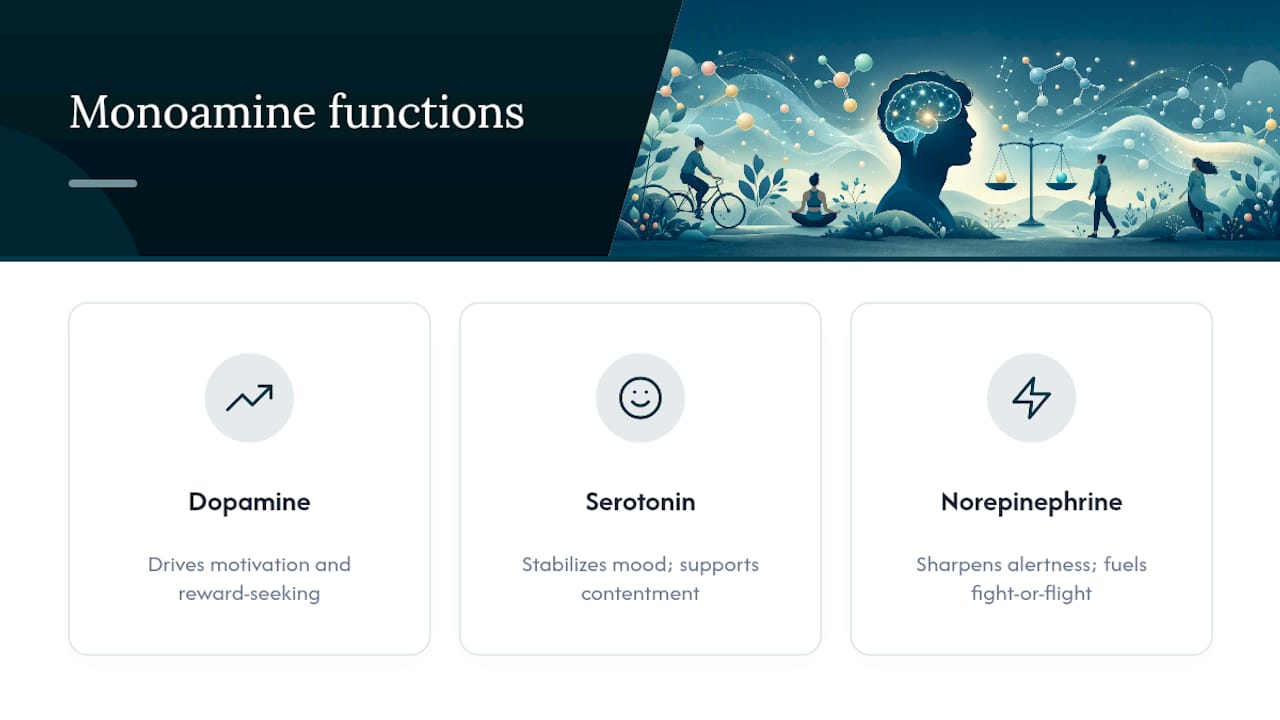
Then there are the monoamine neurotransmitters: dopamine, serotonin, and norepinephrine. Dopamine drives motivation and reward-seeking. Serotonin stabilizes mood and supports a sense of contentment. Norepinephrine sharpens alertness and fuels the fight-or-flight response. These three chemicals modulate the body’s basic emotional states, and imbalances among them are central to how clinicians understand and treat mood disorders.
The practical takeaway: sleep restores prefrontal function overnight, nutrition supplies the raw materials for neurotransmitter production, movement burns off excess cortisol and stress hormones, and stress reduction keeps the HPA axis from staying stuck in the “on” position. None of these are optional extras. They are the biological inputs the whole system runs on.
Why Do Some People Have Bigger Mood Swings?
Mood regulation is not evenly distributed, and the reasons are mostly biological rather than a matter of willpower or effort.
ADHD and autism both affect the executive function systems that support regulation. People with ADHD show some of the highest recorded levels of emotional dysregulation on standardized clinical measures, largely because attention and impulse-control circuits overlap heavily with regulation circuits. Autistic individuals often experience sensory over-responsivity, and research shows that sensory overload directly predicts meltdown frequency and intensity, independent of anxiety or IQ.
Trauma and chronic stress physically reshape how sensitive the HPA axis is to future stress, so smaller triggers can produce outsized reactions long after the original event has passed.
Other contributors compound all of this:
- Sleep deprivation weakens prefrontal function within a single night.
- Substance use disrupts neurotransmitter balance.
- Untreated medical conditions, from thyroid disorders to chronic pain, tax the same regulatory systems.
The behavior you see, whether it’s a meltdown, a snapped comment, or sudden withdrawal, is frequently a readout of what these underlying systems are doing, not a character flaw or a choice someone is making on purpose.
Signs of Emotional Dysregulation and When to Get Help
Dysregulation has a recognizable shape once you know what to look for, and it exists on a spectrum from “worth monitoring” to “needs same-day attention.”
- Everyday warning signs: reactions that seem disproportionate to the trigger, slow recovery time after being upset, impulsive decisions made in the heat of the moment, and mood swings that seem to appear without a clear cause.
- Escalating concerns: dysregulation that is interfering with school, work, or relationships on a regular basis, or that a person themselves describes as feeling out of control.
- Crisis-level signs that need immediate action: any mention of self-harm or suicidal thoughts, a sudden and severe drop in functioning, or behavior that puts the person or others at risk.
For everyday signs, a conversation with a primary care provider is a reasonable first step. For escalating concerns, ask for a referral to a therapist or psychiatrist. For crisis-level signs, call a crisis line or go to an emergency room without waiting for a scheduled appointment.
Evidence-Informed Daily Strategies to Support Mood Regulation
The strategies with the best track record are unglamorous and repeatable, which is exactly why they work.
Build predictable daily anchors. A consistent wake time, regular meal times, and a short movement break at the same point each day give the nervous system fewer surprises to react to. Predictability itself is regulating, especially for kids and for anyone with ADHD or autism.
Protect sleep like it’s medical treatment, because it is. Keep screens out of the bedroom for the last 30 to 60 minutes before sleep, hold a consistent bedtime within a 30-minute window, and get morning light exposure to anchor the body’s circadian rhythm. Sleep loss hits the prefrontal cortex first, which is exactly the system you need for regulation the next day.
Move your body for 10 to 20 minutes. A brisk walk, a short burst of jumping jacks, or a quick bike ride can help lower stress hormones and lift mood in a short time. You do not need a gym membership or an hour of free time. You need to move enough to raise your heart rate briefly.

Feed the neurotransmitter systems you’re relying on. Omega-3 fatty acids, adequate protein for amino acid precursors, and foods that limit blood sugar spikes all support the biological pathways behind mood stability. This is also where specific nutrients that support cognitive and emotional function come into play, since serotonin and dopamine both require dietary building blocks to synthesize.
Practice a small set of coping skills until they’re automatic. A few worth knowing:
- Name it to tame it: putting a specific word on the emotion (“frustrated,” not just “bad”) reduces its intensity by engaging the prefrontal cortex.
- Paced breathing: a slow exhale longer than the inhale calms the nervous system directly.
- Grounding: naming five things you can see, four you can touch, and so on, pulls attention out of a spiral.
- Attention-shifting: deliberately redirecting focus to a neutral task, which research suggests is often more predictive of regulation success than raw working memory.
Use co-regulation if you’re a caregiver or educator. A calm voice, predictable structure, and sensory accommodations act as external scaffolding for a nervous system that is not yet regulating well on its own. Interviews with neurodivergent adolescents consistently point to acceptance and routine, not correction, as what actually reduces distress.
Pro Tip: Keep one coping skill “pre-loaded” for high-stress moments, like a specific breathing count you’ve practiced when calm. Trying to learn a new skill in the middle of a meltdown almost never works; the prefrontal cortex is too offline to learn anything new in that moment.
For a broader menu of emotion regulation techniques you can layer into daily life, start with whichever one feels most doable this week rather than trying all of them at once.
Therapies and Professional Supports That Work
When daily strategies aren’t enough on their own, several clinical approaches have solid evidence behind them.
Cognitive behavioral therapy (CBT) teaches people to catch and reframe distorted thoughts before those thoughts spiral into a mood episode. Dialectical behavior therapy (DBT) was originally built for intense emotional dysregulation and focuses on distress tolerance and skills practiced in real time, not just discussed in session. Both approaches show up repeatedly in reviews of emotion-regulation interventions as effective at improving outcomes when combined with consistent practice.
Medication may be appropriate when an underlying diagnosis, such as major depressive disorder, bipolar disorder, or ADHD, is driving the dysregulation. Medications that target monoamine systems remain a first-line pharmacological option for many mood disorders, though they work best as one piece of a larger plan rather than a stand-alone fix.
Integrated care, where a therapist, prescriber, and sometimes a school or workplace coordinate together, tends to outperform any single intervention alone. A longitudinal study of children and adolescents found that improving emotion regulation skills predicted later gains in executive functioning, which suggests the skills you build now compound over time rather than staying isolated to the moment they’re practiced.
Building a Simple, Personalized Mood Plan
A plan works better on paper than in your head, and it does not need to be complicated.
- List your two or three biggest triggers and the earliest warning sign each one gives you (a tight jaw, a short temper, going quiet).
- Pick two daily anchors you will protect no matter what, usually a consistent sleep window and a short daily movement block.
- Choose two micro-skills to practice when calm, so they’re ready when you’re not, such as paced breathing and naming the emotion out loud.
- Track three small wins per week in a notes app or notebook, whether that’s catching a trigger early or recovering faster than usual.
- Write a one-page crisis plan listing a trusted contact, a crisis line number, and the first two steps to take if things escalate past what daily skills can handle.
Reviewing the plan monthly and adjusting it as circumstances change keeps it useful instead of becoming another forgotten resolution.
Impact of Social Relationships and Support Networks on Mood Regulation
Relationships function as a regulation tool, not just an emotional nice-to-have. A trusted friend, partner, or family member can co-regulate you the same way a calm caregiver co-regulates a child: through tone of voice, physical presence, and predictable responses that signal safety to your nervous system.

Isolation works in the opposite direction. Without regular social contact, people tend to ruminate more and catch early warning signs of a mood dip later, because there’s no outside perspective flagging the shift. This is especially relevant for people managing ADHD or autism, where social exhaustion and misunderstanding from others can add a second layer of stress on top of whatever is already taxing their regulation systems.
Support networks also widen the margin for error. A parent managing a child’s emotional outbursts alone burns out faster than one who has a partner, teacher, or clinician sharing the load and reality-checking whether a pattern is normal or worth escalating. The same applies to adults: a workplace with an understanding manager, or a friend group that tolerates an off week without judgment, gives the nervous system room to recover instead of stacking stress on stress.
None of this requires a large circle. One or two reliable relationships where you can be honest about a rough patch tend to matter more than a wide but shallow network.
Long-Term Effects of Effective Mood Regulation
The payoff for consistent mood regulation compounds well beyond feeling better on any single day. People who regulate well tend to sustain steadier relationships, since fewer interactions get derailed by disproportionate reactions or slow recovery times.
At work or school, regulation and executive function reinforce each other over time. The longitudinal research on children and adolescents found that improved emotion regulation skills predicted later gains in task-switching and attentional control, meaning the benefits extend into cognitive performance, not just emotional comfort. That relationship did not run in reverse in the same window, which suggests regulation skills may be the more foundational piece to build first.
Physically, better regulation is tied to lower chronic inflammation and steadier HPA axis function, both of which reviews connect to long-term resilience against future mood disorders. In practical terms, someone who has spent years building solid regulation habits typically has more buffer left when a genuinely hard year, a loss, a job change, an illness, hits. Their baseline is not starting from empty.
The reverse holds too. Years of poor regulation, especially untreated dysregulation tied to trauma or chronic stress, tend to compound into higher rates of anxiety, depression, and strained relationships over time. This is part of why early support, particularly for kids showing signs of dysregulation, pays off disproportionately compared to waiting.
Mood Regulation vs. Mood Disorders: Where’s the Line?
Mood regulation describes a process. A mood disorder describes a diagnosis. That distinction gets blurred constantly, and it matters for how people respond to what they’re experiencing.
Everyone has regulation challenges sometimes. A stressful week, a bad night’s sleep, or a hard conversation can all produce a mood dip that resolves within days once the stressor passes or a few good nights of sleep happen. That is normal variation in an otherwise functioning system.
A mood disorder, such as major depressive disorder or bipolar disorder, involves a more persistent and severe disruption that does not resolve with rest or a few good coping strategies. It typically meets specific clinical criteria around duration, severity, and impact on functioning, and it usually needs professional treatment rather than lifestyle adjustments alone.
Emotional dysregulation sits in between these two categories. It is a symptom, not a diagnosis on its own, and it shows up across several different conditions, including ADHD, autism, trauma-related disorders, and mood disorders themselves. Someone can have significant dysregulation without meeting criteria for a mood disorder, and someone can have a diagnosed mood disorder with fairly stable day-to-day emotional reactions.
The practical value of the distinction: if daily strategies and better routines are not moving the needle after a genuine, sustained effort, that is a signal worth bringing to a clinician rather than assuming you just need to try harder.
How Light and Seasons Affect Mood
Environmental input shapes mood regulation more than most people give it credit for, and light exposure sits at the top of that list. The body’s circadian rhythm, which governs sleep, cortisol timing, and even neurotransmitter release, runs largely on light cues. Morning sunlight helps set that rhythm for the day, which is part of why a walk outside shortly after waking has an outsized effect on mood and alertness relative to how little effort it takes.
Seasonal shifts amplify this. Shorter days and reduced sunlight in fall and winter push some people toward a more persistent low mood, sometimes rising to the level of seasonal affective patterns, because reduced light exposure affects both circadian timing and neurotransmitter regulation. People who already have less regulatory reserve, whether from ADHD, a mood disorder, or chronic stress, often notice seasonal dips more sharply than others.
Temperature, noise, and physical environment matter too, though less dramatically. A cluttered, chaotic, or overly stimulating space can tax the same sensory processing systems that autistic individuals in particular rely on to avoid overload. Simple adjustments, more natural light during the day, a consistent wind-down routine as it gets dark, and reducing unnecessary sensory clutter, give the nervous system fewer environmental stressors to regulate against.
Tracking Your Mood: Journaling and Apps That Help
You cannot adjust what you cannot see, and mood shifts are often subtle enough that memory alone misses the pattern. Self-monitoring closes that gap.
A basic paper journal works fine for many people: a quick daily note on mood (a 1 to 10 scale), sleep hours, and anything unusual that happened. Over a few weeks, patterns tend to surface that were invisible day to day, like a mood dip that always follows a poor night’s sleep or a specific weekly stressor.
Digital mood-tracking apps do the same job with less friction, often prompting a quick check-in and generating a visual trend line over time. For caregivers tracking a child’s patterns, that visual history is useful when talking to a pediatrician or therapist, since it replaces “he’s been moody lately” with a concrete two-week record.
The specific format matters less than consistency. A tracking method used for three days and abandoned tells you nothing. One used for three to four weeks, even imperfectly, usually reveals at least one actionable pattern, whether that’s a trigger, a time of day, or a lifestyle factor worth adjusting.
Nutrition and Routine Working Together
Building a regulation routine that actually holds up day to day means paying attention to the inputs your brain runs on, not just the coping skills layered on top. Nutrition is one of those inputs. Neurotransmitter production depends on adequate protein, healthy fats, and micronutrients, and gaps there make the rest of a regulation plan work harder than it needs to.
That is where a supplement designed to support mood and focus fits into a broader routine rather than replacing it. It is not a stand-alone fix, and it works best alongside consistent sleep, movement, and the coping skills already covered here, not instead of them.
Readers building out their own plan can find more techniques for emotional well-being as a next step in strengthening the routine already in place.
— Ellory
Where Nutrition Fits into a Mood-Wellness Routine
Snapbrainformula is not a substitute for the routines, skills, and professional care covered in this guide. It is nutritional support designed to fill in a piece those approaches don’t directly address: giving the brain consistent raw materials for the neurotransmitter systems doing the regulating work.

If you or a family member takes prescription medication for a mood or attention condition, talk with a clinician before adding any supplement to the mix, since interactions vary by person and medication. For readers managing stress alongside mood shifts, natural approaches to stress and anxiety are worth reading alongside product details. Visit the BrainSteady product page to see the full formulation and decide whether it fits into your household’s routine.
Sources
- Emotional dysregulation — Cleveland Clinic
- Longitudinal evidence linking emotion regulation improvements to later executive function gains — Child Development (DOI)
- The importance of emotional regulation in mental health — PMC
- Neurobiological mechanisms of mood disorders: Stress vulnerability and resilience — Frontiers
- Monoamine neurotransmitters control basic emotions and affect major depressive disorders — MDPI
Recommended
- Mastering Your Mood: Techniques to Enhance Emotional Well-Being – SNAP Brain Health Supplements
- Natural Mood Stabilizer – SNAP Brain Health Supplements
- 10 Effective Emotions Regulation Techniques for Everyday Life – SNAP Brain Health Supplements
- The Ultimate Guide to Balancing Your Mood Naturally – SNAP Brain Health Supplements
