
How do magnesium glycinate and citrate actually compare?
Magnesium glycinate and magnesium citrate are both well-absorbed forms of magnesium, but they serve meaningfully different purposes. Glycinate is the better pick for sleep, relaxation, and daily nervous system support. Citrate is the go-to for constipation relief and digestive regularity. Choosing the wrong one does not just mean wasted money — it can mean loose stools when you wanted better sleep, or a supplement that does nothing for your gut when that was the whole point.
Here is the short version of what separates them:
- Best for sleep and relaxation: Magnesium glycinate, because the glycine amino acid has its own calming effect on the nervous system
- Best for constipation relief: Magnesium citrate, which draws water into the intestines and acts as an osmotic laxative
- Absorption: Both are highly bioavailable; citrate absorbs at roughly 25–30%, glycinate at roughly 23–27%, a difference that rarely matters clinically
- GI tolerability: Glycinate is gentler on the gut; citrate is more likely to cause diarrhea or cramping, especially at higher doses
- Daily use: Glycinate is better suited for ongoing supplementation; citrate is best reserved for targeted, short-term digestive support
- Tolerable upper intake level: The NIH sets the supplemental magnesium upper limit at 350 mg per day to avoid GI side effects
Table of Contents
- Why magnesium matters more than most people realize
- What magnesium glycinate does for your body
- What magnesium citrate does for your body
- Magnesium glycinate vs citrate: side-by-side comparison
- How to choose between the two forms
- What nutritional experts and clinical guidelines say
- Snapbrainformula supports your brain and mood with the right nutritional foundation
- Key Takeaways
Why magnesium matters more than most people realize
Magnesium is involved in more than 300 enzymatic reactions in the body. That is not a figure to gloss over. It means magnesium touches muscle contraction, nerve signaling, blood sugar regulation, protein synthesis, and bone formation all at once. When levels drop, the effects show up across multiple systems simultaneously.
The problem is that many Americans do not get enough from food alone. Dark leafy greens, nuts, seeds, and whole grains are the richest dietary sources, but diet remains the preferred source of magnesium, with supplements serving as secondary support for deficiency or specific health goals. Soil depletion, food processing, and low vegetable intake all chip away at dietary intake.
Key functions magnesium supports:
- Muscle function: Regulates contraction and relaxation, including the heart muscle
- Nerve signaling: Modulates neurotransmitter activity, influencing mood and stress response
- Bone health: About 60% of the body’s magnesium is stored in bone
- Blood sugar control: Supports insulin sensitivity and glucose metabolism
- Sleep regulation: Activates the parasympathetic nervous system, which governs rest
The recommended dietary allowance for adult men is around the typical adult male requirement, and for adult women, slightly lower, with pregnant women needing slightly more. Supplementation fills the gap when diet falls short, but the form you choose determines how well it works for your specific goal.
What magnesium glycinate does for your body
Magnesium glycinate is magnesium bonded to glycine, a non-essential amino acid that acts as an inhibitory neurotransmitter in the brain. That pairing is what makes this form stand out for nervous system applications. You are not just getting magnesium — you are getting glycine’s calming properties alongside it.
Magnesium glycinate is preferred for daily supplementation aimed at relaxation, sleep, and anxiety support, largely because of glycine’s neurotransmitter properties and the form’s high bioavailability. Glycine taken before bed has been shown to lower core body temperature through vasodilation, which is one of the physiological signals that triggers sleep onset. The result is a supplement where both components are working toward the same goal.
Key benefits and features of magnesium glycinate:
- Sleep improvement: Glycine independently improves sleep efficiency by reducing core body temperature, compounding magnesium’s own sleep-supporting effects
- Anxiety and stress relief: Glycine’s inhibitory action in the central nervous system supports a calmer baseline state; research links magnesium glycinate specifically to rapid recovery in depression
- Gentle on digestion: Unlike citrate, glycinate does not have a laxative mechanism, making it suitable for people with sensitive stomachs
- High bioavailability: Chelated forms like bisglycinate, where two glycine molecules bind to one magnesium ion, offer enhanced stability and absorption with minimal gut irritation
- Sustained daily use: Because it does not stimulate bowel movements, glycinate can be taken consistently without the risk of dependency or chronic digestive disruption
Typical dosages for glycinate are commonly adjusted based on individual needs and may vary. Effects on sleep and anxiety tend to build over two to four weeks of consistent use rather than appearing overnight.
Pro Tip: When shopping for magnesium glycinate, look for “magnesium bisglycinate” on the label. This formulation binds two glycine molecules to each magnesium ion, which maximizes absorption and further reduces the chance of any stomach upset.
What magnesium citrate does for your body
Magnesium citrate is magnesium bonded to citric acid. The citric acid component makes it more soluble than many other magnesium salts, which is part of why it absorbs well. But the bigger story with citrate is what happens in the intestines: it draws water into the bowel through osmosis, softening stool and stimulating movement. That is its primary clinical application.

Magnesium citrate acts as an osmotic laxative, and at the doses used in bowel prep protocols, the effect is dramatic. At typical supplement doses, the effect is milder but still real. For someone dealing with occasional constipation, that is exactly what they want. For someone taking magnesium daily for sleep support, it is a problem.
Key benefits and cautions for magnesium citrate:
- Constipation relief: The osmotic mechanism makes it one of the most effective supplement-based options for bowel regularity
- Kidney stone prevention: Citrate binds calcium in the urinary tract, inhibiting calcium oxalate stone formation — a meaningful benefit for people prone to kidney stones
- Muscle cramps: Magnesium’s role in muscle relaxation applies to both forms, though citrate is often used here given its wider availability
- Bone health: Supports calcium metabolism and bone density alongside dietary calcium
- GI side effects: Diarrhea and cramping are the most common complaints, particularly at doses above the 350 mg supplemental upper limit
- Chronic use risk: Using citrate daily for general supplementation rather than targeted constipation treatment can create a cycle of digestive discomfort
Magnesium citrate is available in both capsule and liquid form. The liquid version tends to act faster, which is why it is commonly used for bowel prep before medical procedures.
Magnesium glycinate vs citrate: side-by-side comparison
The table below summarizes practical differences influencing the choice between these two forms, noting that absorption rates and side effects vary modestly and purpose and tolerability should guide selection.
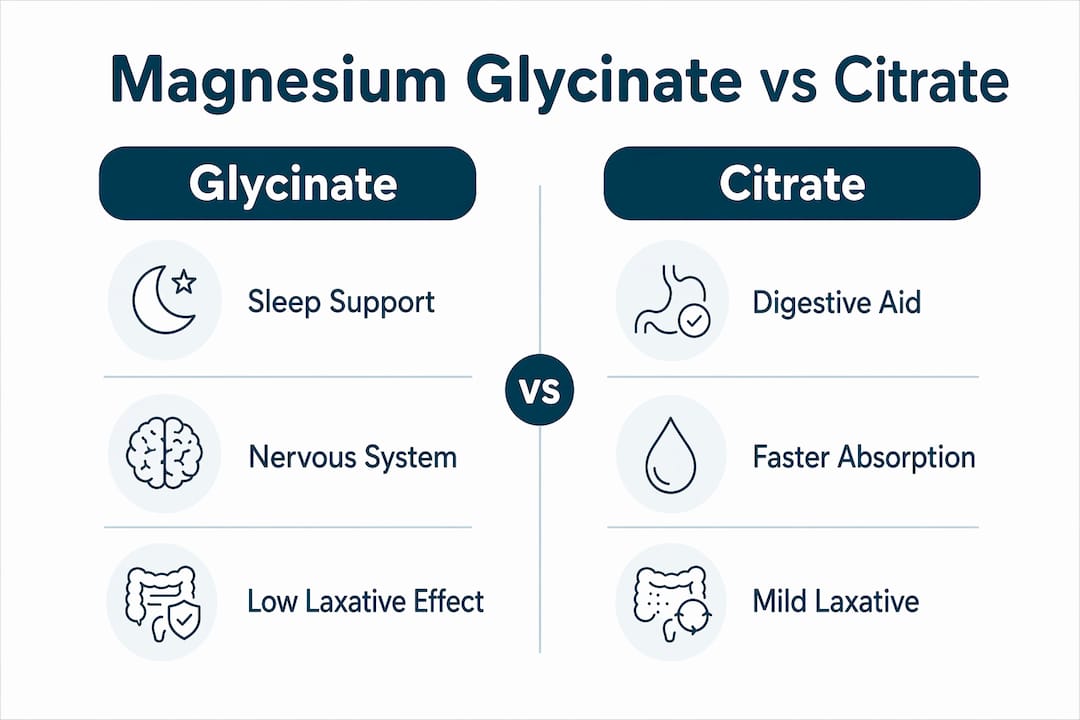
The absorption difference between citrate and glycinate is real but rarely clinically significant. What matters more is tolerability and purpose. Treating these two forms as interchangeable is one of the most common supplementation errors — glycinate suits those avoiding digestive upset, while citrate is a specific tool for bowel regularity.
How to choose between the two forms
Start with your primary goal, not the marketing on the label.

If your main concern is sleep quality, anxiety, or daily stress management, glycinate is the clear choice. Its non-laxative profile means you can take it every night without worrying about GI consequences. People who are managing anxiety naturally often find glycinate fits more sustainably into a daily routine than citrate.
If your main concern is constipation or kidney stone prevention, citrate earns its place. Just keep it targeted rather than chronic. Once bowel regularity is restored, switching to glycinate for ongoing magnesium support is a reasonable move.
Decision factors to work through:
- Digestive sensitivity: If your stomach reacts to supplements easily, glycinate is the safer starting point
- Constipation: Citrate is the more direct tool; glycinate will not provide the same laxative effect
- Sleep and relaxation: Glycinate’s glycine content gives it a functional edge here that citrate cannot replicate
- Medications: Both forms can interact with certain antibiotics (tetracyclines, fluoroquinolones) and bisphosphonates by reducing their absorption. Space magnesium supplements at least two hours away from these drugs
- Kidney function: People with kidney impairment should consult a physician before supplementing with either form, as impaired kidneys cannot clear excess magnesium efficiently
- Pregnancy: Magnesium needs increase during pregnancy; glycinate’s gentle profile makes it the preferred form, but always confirm dosing with an OB or midwife
- Elderly adults: Older adults often have reduced kidney function and are more likely to be on multiple medications, making medical guidance especially important before starting supplementation
Pro Tip: Check the supplement facts panel for “elemental magnesium” — not the total weight of the compound. A 500 mg capsule of magnesium glycinate may contain only 50–100 mg of actual elemental magnesium. Dosing by compound weight instead of elemental content is how people accidentally underdose or, less commonly, exceed the 350 mg daily upper limit.
What nutritional experts and clinical guidelines say
The clinical picture on magnesium supplementation has sharpened considerably. Current guidance from the NIH and integrative medicine practitioners consistently emphasizes one point: form matters, and the forms are not interchangeable.
That framing reflects what practitioners see in practice. Someone taking citrate nightly for sleep support often ends up with loose stools and no meaningful improvement in sleep quality. Someone taking glycinate for constipation relief gets neither the laxative effect nor the bowel regularity they need.
Expert consensus points toward several evidence-based principles:
- Form specificity: Glycinate is the preferred form for neurological and mood-related applications; citrate is the preferred form for digestive and urological applications
- Blood pressure: Magnesium supplementation at doses above 370 mg elemental magnesium per day has been associated with modest reductions in systolic and diastolic blood pressure (approximately 2.00/1.78 mmHg), though this effect is not strongly form-dependent
- Depression and mood: Research published in PMC links magnesium glycinate and magnesium taurinate specifically to rapid recovery in depression, with magnesium serving as a cofactor in converting tryptophan to serotonin
- Elemental content awareness: Many consumers overlook elemental magnesium content, risking underdosing or GI side effects from miscalculated amounts
- Kidney stone prevention: Magnesium citrate, particularly alongside potassium citrate, is used clinically for nephrolithiasis because citrate chelates oxalate and urate to prevent stone formation
For those exploring science-backed supplements for anxiety, magnesium glycinate consistently appears in practitioner recommendations precisely because its dual mechanism — magnesium’s NMDA receptor modulation plus glycine’s inhibitory signaling — addresses anxiety through two pathways simultaneously.
The 350 mg per day supplemental upper intake level is the guardrail worth keeping in mind regardless of which form you choose. Exceeding it does not cause acute toxicity in people with healthy kidneys, but it reliably causes GI distress, particularly with citrate. Staying within that ceiling while tracking elemental magnesium (not compound weight) is the practical takeaway from current clinical guidance.
Snapbrainformula supports your brain and mood with the right nutritional foundation

If you landed on this article because sleep, anxiety, or emotional regulation is the real issue, the form of magnesium is only part of the picture. Snapbrainformula is built around exactly this kind of nuanced, evidence-informed thinking — not just “take magnesium” but understanding which nutrients, in which forms, actually support the brain chemistry behind focus, calm, and emotional balance.
Snapbrainformula’s supplements are formulated for children, teens, and adults dealing with ADHD, anxiety, mood dysregulation, and the daily cognitive demands that come with a busy brain. The product line goes beyond single-ingredient supplementation, combining nutrients that work together the way the brain actually needs them to. If you are a parent researching options for your child, or an adult who has tried generic magnesium and found it underwhelming, the Snapbrainformula supplement line is worth a closer look. The educational content on the site also covers calming supplements for the mind in depth, so you can make a genuinely informed decision before you buy anything.
Key Takeaways
Magnesium glycinate is the better daily supplement for sleep and nervous system support, while magnesium citrate is a targeted tool for constipation relief and kidney stone prevention — using them interchangeably undermines both.
| Point | Details |
|---|---|
| Form determines function | Glycinate suits sleep, anxiety, and daily use; citrate suits constipation relief and kidney stone prevention. |
| Absorption is close | Citrate absorbs at ~25–30% and glycinate at ~23–27%; the difference rarely changes outcomes for most people. |
| Stay within the upper limit | The NIH sets the supplemental upper intake level at 350 mg elemental magnesium per day to avoid GI side effects. |
| Check elemental content | Supplement labels list compound weight, not elemental magnesium; always dose by elemental content to avoid underdosing or GI issues. |
| Snapbrainformula | Offers evidence-informed brain health supplements combining magnesium and complementary nutrients for mood, focus, and emotional balance. |
