
Defiant and oppositional disorder, clinically known as oppositional defiant disorder (ODD), is a diagnosable behavioral condition marked by a persistent pattern of angry mood, argumentative behavior, and vindictiveness lasting six months or more. Clinicians confirm it using DSM-5-TR criteria: at least four symptoms occurring more often than typical for the child’s age. If your child’s defiance disrupts school, friendships, or home life, call a pediatrician or child mental health specialist and start consistent, positive behavior strategies right away.
TL;DR:
- Genetic risk accounts for about half of the variation in oppositional defiant disorder, but environmental factors like parental involvement significantly influence outcomes.
- Consistent routines, high parental warmth, and school-home communication can mitigate genetic vulnerability and reduce oppositional behaviors over time.
- Early intervention focusing on parent management training and behavioral strategies shows measurable improvement within a few months, especially when started promptly.
- Severity signs such as aggression causing injury or escalation over weeks require immediate assessment, rather than waiting to see if behaviors improve.
- Medication plays a secondary role mainly for co-occurring conditions like ADHD, with behavioral treatment remaining the primary approach for addressing oppositional defiant disorder.
Table of Contents
- Symptoms and Signs of Oppositional Defiant Disorder
- What Causes Oppositional Defiant Disorder?
- How Is Oppositional Defiant Disorder Diagnosed?
- What Treatments Actually Work for Oppositional Behavior?
- What Happens if Oppositional Defiant Disorder Goes Untreated?
- Why Parental Involvement Changes the Genetic Equation
- How Common Is Oppositional Defiant Disorder?
- Do Boys and Girls Show Oppositional Defiant Disorder Differently?
- How Does ODD Affect School, Friendships, and Family Life?
- What Role Do Schools and Community Resources Play?
- A Closing Thought on Getting Help Early
- Where Nutritional Support Fits Alongside Clinical Care
- Sources
Symptoms and Signs of Oppositional Defiant Disorder
ODD symptoms cluster into three domains, and a real diagnosis needs a mix from at least one of them showing up more often than is typical for the child’s developmental stage. This is not one bad week after a move or a divorce. It’s a pattern.
The three domains, per DSM-5-TR, are:
- Angry/irritable mood: losing his or her temper often, being touchy or easily annoyed, or appearing angry and resentful most of the time.
- Argumentative/defiant behavior: arguing with authority figures, actively defying or refusing to comply with rules, deliberately annoying others, or blaming others for mistakes.
- Vindictiveness: being spiteful or seeking revenge at least twice within six months.
Frequency and duration rules matter more than most parents realize. For children under 5, the behavior needs to show up on most days for at least six months. For kids 5 and older, once a week is the threshold, sustained over the same six-month window. Clinicians also require that the behavior occurs with at least one person who is not a sibling. That “other than siblings” clause exists because sibling friction is nearly universal and, on its own, tells a clinician very little.
Pro Tip: Keep a simple two-week log of specific incidents. Note what happened right before the outburst, what your child said or did, and how long it lasted. Patterns jump out on paper that get lost in memory during a stressful week.
What this looks like at different ages
A preschooler with ODD might have tantrums that go well beyond what’s expected for a 3-year-old. Think prolonged screaming fits over minor transitions, deliberately breaking a sibling’s toy, or refusing basic requests like getting dressed almost every single day rather than occasionally.
School-age children tend to show it differently. Arguing with teachers over classroom rules, refusing homework outright rather than complaining about it, blaming classmates for their own mistakes, and losing friendships because peers find the constant friction exhausting.
Adolescents often externalize more visibly. Defiant behavior in adolescents can include walking out of class, open hostility toward parents, skipping curfews as a statement rather than an oversight, and vindictive comments aimed at siblings or peers. Because teenage independence-seeking is developmentally normal, clinicians look hard at intensity and impairment, not just the presence of pushback.
Red flags that mean don’t wait
Certain signs point to a more urgent evaluation rather than a wait-and-see approach:
- Aggression that causes injury to people, animals, or property.
- School suspension or expulsion tied directly to defiant or aggressive incidents.
- Escalating frequency or severity over a matter of weeks, not months.
- Signs of self-harm, substance use, or statements about wanting to hurt someone.
If any of these show up, skip the observation period and get an assessment scheduled. A checklist for identifying oppositional defiance in teens can help you organize what you’re seeing before that first appointment.
What Causes Oppositional Defiant Disorder?
No single cause explains oppositional defiant disorder causes. It’s a multifactorial condition, meaning genetics, brain function, and environment interact. Understanding that mix matters because it points directly at what parents can actually change.
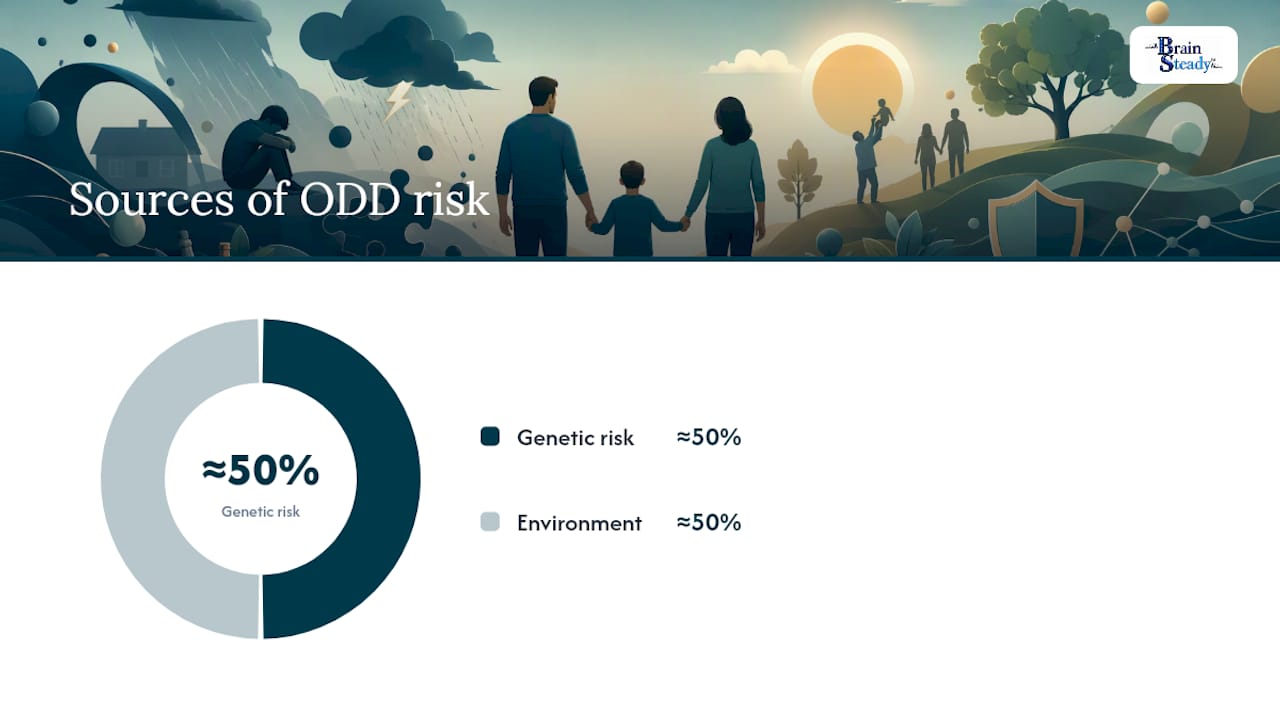
Twin and family studies put the heritability of ODD at roughly 50%, meaning genetic factors account for about half of the variation in risk across children. That’s a meaningful number, but it also means environment carries equal weight, and environment is far more responsive to intervention than DNA.
Family-level factors show up consistently in the research. A systematic review of 62 studies organized these into three levels:
- System-level: low socioeconomic status, chronic family stress, and neighborhood instability.
- Dyadic-level: marital conflict between parents and harsh or inconsistent parent-child interactions.
- Individual-level: parental depression or substance use, and the child’s own temperament.
Neurobiologically, researchers have linked ODD to differences in how the brain processes emotional regulation and responds to reward and punishment cues. Kids with ODD often show heightened reactivity to perceived threats or frustration and reduced sensitivity to typical consequences, which helps explain why standard discipline sometimes backfires.
Here’s the part that should give parents real hope rather than guilt: one twin study found that genetic risk for ODD becomes more prominent specifically when children perceive low parental involvement. In other words, genetic vulnerability isn’t a fixed sentence. When kids feel engaged and supported by a parent, that genetic risk has less room to express itself behaviorally.
Protective factors that consistently show up in the literature include:
- Consistent daily routines and predictable consequences.
- High parental involvement and warmth, even amid conflict.
- Strong school-home communication and support.
- Access to extended family or community support reducing overall household stress.
Pro Tip: You cannot control your child’s genetics, but you can control the predictability of your household. Pick one routine this week, morning departure, homework time, or bedtime, and make it identical every single day for two weeks before adding a second one.
How Is Oppositional Defiant Disorder Diagnosed?
There’s no blood test or brain scan for ODD. Diagnosis relies on structured clinical interviews, standardized rating scales, and careful history-gathering from multiple informants, typically parents, teachers, and sometimes the child directly.
Clinicians follow a specific sequence during assessment:
- Clinical interview and developmental history. The clinician asks about onset, frequency, and context of behaviors across settings, home, school, and social situations, going back at least six months.
- Standardized rating scales. Tools completed by parents and teachers help quantify frequency and severity and compare the child’s behavior to age-based norms.
- Direct observation or collateral reports. Teacher input is especially valuable since it reveals whether defiance is situational (only at home) or pervasive (across settings), which affects both diagnosis and severity rating.
- Screening for comorbid conditions. Because oppositional symptoms frequently overlap with other conditions, clinicians systematically check for ADHD, mood disorders, anxiety, and learning or language delays.
- Application of DSM-5-TR thresholds. The clinician confirms at least four symptoms across the three domains, present for six months, occurring at the required frequency for the child’s age, and involving someone other than a sibling.
Differential diagnosis is where a lot of families get confused, understandably, since several conditions produce overlapping behaviors:
- ADHD: Impulsivity and frustration from unmanaged ADHD can look like defiance, but the underlying driver is attention and self-regulation difficulty rather than a pattern of anger and vindictiveness. Treating the ADHD often reduces the oppositional behavior on its own.
- Mood and anxiety disorders: Irritability from depression or chronic anxiety can mimic ODD’s angry mood domain. The distinguishing factor is usually the presence of sadness, worry, or somatic complaints alongside the irritability.
- Disruptive mood dysregulation disorder (DMDD): DMDD involves more severe, frequent temper outbursts (three or more times weekly) combined with a persistently irritable baseline mood, a more intense presentation than typical ODD.
- Conduct disorder (CD): CD involves more serious violations, aggression toward people or animals, property destruction, theft, or serious rule violations, whereas ODD centers on defiance and irritability without those more severe acts.
- Learning or language disorders: Undiagnosed learning difficulties can produce frustration-driven defiance, particularly around homework or classroom tasks, that resolves once academic supports are in place.
Refer to a specialist, a child psychologist, developmental pediatrician, or child psychiatrist, when symptoms are severe, when comorbidities are suspected, or when a primary care provider’s initial screening raises concerns that need deeper evaluation. Resources like ADHD and ODD: turning defiance into communication can help you understand where the overlap between these two conditions tends to show up.
What Treatments Actually Work for Oppositional Behavior?
The strongest evidence points toward behavioral, family-centered treatment for oppositional behavior, not medication as a first step. An AHRQ systematic review comparing intervention types found multicomponent programs and parent-only interventions each carried a significantly higher probability of being the most effective approach compared to child-only interventions. That’s a striking gap, and it tells you where to focus your energy and your time.
The evidence gap is real: parent-focused and multicomponent programs nearly triple the effectiveness odds of child-only therapy for reducing disruptive behavior.
Parent management training (PMT)
Parent management training is the backbone of evidence-based care for oppositional behavior. Sessions typically run from about an hour to an hour and a half, weekly, over multiple weeks, though some programs extend longer for more entrenched patterns.
PMT teaches parents to:
- Use specific praise and positive reinforcement immediately after desired behavior, rather than generic encouragement.
- Set clear, consistent consequences decided in advance, not negotiated in the heat of the moment.
- Reduce power struggles by choosing which battles actually matter.
- Practice active ignoring for minor attention-seeking behavior while reinforcing cooperation.
Families typically see measurable improvement within several weeks when they attend consistently and practice the skills between sessions. It’s not fast, and it’s not effortless. It works because it changes the reinforcement patterns in the home, not because it’s a quick fix.
Child-focused therapy and school interventions
Cognitive behavioral therapy (CBT) for the child directly targets problem-solving skills, frustration tolerance, and social skills, particularly for older children and adolescents who can engage in the reflective work CBT requires. It’s rarely used alone; the AACAP practice parameter recommends multimodal treatment combining family-based and individual approaches, especially once comorbid conditions are in the picture.
School-based interventions matter just as much. Behavior plans coordinated between home and school, consistent reward systems across both settings, and regular teacher check-ins reinforce the same skills a child is practicing in therapy. A parent’s guide to managing oppositional behavior walks through how to build that kind of consistency between home and classroom.
Where medication fits in
Medication is not a primary treatment for ODD itself. It plays a targeted, secondary role when a comorbid condition needs its own management, most commonly ADHD, or when aggression is severe enough to interfere with safety and therapy engagement.
Small trials have shown atomoxetine and guanfacine XR can reduce oppositional symptoms in the short term, particularly in children with comorbid ADHD, and stimulants have shown benefit in some trials for the same reason. Antipsychotics and antiepileptic medications have produced mixed short-term results and generally carry more monitoring requirements. Any medication decision should come with regular follow-up appointments to track side effects, dosing, and whether the underlying behavioral work is progressing alongside it. Medication without concurrent behavioral treatment rarely produces lasting change on its own.
Setting realistic goals and vetting a provider
When you’re evaluating a therapist or program, ask directly: Does this approach include a parent-training component? How many sessions does a typical family complete? How do you measure progress? A provider who can’t answer those questions with specifics is worth a second look.
Realistic goals matter too. Improvement usually looks like fewer and shorter outbursts, not zero conflict. Expect gradual gains over two to three months of consistent participation rather than overnight transformation. Positive-reinforcement techniques, particularly when ADHD co-occurs, tend to compound over time as new habits replace old reinforcement patterns.
For adults navigating their own therapy alongside supporting a child, it’s worth knowing that effective therapy practices share the same core principle: consistency and measurable goals beat vague, open-ended sessions.
What Happens if Oppositional Defiant Disorder Goes Untreated?
Without treatment, ODD doesn’t necessarily worsen for every child, but the risk profile shifts in a direction worth taking seriously. Onset typically occurs in the preschool or early school-age years, though it can also emerge in adolescence, sometimes with a more abrupt presentation.
Comorbidity is common rather than exceptional. Kids with ODD frequently also meet criteria for ADHD, anxiety, or mood disorders, and untreated oppositional patterns can compound the impairment from those other conditions rather than existing in isolation.
Left unaddressed, a subset of children with ODD go on to develop conduct disorder, which involves more serious rule violations and aggression. Others carry elevated risk for mood disorders or substance use in adolescence and young adulthood. Not every child follows that trajectory. But practice parameters and longitudinal research consistently show that early, family-focused intervention reduces the likelihood of that escalation and improves day-to-day functioning in the meantime.
Practical monitoring steps for families already in treatment:
- Track frequency and intensity of outbursts monthly, not just when things feel bad.
- Watch for new symptoms, sleep changes, mood shifts, or social withdrawal, that might signal an emerging comorbidity.
- Escalate care if behaviors intensify despite consistent participation in a treatment program for six to eight weeks.
- Keep communication open with the school so warning signs get flagged early, not after a crisis.
Why Parental Involvement Changes the Genetic Equation
Here’s a finding that deserves more attention than it gets: genetic risk for ODD becomes more pronounced specifically when children perceive lower parental involvement. That single data point reframes the entire genetics conversation for parents who feel like biology has already decided their child’s outcome.
That doesn’t mean involvement is a cure. It means the environmental half of the equation, the half parents actually influence, carries real weight even when genetic risk is elevated. Consistency, warmth, and predictable structure aren’t just “nice to have.” They’re one of the few levers with direct research support.
Where does nutritional support fit into this picture? It doesn’t replace behavioral treatment or clinical assessment, full stop. But some families look for adjunctive support to help with the focus and emotional regulation challenges that often accompany oppositional behavior, particularly when ADHD is also part of the picture. That’s a reasonable question to raise with your child’s clinician, not a substitute for raising it. Explore the root causes of oppositional behavior for a deeper look at how these factors interact before deciding what adjunctive steps make sense for your family.
How Common Is Oppositional Defiant Disorder?
ODD is one of the more frequently diagnosed childhood behavioral conditions, though estimates vary depending on the population studied and the assessment method used. It tends to emerge earlier than conduct disorder and often precedes it in children who go on to develop more serious behavioral problems.
Rates tend to be roughly similar between boys and girls in early childhood, though presentation and referral patterns diverge as children get older, a pattern discussed further below. Prevalence also appears sensitive to family stress levels. Households under significant socioeconomic or relational strain report higher rates of oppositional symptoms, which lines up with the family-systems research on risk factors covered earlier in this guide.
Most cases first draw clinical attention during preschool or early elementary years, when defiant behavior starts interfering with classroom participation or peer relationships in ways that are hard to overlook. That early identification window matters. Children referred for assessment and treatment before adolescence generally have more options and more time for family-based interventions to take hold before patterns become entrenched.
Do Boys and Girls Show Oppositional Defiant Disorder Differently?
Presentation differences between genders show up more in adolescence than early childhood, and they affect who gets diagnosed and how quickly. Boys are more frequently referred for evaluation in childhood, often because their defiance tends to show up as overt, visible aggression, arguing loudly, physical confrontation, and open rule-breaking that teachers and parents notice immediately.
Girls with ODD more often present with relational aggression, exclusion, spreading rumors, and vindictive social behavior that falls squarely within the DSM-5-TR’s vindictiveness domain but attracts less attention from adults because it doesn’t disrupt a classroom the way a shouting match does. That difference in visibility contributes to underdiagnosis in girls, not because the condition is less common but because it’s less disruptive to observe.
Cultural context matters too. What counts as defiant in one family or community setting may be viewed as normal assertiveness in another, and clinicians are trained to weigh behavior against the child’s own developmental and cultural context rather than a single universal standard. Language barriers, differing norms around discipline, and varying comfort with mental health evaluation can all affect when and whether a family seeks assessment. None of that changes the DSM-5-TR criteria themselves, but it does affect how consistently those criteria get applied across different families and communities.
How Does ODD Affect School, Friendships, and Family Life?
Academically, oppositional behavior frequently shows up as refused assignments, conflict with teachers, and disciplinary referrals that eat into instructional time. Even bright, capable kids can fall behind simply because so much classroom energy gets spent managing conflict instead of learning.
Socially, peer relationships take a real hit. Kids with ODD often struggle to keep friends because the same argumentative and vindictive patterns that show up at home surface on the playground and in group settings. Peer rejection, in turn, is itself a risk factor that can deepen oppositional behavior, creating a cycle that’s genuinely hard to break without outside support.
At home, family functioning often bears the heaviest weight. Parents report high stress and, sometimes, marital strain tied directly to managing daily conflict. Siblings can end up walking on eggshells or resenting the disproportionate attention the child with ODD requires. None of that reflects parenting failure. It reflects a condition that, by definition, generates conflict in every relationship it touches, which is exactly why family-centered treatment outperforms approaches that focus on the child alone.
What Role Do Schools and Community Resources Play?
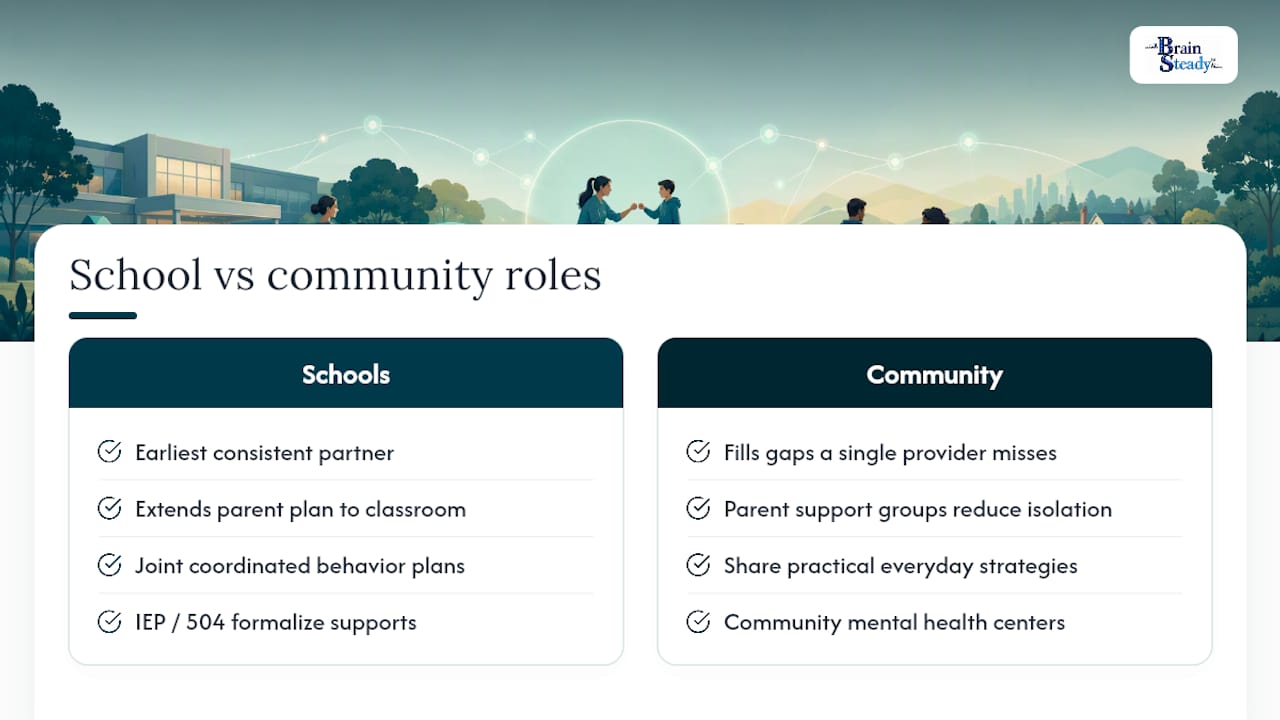
Schools are often a family’s earliest and most consistent partner in managing oppositional behavior, simply because teachers see patterns across a full day that parents only glimpse in fragments. A coordinated behavior plan, built jointly with a teacher or school counselor, extends the consistency that parent management training establishes at home into the classroom, which is exactly where a lot of defiant behavior in adolescents and younger children plays out.
Individualized Education Programs (IEPs) or 504 plans can formalize behavioral supports and accommodations when defiance intersects with a learning difference, giving teachers a documented framework rather than an ad hoc response. School psychologists and counselors can also serve as a bridge, applying the same reinforcement principles a family is using at home during the school day. Practical tips for teaching students with oppositional defiant behavior gives educators concrete tools that mirror what clinicians recommend for parents.
Beyond the classroom, community resources, support groups for parents, community mental health centers, and primary care networks, fill gaps that a single provider can’t cover alone. Many families find that connecting with other parents managing similar behavior reduces the isolation that often comes with a diagnosis like this, and it gives you a place to trade practical strategies for oppositional defiance that actually held up in daily life.
A Closing Thought on Getting Help Early
Watching a child’s behavior spiral into constant conflict is exhausting, and it’s easy to internalize it as a parenting failure. It isn’t. The research is consistent on this point: family involvement moderates genetic risk, and early, structured intervention changes outcomes. That’s not a platitude. It’s what the data actually shows.
If you take one thing from this guide, take this: don’t wait for things to get worse before seeking an assessment. A pediatrician or child mental health specialist can tell you within one or two visits whether what you’re seeing meets diagnostic thresholds or reflects something else entirely, and either answer gives you a clearer path forward than uncertainty does.
Bring your behavior log to that first appointment. Ask specific questions about parent training availability. And know that consistency, not perfection, is what moves the needle. Families who stick with a structured approach for even eight to twelve weeks typically see real change, even when the first few weeks feel like nothing is working.
For families looking for additional support alongside clinical care, there are resources built specifically for this, including educational tools focused on the nutritional side of brain health and emotional regulation.
— Ellory
Where Nutritional Support Fits Alongside Clinical Care
Behavioral therapy and parent training remain the foundation of effective ODD care, and nothing here changes that. But many parents managing oppositional behavior are also navigating overlapping challenges with focus, mood swings, and emotional regulation, especially when ADHD or anxiety are part of the picture alongside the defiance.

Evidence-informed capsule and liquid supplements are formulated to support focus, mood balance, and emotional regulation in children, teens, and adults. Unlike generic “calm down” products that make vague promises, educational content around brain chemistry and neurotransmitter science offers parents a more informed starting point for conversations with their child’s provider. These products are designed as an adjunct to, never a replacement for, professional evaluation and treatment. Always talk with your child’s pediatrician or mental health provider before adding any supplement to a treatment plan, particularly if your child is already taking medication. If you’re ready to explore whether nutritional support makes sense for your family’s situation, visit the Snapbrainformula product page to see current formulations and talk to your clinician about whether one fits into your child’s broader care plan.
Sources
- Oppositional defiant disorder (NCBI Bookshelf — DSM-5-TR summary)
- Practice Parameter for the Assessment and Treatment of Children and Adolescents With Oppositional Defiant Disorder (AACAP)
- A Systematic Review of Multiple Family Factors Associated with Oppositional Defiant Disorder (PMC)
