
No medication sold over the counter is FDA-approved to treat anxiety disorders. Prescription drugs like SSRIs, SNRIs, and buspirone remain the only medications with regulatory approval and strong evidence behind them. That said, nonprescription supplements and herbal remedies (ashwagandha, magnesium, L-theanine, and others) are widely used for everyday stress and mild, occasional anxious feelings. They come with real evidence gaps and safety trade-offs, so they work best as a short-term, low-risk option rather than a substitute for clinical care when symptoms are persistent or severe.
TL;DR:
- Most over-the-counter supplements for anxiety lack strong evidence and standardization, making their effectiveness and safety uncertain.
- Ashwagandha and kava are among the few supplements with more consistent research support, though kava’s liver risk limits its short-term use.
- Supplements can interact with medications like SSRIs, blood thinners, and sedatives, so consulting a healthcare professional is essential before use.
- Non-medication approaches such as sleep, exercise, breathing, and mindfulness often provide more reliable relief and should complement supplement use.
- Using one supplement at a studied dose for 6 to 8 weeks and tracking results is the safest way to evaluate potential benefits.
Table of Contents
- Anxiety Medicine Over the Counter: Supplements People Actually Try
- How Strong Is the Research, Really?
- Safety, Interactions, and Reading the Label Correctly
- Choosing an Option and Knowing When to Call a Professional
- Lifestyle Changes That Help Alongside Anything Else
- Why This Guide Takes an Evidence-First Approach
- The Gap Between What Supplements Promise and What They Deliver
- Where BrainSteady Fits Into an Anxiety Support Routine
- Sources
Anxiety Medicine Over the Counter: Supplements People Actually Try
The nonprescription market for anxiety support is crowded, and quality varies enormously from one product to the next. Here’s what shows up most often, along with the doses researchers have actually tested.
- Ashwagandha: An adaptogenic herb studied in several 6 to 8 week randomized trials, typically dosed around 500 to 600 mg per day. Trials report reduced subjective stress and lower cortisol, making it one of the more consistently studied options on this list.
- Magnesium: A mineral involved in nervous system regulation. Doses vary widely by formulation (glycinate, citrate, oxide), and study designs are inconsistent enough that no standard therapeutic dose exists yet.
- Cannabidiol (CBD): Legal status and label accuracy vary by product and jurisdiction. Some small trials suggest anxiolytic effects, but potency and purity differ so much between brands that results don’t generalize well.
- Kava: An herbal anxiolytic with a genuine evidence base. A network meta-analysis found it can reduce anxiety scores versus placebo, but liver toxicity concerns mean it’s typically studied and used only short-term.
- Valerian root: Mostly researched for sleep, not anxiety. The evidence specific to anxiety symptoms is weak and inconsistent.
- L-theanine: An amino acid found in tea leaves. Small studies show a calming effect, often without sedation, though sample sizes remain modest.
- Omega-3 fatty acids: Better supported for general mood support than for anxiety specifically. Results across anxiety-focused trials are mixed.
- Chamomile and saffron: Both have small supportive trials suggesting modest benefit, though neither has the trial volume of ashwagandha or kava.
- Phenibut: Sold as a supplement in some markets, but it carries a documented risk of dependency, severe withdrawal, and toxicity. Regulatory notices and case reports flag it as one to avoid rather than try casually.
For a deeper breakdown of how these compare on evidence and safety, Snapbrainformula’s science-backed supplement guide walks through the data product by product.
How Strong Is the Research, Really?
The honest answer: promising in spots, thin overall. Many trials testing herbal and nutritional supplements for anxiety are small, run for only a few weeks, and use different extracts or doses from one study to the next, which makes it hard to draw firm conclusions across the research base, according to NCCIH’s review of complementary approaches.
Ashwagandha has some of the more consistent findings, and kava and saffron show up favorably in certain analyses. Valerian, chamomile, and L-theanine sit in murkier territory, where results swing between modest benefit and no effect depending on the trial. A scoping review of 69 trials covering kava, lavender, saffron, and valerian found dosages so heterogeneous that direct comparison across products is nearly impossible.
There’s also a practical wrinkle: clinical trials usually test standardized, proprietary extracts, not the bottle sitting on a store shelf. A supplement without that same standardization may not deliver what the study measured. “May help” is the accurate framing here, not “works.”
Safety, Interactions, and Reading the Label Correctly
Dietary supplements don’t go through the same approval process as prescription drugs. The FDA doesn’t verify that a bottle’s contents match its label before it hits shelves, and ODS guidance notes some products have been found containing undeclared ingredients entirely.
Interaction risks are real and specific:
- 5-HTP combined with SSRIs raises serotonin syndrome risk.
- Omega-3s at high doses can increase bleeding risk, especially with blood thinners.
- Kava carries a liver toxicity signal, particularly with prolonged use or alcohol.
- Phenibut poses dependency risk even at moderate, regular use.
- Antihistamine-based sleep aids can cause excess sedation when stacked with other calming supplements.
Many of these interactions run through cytochrome P450 enzyme pathways, the same liver enzymes that metabolize a large share of prescription drugs.
Pro Tip: Look for a USP or NSF third-party testing seal on the label before buying. It won’t confirm the supplement works, but it’s the closest thing to a quality check you’ll get without FDA pre-approval.
Start at the low end of any studied dose range, tell your doctor or pharmacist what you’re taking, avoid new supplements in the two weeks before surgery, and stop immediately if you notice unusual symptoms.
Choosing an Option and Knowing When to Call a Professional
Before trying anything, run through a short mental checklist:
- Rate your symptoms honestly. Occasional nervousness before a big event is different from anxiety that shows up most days.
- Check your current prescriptions. If you take an SSRI, SNRI, blood thinner, or sedative, talk to a pharmacist before adding anything new.
- Flag pregnancy or nursing. Most of these supplements haven’t been studied in that population, so caution defaults to “skip it.”
- Look for a testing seal. No seal, no purchase, especially for CBD and kava products.
- Set a realistic goal. A supplement might smooth out sleep or everyday jitters. It’s not built to manage a diagnosed anxiety disorder.
Certain symptoms mean it’s time to see a healthcare professional, not try another bottle off the shelf: panic attacks, anxiety that’s interfering with work or relationships, symptoms that are getting worse instead of better, any thought of self-harm, or side effects from a supplement that feel severe. Research shows 30 to 43% of primary care patients use complementary remedies without telling their provider, which is exactly the gap that causes preventable interactions.
Lifestyle Changes That Help Alongside Anything Else
Supplements aside, a handful of daily habits move the needle on anxiety more reliably than most people expect. Regular sleep and wake times, aerobic exercise several times a week, and basic breathing or mindfulness practice all have real evidence behind them, and Snapbrainformula’s natural calming remedies guide breaks down how these pair with supplement use. Cutting back on caffeine and alcohol also matters more than most people assume, since both can mimic or worsen anxious symptoms directly.
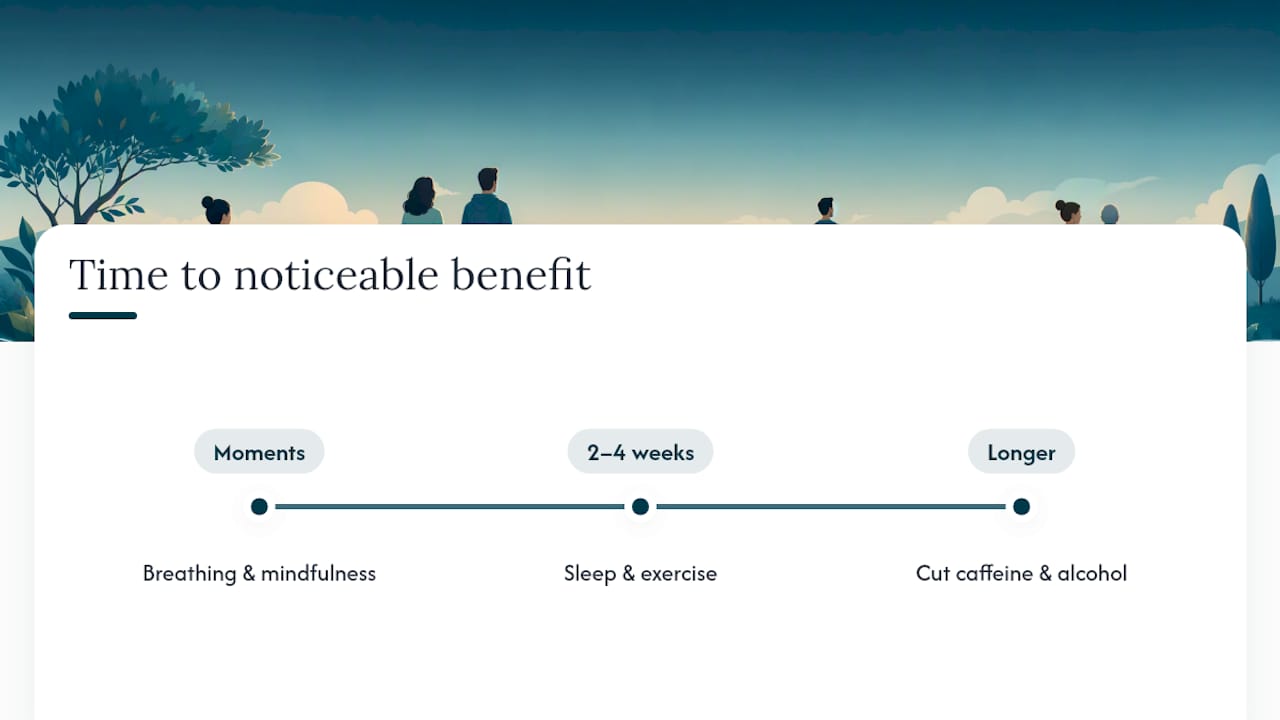
Pick one or two changes to try this week rather than overhauling everything at once. Sleep and exercise adjustments often show benefit within two to four weeks; breathing and mindfulness skills tend to help faster on any given anxious moment but take longer to build as a habit. None of this replaces prescription treatment when it’s clinically indicated. It’s the foundation that makes everything else, supplements included, work better.
Why This Guide Takes an Evidence-First Approach
Snapbrainformula builds educational content around the same evidence standards used throughout this piece, drawing on NIH and NCCIH sourcing rather than marketing claims. For readers who want to compare specific products against the research, the anxiety supplement FAQ covers common follow-up questions in more depth. This article was written by Ellory. Anyone managing moderate or persistent anxiety should still loop in a licensed clinician. No blog post replaces that conversation.
The Gap Between What Supplements Promise and What They Deliver
Here’s what gets lost in most coverage of this topic: the supplement industry markets these products as if they’re interchangeable with prescription treatment, and readers absorb that framing without realizing how thin some of the underlying research actually is. Ashwagandha and kava have earned their spot on this list. Several other popular options are riding on a handful of small trials and a lot of marketing confidence.
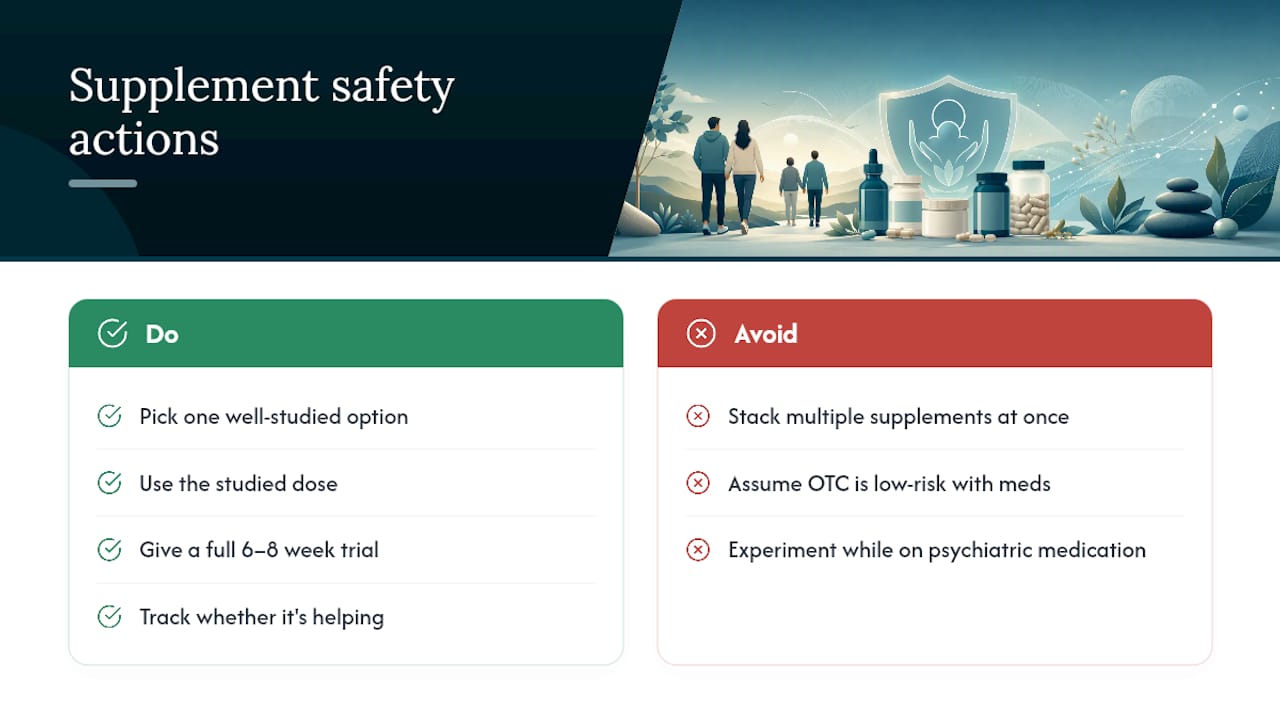
The bigger blind spot is disclosure. People assume that because something is sold without a prescription, it’s automatically low-risk to combine with whatever else they’re taking. That’s backward. Interaction risk doesn’t care whether a product needed a prescription to reach your medicine cabinet. If you’re on any psychiatric medication, the supplement aisle is not a place to experiment without a pharmacist’s input first.
My actual recommendation: pick one well-studied option, use it at a studied dose, give it the full trial period the research used (usually 6 to 8 weeks), and track whether it’s actually helping before adding anything else. Stacking five supplements at once makes it impossible to know what’s working, and it multiplies your interaction risk for no clear benefit.
— Ellory
Where BrainSteady Fits Into an Anxiety Support Routine
If you’ve made it this far, you already know supplements are a supporting player, not a substitute for prescription treatment when anxiety is significant or persistent. That’s exactly the role BrainSteady from Snapbrainformula is built for: nutritional support for mood, focus, and emotional regulation, meant to sit alongside good sleep habits, exercise, and clinical care when it’s needed, not replace any of them.
Before starting anything new, check for interactions with your current medications and loop in your doctor or pharmacist, especially if you’re pregnant, nursing, or managing a diagnosed condition. If mindfulness or breathing work sounds like a better first step than a supplement, these anxiety-focused exercises are worth trying first. When you’re ready to look at ingredients, dosing, and how BrainSteady fits your specific situation, the full product details are on the Snapbrainformula site.
Sources
- Ashwagandha — Office of Dietary Supplements (NIH)
- Anxiety and complementary health approaches — NCCIH
- What OTC products have been evaluated for anxiety in adults? A scoping review
- What You Need To Know About Dietary Supplements (ODS/NIH)
