
Ashwagandha has the strongest clinical case of any adaptogen for anxiety. Multiple systematic reviews and meta-analyses show consistent reductions in anxiety symptoms and cortisol levels, generally using doses around 600 mg a day for about eight weeks. Rhodiola and holy basil have supporting research too, but it is thinner and more mixed. Ginseng, eleuthero, reishi, and astragalus show up constantly in adaptogen conversations, yet their anxiety-specific human data is weaker than ashwagandha’s.
That is the honest hierarchy. It does not mean ashwagandha works for everyone, and it does not mean the others are useless. It means if you are choosing where to start, the evidence points in one clear direction.
Here is what the research actually supports:
- Ashwagandha: best-supported option, typical trial dose around several hundred milligrams per day, over several weeks to judge effect
- Rhodiola: smaller trials, promising for fatigue-linked anxiety, less consistent than ashwagandha
- Holy basil (tulsi): modest human evidence, often paired with stress-reduction routines rather than standalone use
- Ginseng, eleuthero, reishi, astragalus: traditional use is well documented, but anxiety-specific clinical trials are limited
One caveat that matters more than any dosing chart: adaptogens are not risk-free just because they’re herbal. Harvard Health warns that people who are pregnant or breastfeeding, or who have thyroid disease, autoimmune conditions, or certain cancers, should avoid ashwagandha specifically, and drug interactions with thyroid medication, diabetes drugs, and blood pressure medication are real possibilities. Talk to a clinician before starting, especially if you take prescription medication or manage a chronic condition.
Key Takeaways
Ashwagandha has the strongest clinical evidence for reducing anxiety symptoms among adaptogens, typically dosed around 600 mg daily for about eight weeks, but it still requires medical screening for contraindications and drug interactions before use.
| Point | Details |
|---|---|
| Ashwagandha leads the evidence | Meta-analyses show consistent HAM-A and PSS improvements at ~600 mg/day over ~8 weeks. |
| Rhodiola and holy basil trail behind | Smaller, more mixed trials suit fatigue-linked or mild stress rather than acute anxiety. |
| Match herb to symptom type | Sleep-linked anxiety, fatigue-linked anxiety, and stress-driven anxiety respond to different herbs. |
| Safety screening is non-negotiable | Avoid ashwagandha in pregnancy, thyroid disease, or autoimmune conditions; check medication interactions first. |
| Choose single-ingredient, tested products | Snapbrainformula formulates standardized, transparently tested supplements as a safer starting point than unlabeled blends. |
Table of Contents
- Adaptogens For Anxiety: A Herb-By-Herb Breakdown
- What The Research Actually Shows About Effect Sizes
- Why Adaptogens Take Weeks, Not Minutes, To Work
- A Safety Checklist Before You Try An Adaptogen For Anxiety
- How To Choose, Start, And Track An Adaptogen Safely
- Sources
Adaptogens For Anxiety: A Herb-By-Herb Breakdown
Not every adaptogen targets the same kind of anxious feeling. Some readers are dealing with wired, sleepless anxiety. Others feel foggy, drained, and anxious at once. Matching the herb to your symptom pattern matters more than picking whatever is trending.
Ashwagandha (Withania somnifera)
Ashwagandha is a nightshade-family root used for centuries in Ayurvedic medicine, and it’s now the most rigorously studied adaptogen for anxiety. Trials consistently show improvements on the Hamilton Anxiety Rating Scale (HAM-A) and Perceived Stress Scale (PSS), alongside measurable drops in cortisol, usually at doses near 600 mg daily over roughly eight weeks.
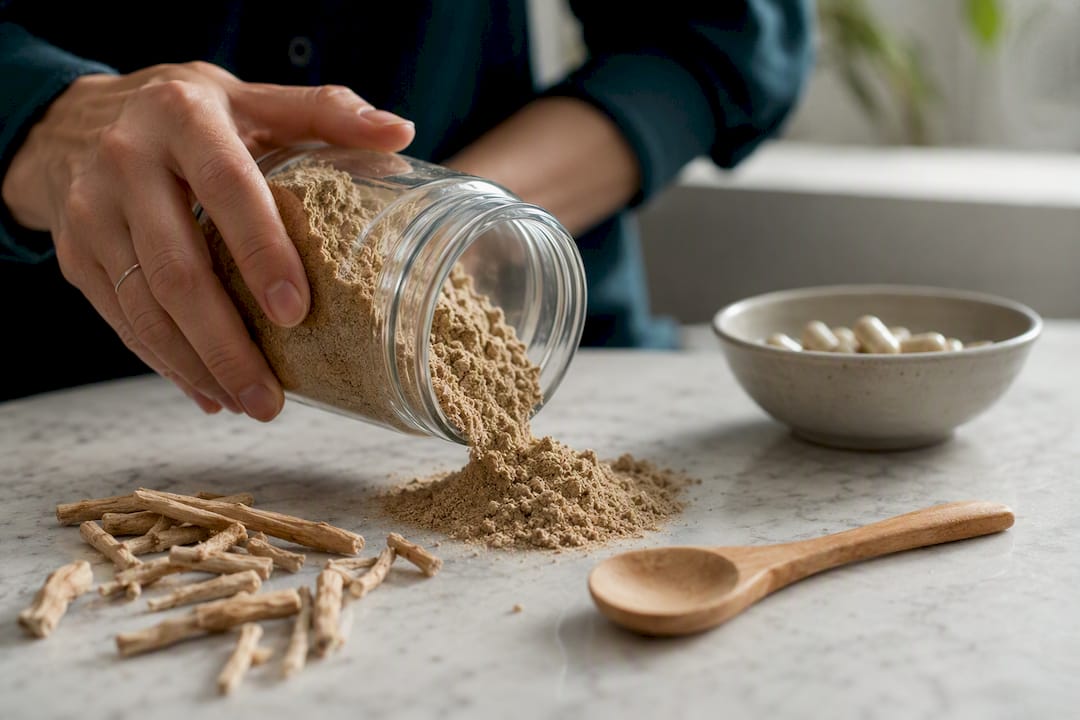
Side effects tend to be mild (drowsiness, upset stomach), but the contraindication list is not small: avoid it if you’re pregnant, breastfeeding, dealing with thyroid disease, autoimmune disorders, or hormone-sensitive cancers.
Best for: people whose anxiety runs alongside chronic stress, elevated cortisol symptoms, or sleep disruption, and who don’t fall into a contraindicated group.
Rhodiola (Rhodiola rosea)
Rhodiola is a Arctic root adaptogen traditionally used for fatigue and altitude stress. Small trials suggest it can ease anxiety and fatigue symptoms together and may blunt the cortisol spike tied to acute stress, but the evidence base is smaller and more inconsistent than ashwagandha’s. Typical study doses run from 200 to 600 mg daily, often split into two doses because rhodiola can feel mildly stimulating.
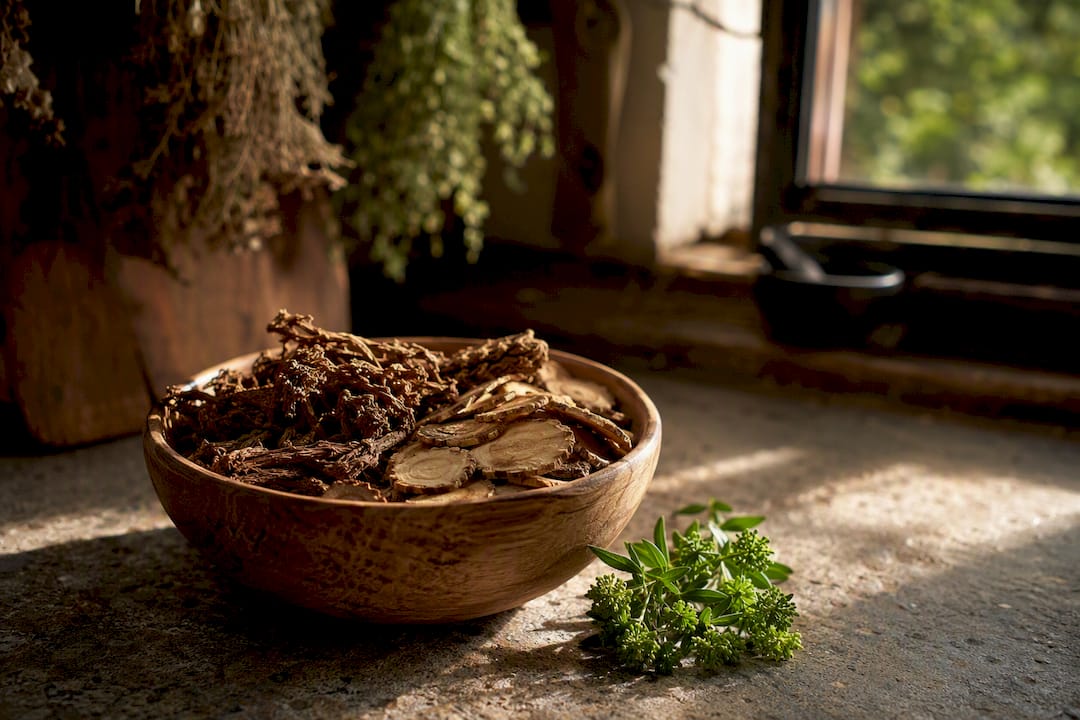
That stimulating quality is worth flagging: some people find it energizing in a helpful way, others find it agitating, especially later in the day.
Best for: anxiety that shows up as exhaustion, burnout, or brain fog rather than racing thoughts or panic.
Holy Basil (Tulsi)
Holy basil is a revered plant in Ayurvedic tradition, often brewed as tea, and modern research treats it as a mild anxiolytic and stress modulator. The human evidence is smaller in scale than ashwagandha’s trials, but it consistently points toward reduced perceived stress and improved mood, generally at doses of 300 to 600 mg of standardized extract or as a daily tea ritual.
Best for: people who want a gentler, lower-intensity option, or who prefer building a stress-relief habit (like a tea ritual) into their day rather than swallowing another capsule.
Panax Ginseng
Panax ginseng is best known for cognitive and energy effects, and its anxiety-specific research is thinner than its reputation suggests. Some small studies note mood and stress benefits, but most of ginseng’s evidence base centers on fatigue, cognition, and general vitality rather than anxiety symptoms directly. Doses in studies vary widely, from 200 mg to over 1,000 mg daily, which itself signals how unsettled the dosing science is.
Best for: people whose anxiety is tangled up with mental fatigue or low energy, who want a dual-purpose herb rather than a targeted anxiety treatment.
Eleuthero (Eleutherococcus senticosus)
Eleuthero, sometimes called Siberian ginseng despite not being a true ginseng, has a long history as a stamina and resilience herb in Russian and Chinese traditional medicine. Its anxiety data in humans is sparse, leaning more on animal and mechanistic research than large clinical trials. Traditional and modern doses commonly range from 300 to 1,200 mg daily of root extract.
Best for: people looking for general stress resilience support alongside other better-evidenced options, not as a standalone anxiety treatment.
Reishi (Ganoderma Lucidum)
Reishi is a medicinal mushroom prized in traditional Chinese medicine, mostly studied for immune modulation rather than anxiety. What anxiety-related benefit it shows appears to run through improved sleep quality and calming effects, rather than a direct anxiolytic mechanism. Extract doses in available research vary considerably, often in the range of 1 to 3 grams of dried extract or 400 to 800 mg of concentrated extract daily.
Best for: anxiety that’s tightly linked to poor sleep, since reishi’s clearest signal is sleep support rather than daytime calm.
Astragalus
Astragalus is another traditional Chinese herb, historically used for immune support and vitality, with the least anxiety-specific human research of the group. What data exists is largely preliminary or drawn from combination formulas, making it hard to isolate astragalus’s individual effect on mood or stress. Traditional doses run from 250 mg to 1,000 mg of root extract daily.
Best for: people already using astragalus for immune or energy reasons who want a mild, low-risk addition rather than a primary anxiety strategy.
Pro Tip: Pick one herb at a time and stick with it for the full trial window before judging it. Layering three adaptogens at once makes it impossible to know which one is helping, or which one is causing that new stomach upset.
What The Research Actually Shows About Effect Sizes
Ashwagandha’s evidence base is the deepest of any adaptogen for anxiety, and it’s worth understanding what the numbers actually mean rather than treating “statistically significant” as a magic phrase. A systematic review and meta-analysis published through PubMed found consistent improvements on the HAM-A and PSS scales, alongside cortisol reductions, with a median trial dose around 600 mg daily sustained for about eight weeks. A parallel analysis in BJPsych Open reached a similar conclusion but flagged that evidence certainty is still limited by trial heterogeneity and relatively small sample sizes.
That last point deserves emphasis. “Statistically significant” does not mean “dramatic.” Most trials show moderate improvement, not the disappearance of anxiety. Some participants respond strongly; others notice little. Averaged across a study population, the signal is real, but your personal experience could sit anywhere on that curve.
Rhodiola and holy basil trail behind on trial volume. The available research on rhodiola suggests real but modest benefit, often intertwined with fatigue reduction rather than anxiety reduction alone. Holy basil’s trials are smaller still, and most rely on subjective stress scales rather than the more standardized anxiety instruments used in ashwagandha research.
Three limitations explain why no one hands you a single, universal dosing chart:
- Different studies use different extracts, extraction ratios, and standardization methods, so a “600 mg dose” in one trial isn’t chemically identical to 600 mg in another.
- Sample sizes across most adaptogen trials are small, often a few dozen to a couple of hundred participants, which widens the margin of error on any reported effect.
- Outcome measures vary (HAM-A vs. PSS vs. self-reported stress), making direct comparison across herbs harder than it should be.
On the safety side, a scoping review and pharmacovigilance analysis examining VigiBase case reports found that gastrointestinal, dermatological, hepatic, cardiovascular, and immunological reactions were the most commonly reported adverse events across adaptogenic products. Serious adverse events were rare, but the review noted that multi-ingredient formulas made it difficult to pin down which ingredient actually caused a given reaction, a problem worth remembering the next time you’re tempted by a “10 herb blend” bottle.
Why Adaptogens Take Weeks, Not Minutes, To Work
Adaptogens don’t behave like a fast-acting anxiety medication, and understanding why helps set realistic expectations.
- HPA-axis modulation is the leading hypothesis. The hypothalamic-pituitary-adrenal axis governs your body’s stress response, and mechanistic reviews suggest adaptogens help regulate this system over time, gradually normalizing cortisol output rather than blocking it instantly.
- Neurotransmitter involvement is part of the picture. Some research points to effects on GABA, serotonin, and dopamine pathways, systems tied to mood regulation and the body’s calming response, though human evidence here is less developed than the cortisol data.
- Consistency matters more than a single dose. Because the mechanism is regulatory rather than sedative, taking ashwagandha once won’t calm you down the way a fast-acting medication might. Benefit tends to build over roughly six to twelve weeks of steady use.
- Much of the mechanistic detail comes from animal and lab studies. That doesn’t invalidate it, but it does mean the biological “why” is more established in petri dishes and rodent models than in human brain scans, so treat mechanism explanations as plausible rather than proven.
If you start an adaptogen expecting the calm of a benzodiazepine within an hour, you’ll be disappointed and probably quit before giving it a fair shot. That mismatch between expectation and mechanism is one of the most common reasons people abandon adaptogens prematurely.
A Safety Checklist Before You Try An Adaptogen For Anxiety
Adaptogens sit in a strange regulatory gap. They’re sold as supplements, not drugs, which means the FDA doesn’t require the same manufacturing standardization or pre-market efficacy testing that pharmaceuticals go through. That gap creates real risk if you’re not paying attention to product quality.
Run through this before buying anything:
- Check for single-ingredient, standardized extracts. A product listing “ashwagandha root extract, standardized to 5% withanolides” tells you far more than a vague “proprietary herbal blend.”
- Look for third-party testing or a certificate of analysis (COA). This is how you verify what’s actually in the capsule, not just what the label claims.
- Screen for interaction risk with your current medications. Thyroid drugs, diabetes medications, blood pressure medications, and benzodiazepines or SSRIs all carry documented interaction concerns with certain adaptogens.
- Avoid adaptogens entirely if you’re pregnant or breastfeeding, per Harvard Health’s guidance, unless a clinician has specifically cleared it.
- Watch for gastrointestinal upset, skin reactions, or unusual fatigue in the first few weeks. These are the most commonly reported adverse events in pharmacovigilance data.
- Monitor blood pressure and glucose if you have cardiovascular risk factors or diabetes, since some adaptogens can shift these markers.
Multi-ingredient “calm blend” supplements are especially tricky. When five herbs are combined in one capsule, you cannot tell which ingredient is helping, which is causing a side effect, or whether the doses of each are even clinically meaningful. A breakdown of herbal supplement quality risks makes the same point: adulteration and mislabeling are real problems in the unregulated herbal supplement space, which is exactly why single-ingredient, third-party-tested products deserve priority over blends.
Pro Tip: If a bottle’s label lists “proprietary blend” without individual milligram amounts for each herb, put it back on the shelf. You have no way to know if you’re getting a therapeutic dose or a token sprinkle.
Stop and seek medical care if you notice new chest discomfort, irregular heartbeat, signs of an allergic reaction, or a mood shift that feels worse rather than better. Herbal doesn’t mean harmless, and your body will tell you if something’s off if you’re paying attention.
How To Choose, Start, And Track An Adaptogen Safely
A responsible trial isn’t complicated, but skipping steps is exactly how people end up confused about whether something worked.
- Pick one herb based on your symptom pattern. Cortisol-driven stress and sleep disruption point toward ashwagandha. Fatigue-linked anxiety leans toward rhodiola. Sleep-linked anxiety may respond better to reishi.
- Choose a single-ingredient, standardized product with a COA. Manufacturer transparency about sourcing and testing is a proxy for overall quality control.
- Start at the manufacturer’s low recommended dose. For ashwagandha, that’s often in the 300 mg range before working up toward the roughly 600 mg/day used in most trials.
- Commit to a full trial window, typically 6 to 12 weeks, before deciding whether it’s working. Judging after five days is judging too early.
- Track a simple weekly log: a 1 to 10 anxiety rating, sleep quality, and any physical side effects. If you have cardiovascular risk factors, add blood pressure or glucose checks per your clinician’s guidance.
- Reassess at the halfway point. If nothing has shifted by week four to six and you’re not experiencing side effects, it’s reasonable to consider a different herb rather than pushing indefinitely on one that isn’t working.
Expect the early weeks to feel uneventful. That’s normal. Most people don’t notice a dramatic shift; they notice, in retrospect, that they’ve been a little more even-keeled or sleeping a bit better. Sudden intense effects in the first few days are more likely a side effect than a benefit kicking in early.
Pro Tip: Keep your other stress habits steady while you trial an adaptogen. If you also start a new workout routine, cut caffeine, and begin therapy in the same week, you won’t know what’s actually driving any improvement you feel.
If you’re stopping or pausing, taper down rather than quitting cold, and consult a clinician if you’re on any interacting medication before making changes. A checklist for pairing supplements with broader stress management strategies can help you build sleep, movement, and diet habits around whichever adaptogen you choose, since none of these herbs work in a vacuum.
When Adaptogens Aren’t Enough
Some situations call for more than an herbal trial, and recognizing them quickly protects you.
- Anxiety that’s interfering with work, relationships, or basic daily function
- Any thoughts of self-harm or suicidal ideation, which require immediate professional support
- Panic attacks, severe insomnia, or symptoms escalating rapidly over days rather than weeks
- A sense that you need therapy or medication alongside (or instead of) a supplement
- Emergency signs like chest pain, fainting, or a severe allergic reaction, which need urgent medical attention right away
If any of these apply, an adaptogen is not the right first move. A broader look at evidence-based anxiety treatment options covers what clinical care can add on top of, or instead of, herbal support.
An Evidence-First View On Adaptogens For Anxiety
Adaptogens deserve a place in an anxiety management plan, but only as an adjunct, not a substitute for clinical care. Snapbrainformula’s stance has always been that brain chemistry deserves the same evidence scrutiny as any other health decision. Ashwagandha earns its reputation because the research backs it, not because it’s trendy. Reishi and astragalus earn a more cautious place because the human data simply isn’t there yet.
What gets overlooked most often is patience. People start an adaptogen expecting a fast mood shift, get nothing in three days, and move on to the next bottle, never giving any single herb a fair evaluation window. Real change here looks boring: steady dosing, a tracking log, and enough weeks to let the HPA axis actually recalibrate.
Use the monitoring checklist above, loop in a clinician if you’re on medication or managing a chronic condition, and treat any adaptogen as one part of a larger plan rather than the whole plan.
— Ellory
An Evidence-Informed Option Worth Considering
If you’ve read this far, you already know the real work in choosing an adaptogen isn’t picking a trendy herb, it’s finding a single-ingredient, properly tested product and giving it a fair trial. That’s the exact gap Snapbrainformula was built to close.
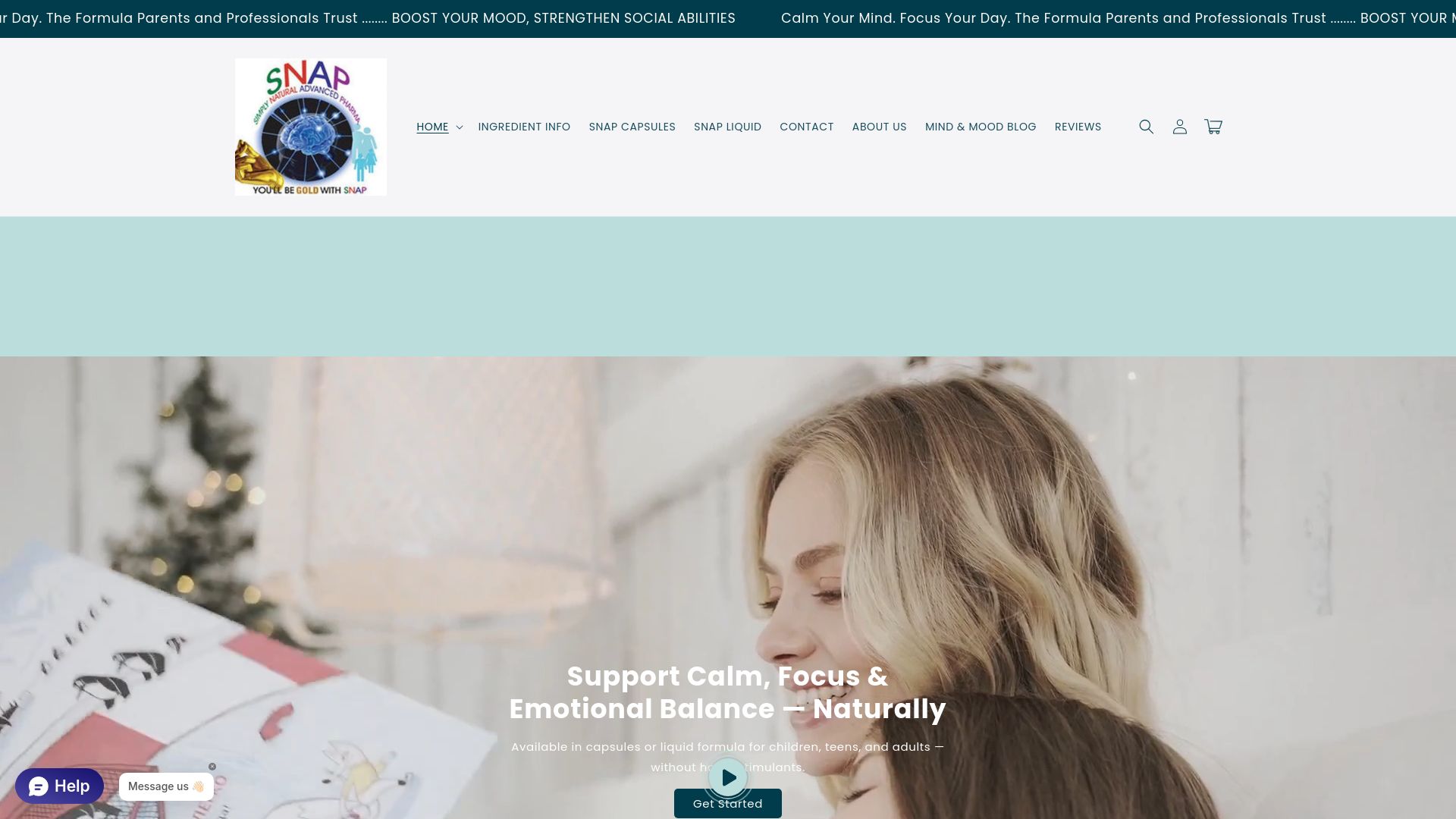
Snapbrainformula formulates evidence-informed capsule and liquid supplements for mood, focus, and emotional balance, built around the same principles covered in this guide: standardized extracts, transparent dosing, and third-party testing rather than vague proprietary blends. The brand’s educational content on ADHD, anxiety, and executive functioning is designed to help you understand the “why” behind a formulation, not just sell you a bottle. None of this replaces a clinician’s guidance, especially if you’re managing a diagnosed anxiety disorder or taking prescription medication, but it does give you a more accountable starting point than an unlabeled blend from an unfamiliar brand. If you want to see how these principles show up in an actual product lineup, visit the Snapbrainformula homepage to explore current formulations and resources.
Sources
- Effects of Ashwagandha Supplements on Cortisol, Stress, and Anxiety Levels in Adults: A Systematic Review and Meta-Analysis
- Ashwagandha: Benefits, side effects, and safety concerns - Harvard Health
- Scoping review of safety profiles of adaptogenic and immunomodulatory natural products and analysis of VigiBase case reports
Research on adaptogens is still evolving, and larger, more standardized trials are needed before firm dosing guidelines exist across every herb covered here.
Recommended
- Top 8 Science-Backed Supplements for Alleviating Anxiety – SNAP Brain Health Supplements
- Top 7 Supplements to Ease Your Anxiety Effectively – SNAP Brain Health Supplements
- Understanding Anxiety and How Natural Supplements Can Help – SNAP Brain Health Supplements
- Natural Remedies That Are Proven to Alleviate Worry – SNAP Brain Health Supplements
